Why is the giant phantom jellyfish trending right now?
The giant phantom jellyfish is trending due to new, high-definition deep-sea ROV footage, revealing this rare, massive creature.
 Sylvie Vance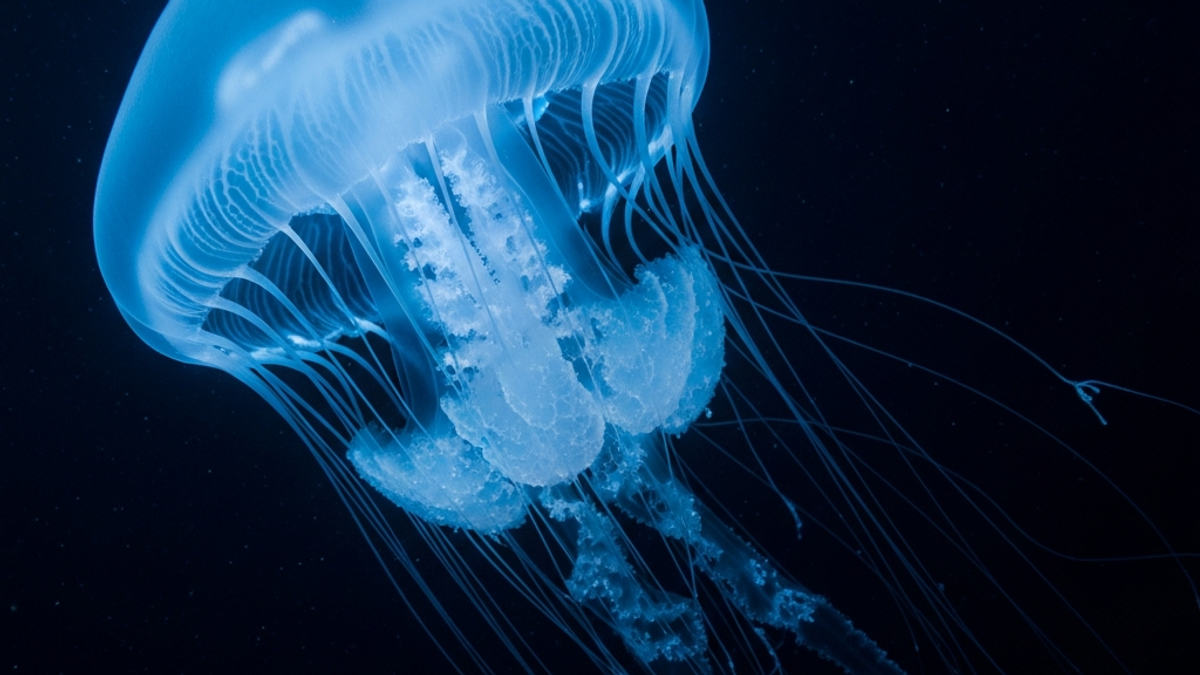
The giant phantom jellyfish (*Stygiomedusa gigantea*) is trending right now due to several recent, stunning deep-sea expeditions that have successfully captured high-definition video of this colossal and elusive creature, most notably during a recent exploration off the coast of Argentina [1, 3]. This creature, which can grow to lengths comparable to a school bus, sparks widespread public fascination because it remains one of the largest and least-understood jellyfish species on Earth, making any confirmed sighting a significant event for marine science and a guaranteed viral moment [3, 5].
### What makes the *Stygiomedusa gigantea* so rare and scientifically significant?
The scientific significance of the giant phantom jellyfish lies in its extreme rarity of observation and its unique biological adaptations to the abyssal zone. Discovered in 1899, the *Stygiomedusa gigantea* has only been documented around 120 times in over a century of deep-sea exploration [5]. Its sheer size is notable; it possesses an enormous, bell-shaped body that can reach up to 33 feet in length, complemented by four massive oral arms that trail behind it, distinguishing it from most shallow-water jellyfish [2, 5]. Its biology is adapted for the crushing pressures and perpetual darkness of the deep ocean, residing in depths where few human eyes have ever ventured. Furthermore, the species exhibits an unusual reproductive strategy, potentially releasing its young from its mouth, which further complicates research into its lifecycle [5].
### How do modern deep-sea exploration technologies enable these recent sightings?
The recent ability to capture clear footage of the giant phantom jellyfish is a direct result of advancements in deep-sea technology, primarily Remote Operated Vehicles (ROVs) and specialized research vessels [2]. Modern expeditions, such as the one conducted by the Schmidt Ocean Institute aboard the R/V *Falkor*, utilize sophisticated, maneuverable submersibles equipped with high-resolution cameras and specialized low-light sensors [3]. These technologies allow scientists to explore depths where the *Stygiomedusa gigantea* resides—often hundreds of feet below the surface—without the limitations of manned submersibles. The high-quality footage captured during these explorations contrasts sharply with historical, blurry records, making the creature highly engaging for public consumption and crucial for scientific analysis of its behavior and movement patterns [3].
### What can these sightings teach us about the biodiversity of the deep Argentine continental shelf?
The recent sighting off the coast of Argentina provided more than just a view of a single rare animal; it offered crucial data points about the biodiversity of that specific deep-sea environment. Researchers involved in the expedition expressed surprise at the overall richness of life they observed along the continental shelf, spanning from Buenos Aires to Tierra del Fuego [3]. Every documented sighting of a large, apex creature like the phantom jellyfish helps marine biologists map out complex deep-sea food webs and understand the health of these largely unexplored ecosystems. Specifically, these expeditions help assess how deep-sea communities respond to changing ocean conditions and confirm that life thrives even in the extreme, lightless environment of the Argentine deep sea [3].
## Key Takeaways
* **Extreme Rarity:** The giant phantom jellyfish is one of the ocean's most elusive animals, with only about 120 confirmed sightings since its discovery in 1899 [5].
* **Recent Drivers:** The current trend is fueled by recent, high-definition video captures from dedicated deep-sea research expeditions, particularly one operating off Argentina [1, 3].
* **Technological Impact:** Modern ROVs and research vessels are directly responsible for these clear, shareable images, pushing the boundaries of deep-sea observation [2].
* **Ecological Significance:** Sightings in specific regions, like the Argentine shelf, contribute vital, often unexpected, data on deep-ocean biodiversity and ecosystem health [3].
The future implications of increased deep-sea observation are significant. As technology makes these unseen realms more accessible, the scientific community expects more frequent documentation of rare fauna, prompting a necessary re-evaluation of established assumptions about deep-sea life and resource distribution.
In conclusion, the trending status of the giant phantom jellyfish is a testament to the enduring human curiosity about the unknown. Driven by a combination of technological success in exploration and the creature's staggering, almost mythical appearance, these rare glimpses into the deep ocean serve as powerful reminders of how much of our own planet remains undiscovered, hidden beneath the waves.
## References
* [1] NBC DFW. (n.d.). *Rare phantom jellyfish seen in Argentina deep sea...* Retrieved from https://www.nbcdfw.com/news/national-international/rare-phantom-jellyfish-argentina-deep-sea-exploration/3977446/
* [2] Smithsonian Magazine. (n.d.). *Watch This Giant Phantom Jellyfish With 33-Foot-Long...* Retrieved from https://www.smithsonianmag.com/smart-news/colossal-crimson-jellyfish-spotted-by-monterrey-bay-scientists-off-california-coast-180979218/
* [3] Yahoo News. (n.d.). *Rare jellyfish that can 'grow as long as a school bus' spotted in deep sea.* Retrieved from https://www.yahoo.com/news/articles/watch-rare-jellyfish-grow-long-212851230.html
* [5] Live Science. (n.d.). *Giant phantom jelly: The 33-foot-long ocean giant that has...* Retrieved from https://www.livescience.com/animals/jellyfish/giant-phantom-jelly-the-33-foot-long-ocean-giant-that-has-babies-out-of-its-mouth