What is the significance of Artemis II for NASA and future space exploration?
Artemis II marks a historic return to crewed deep-space flight, testing vital Orion systems to enable long-term lunar habitation and future trips to Mars.
 Sylvie Vance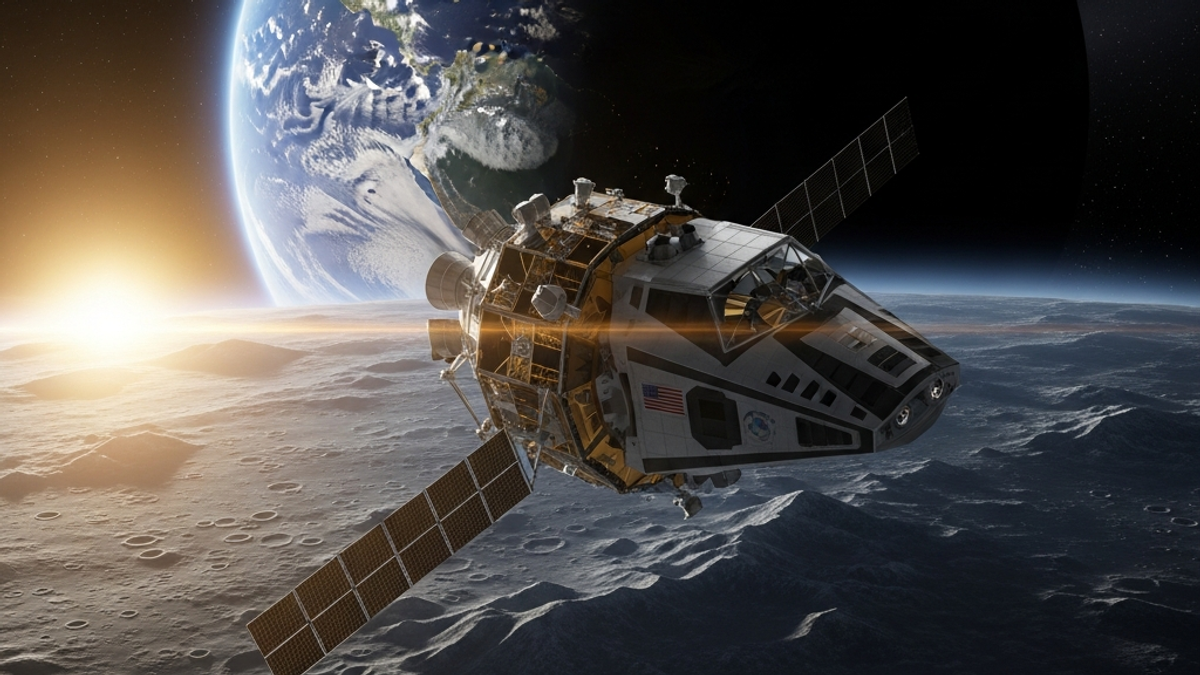
Artemis II is the first crewed mission of NASA’s Artemis program, marking a historic milestone by sending four astronauts on a flyby around the Moon, a feat not accomplished by humans in over 50 years [https://www.space.com/artemis-2-humans-moon-orbit](https://www.space.com/artemis-2-humans-moon-orbit). By testing the critical life-support and navigation systems of the Orion spacecraft with a human crew, the mission serves as a vital proving ground that paves the way for future long-duration lunar habitation and eventual human missions to Mars.
### How does Artemis II differ from the Apollo missions?
While the Apollo missions of the 1960s and 70s were driven by the geopolitical imperative of the Space Race, Artemis II represents a shift toward sustainable, long-term space exploration and international collaboration. Unlike Apollo, which relied on the Saturn V rocket, Artemis II utilizes the Space Launch System (SLS)—the most powerful rocket NASA has ever built—to propel the advanced Orion spacecraft [https://www.space.com/artemis-2-humans-moon-orbit](https://www.space.com/artemis-2-humans-moon-orbit). Furthermore, Artemis II incorporates a diverse, international crew, including astronauts from the Canadian Space Agency, reflecting a modern, global approach to deep-space discovery [https://www.nasa.gov/humans-in-space/artemis-ii-science/](https://www.nasa.gov/humans-in-space/artemis-ii-science/).
### Why is this mission considered a "proving ground"?
Artemis II functions as a high-stakes stress test for human-rated hardware in deep space. Because the mission involves a flyby rather than a landing, NASA engineers can rigorously evaluate the Orion spacecraft's environmental control and life-support systems under the actual stresses of lunar trajectories without the added complexity of a descent to the surface [https://news.cuanschutz.edu/news-stories/artemis-ii-and-the-next-era-of-space-exploration](https://news.cuanschutz.edu/news-stories/artemis-ii-and-the-next-era-of-space-exploration). The data gathered during this mission is essential for certifying the vehicle’s safety, which is a prerequisite for the subsequent, more complex Artemis III mission that aims to return humans to the lunar surface [https://www.space.com/artemis-2-humans-moon-orbit](https://www.space.com/artemis-2-humans-moon-orbit).
### How does this mission impact the goal of reaching Mars?
The Moon is being utilized as the "gateway" to the rest of the solar system. By establishing a sustained human presence on and around the Moon through the Artemis program, NASA intends to develop and master technologies—such as deep-space radiation shielding, sustainable power systems, and in-situ resource utilization—that are fundamentally necessary for the much longer, more dangerous journey to Mars [https://www.nasa.gov/humans-in-space/artemis/](https://www.nasa.gov/humans-in-space/artemis/). Artemis II is the bridge that turns theoretical plans for these technologies into operational reality.
### Key Takeaways
* **Historic Re-entry:** Artemis II is the first human mission to venture beyond low-Earth orbit since the end of the Apollo era, re-establishing deep-space flight capability.
* **Technological Validation:** The mission provides critical, real-world data on Orion's life-support systems, ensuring they are safe for the longer duration missions required for lunar landings.
* **Foundational for Mars:** By refining lunar exploration, NASA is building the infrastructure and logistical framework required for the first crewed missions to Mars.
* **International Partnership:** The mission emphasizes global cooperation, bringing together multi-national agencies to share the risks and rewards of space exploration.
The successful execution of Artemis II will demonstrate that humanity has moved beyond the constraints of Earth-orbit dependency, effectively opening a new chapter of lunar exploration. As we look toward the future, the lessons learned from this mission will not only redefine our relationship with our nearest celestial neighbor but will also determine how we sustain life far from the protection of Earth's atmosphere, ultimately informing the feasibility of deep-space human exploration.
## References
* [NASA: Artemis II – NASA’s First Crewed Lunar Flyby in 50 Years](https://www.nasa.gov/mission/artemis-ii/)
* [Space.com: NASA's Artemis 2 mission: Everything you need to know](https://www.space.com/artemis-2-humans-moon-orbit)
* [CU Anschutz News: Artemis II and the Next Era of Space Exploration](https://news.cuanschutz.edu/news-stories/artemis-ii-and-the-next-era-of-space-exploration)
* [NASA: Artemis II Science](https://www.nasa.gov/humans-in-space/artemis-ii-science/)
* [NASA: Artemis Program Overview](https://www.nasa.gov/humans-in-space/artemis/)