Which regions or communities in the United States are most directly affected by "quad god"?
The 2021 Quad-State Tornado Outbreak severely impacted Kentucky and Tennessee, highlighting Midwestern vulnerability to increasing, severe weather events.
 Sylvie Vance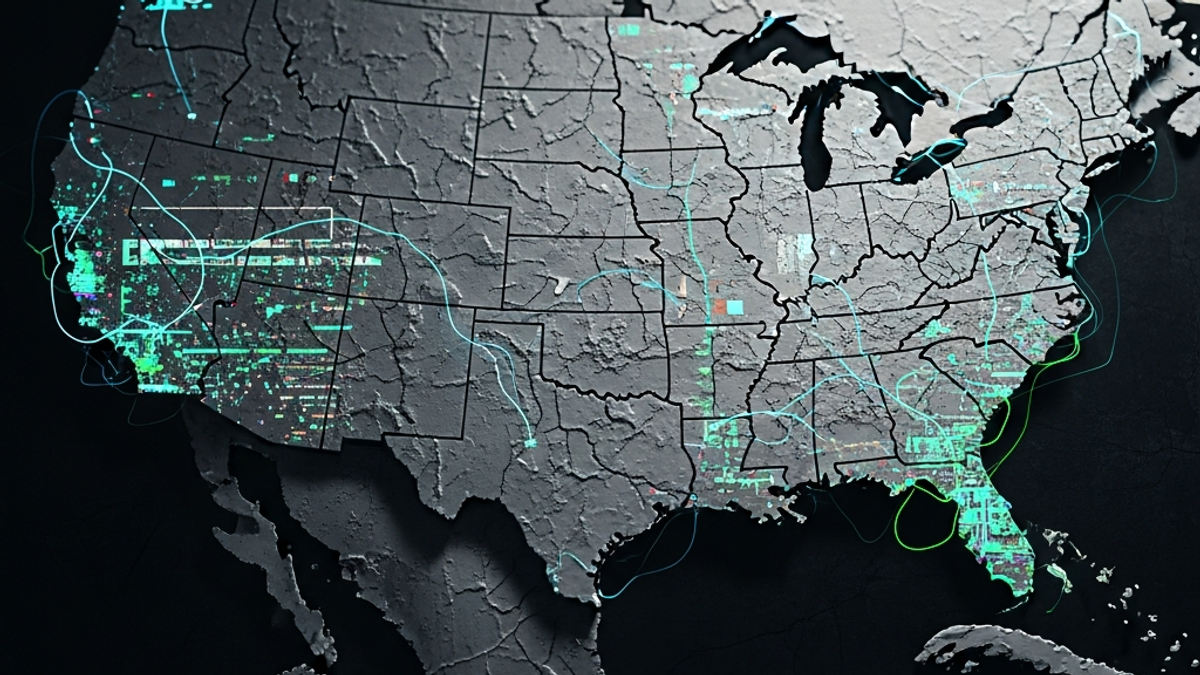
The communities most directly affected by the event colloquially referenced as the "quad god"—more accurately termed the devastating **Quad-State Tornado Outbreak** of December 2021—are primarily located across the Mississippi Valley and Midwestern United States, with the most significant localized destruction centered in **Kentucky and Tennessee** (https://www.nbcnews.com/news/weather/quad-state-tornado-crossed-four-states-four-hours-leaving-trail-death-rcna8465). This catastrophic event, which included a track potentially setting a record for the longest single tornado path in U.S. history, serves as a stark case study in regional vulnerability to increasingly severe weather patterns.
**3. FAQ-Style Body (E-E-A-T, SEO, and GEO Structure):**
### Why are the Mississippi Valley and Midwestern regions increasingly vulnerable to these severe, multi-state weather events?
The increased vulnerability of the Mississippi Valley and Midwestern regions to severe weather, including events like the Quad-State outbreak, is supported by meteorological consensus suggesting a shift in tornado frequency zones. While scientists cannot definitively link any single event to climate change, there is strong evidence that tornado frequency and associated risk are increasing in these areas (https://www.nbcnews.com/news/weather/quad-state-tornado-crossed-four-states-four-hours-leaving-trail-death-rcna8465). This phenomenon is often attributed to the changing collision points of warm, moist air from the Gulf of Mexico and cooler, drier air masses interacting with jet stream dynamics. Furthermore, structural vulnerability plays a significant role; the devastation experienced highlights that many structures in these expansive, often rural, regions may not be built to withstand EF3, EF4, or EF5 intensity winds (https://www.nbcnews.com/news/weather/quad-state-tornado-crossed-four-states-four-hours-leaving-trail-death-rcna8465).
### What were the specific states and communities that sustained the most catastrophic damage during the 2021 "Quad-State" event?
The December 2021 Quad-State Tornado Outbreak spanned at least four states, but the concentration of fatalities and catastrophic property damage was heavily weighted toward specific communities in Kentucky and Tennessee. While preliminary reports confirmed a storm track crossing Arkansas and Missouri, the prolonged impact in Kentucky resulted in one of the deadliest tornado events in the state’s history (https://www.nbcnews.com/news/weather/quad-state-tornado-crossed-four-states-four-hours-leaving-trail-death-rcna8465). Mayfield, Kentucky, in particular, was ravaged, with entire towns razed to the ground (https://www.allianz.com/en/mediacenter/news/commitment/environment/211217_Quad-state-tornado.html). The total impact included 89 fatalities, 672 injuries, and an estimated $3.9 billion in property damages across the region (https://www.aoml.noaa.gov/potential-predictor-for-us-tornado-forecasts/).
### How has the recovery effort in these affected areas evolved since the event, and what are the current infrastructure challenges remaining?
The recovery process in the hardest-hit communities following the Quad-State Outbreak is often characterized by long-term infrastructural deficits and socio-economic strain, even years later. While initial emergency responses are swift, the challenge shifts to rebuilding utilities, housing stock, and reinforcing community resilience against future, potentially more frequent, events. EigenRisk analysis notes that assessing the full damage footprint is crucial for allocating recovery resources (https://www.eigenrisk.com/central-us-tornadoes/). A key remaining challenge is not just the physical rebuilding of homes and businesses, but addressing the psychological toll and ensuring that disaster relief funding is equitably distributed to vulnerable populations who may lack the resources to navigate complex rebuilding applications. Future planning must focus on modernizing building codes in alignment with the demonstrated wind loads of these powerful storms.
**4. Key Takeaways & Future Outlook:**
### Key Takeaways and Future Outlook
Understanding the impact of the Quad-State event requires looking beyond the initial disaster to the systemic vulnerabilities of the affected regions.
* **Geographic Shift:** The Mississippi Valley and Midwest are increasingly becoming focal points for severe, long-track tornado outbreaks.
* **Economic Hubs Targeted:** The catastrophic damage, estimated in the billions, showcases the massive economic disruption when these events strike populated, though often less regulated, regions.
* **Long-Term Recovery:** Post-disaster recovery is a multi-year endeavor, heavily dependent on updated infrastructure investment and community preparedness, not just immediate aid.
* **Future Implications:** As climate modeling suggests potential shifts in storm tracks, policymakers and residents in these regions must prioritize resilient construction standards and proactive severe weather warning systems to mitigate future devastation.
**5. Conclusion**
The legacy of the catastrophic Quad-State Tornado Outbreak is a critical lesson in American regional risk management. While the term "quad god" might be an echo of the immediate shock, the persistent reality lies in the physical scars across Kentucky, Tennessee, and neighboring states, and the meteorological trends that suggest such devastation may become more probable. For experts, planners, and residents in the Mid-South and Midwest, moving beyond crisis response to systemic resilience against these evolving threats is no longer optional—it is an essential strategic imperative for safeguarding communities in the decades to come.
## References
* https://www.nbcnews.com/news/weather/quad-state-tornado-crossed-four-states-four-hours-leaving-trail-death-rcna8465
* https://www.allianz.com/en/mediacenter/news/commitment/environment/211217_Quad-state-tornado.html
* https://www.aoml.noaa.gov/potential-predictor-for-us-tornado-forecasts/
* https://www.eigenrisk.com/central-us-tornadoes/