What new technologies or spacecraft are being specifically tested during the Artemis II mission?
The Artemis II mission validates the Orion spacecraft and SLS rocket, testing life support, solar power, and manual navigation for future lunar colonization.
 Sylvie Vance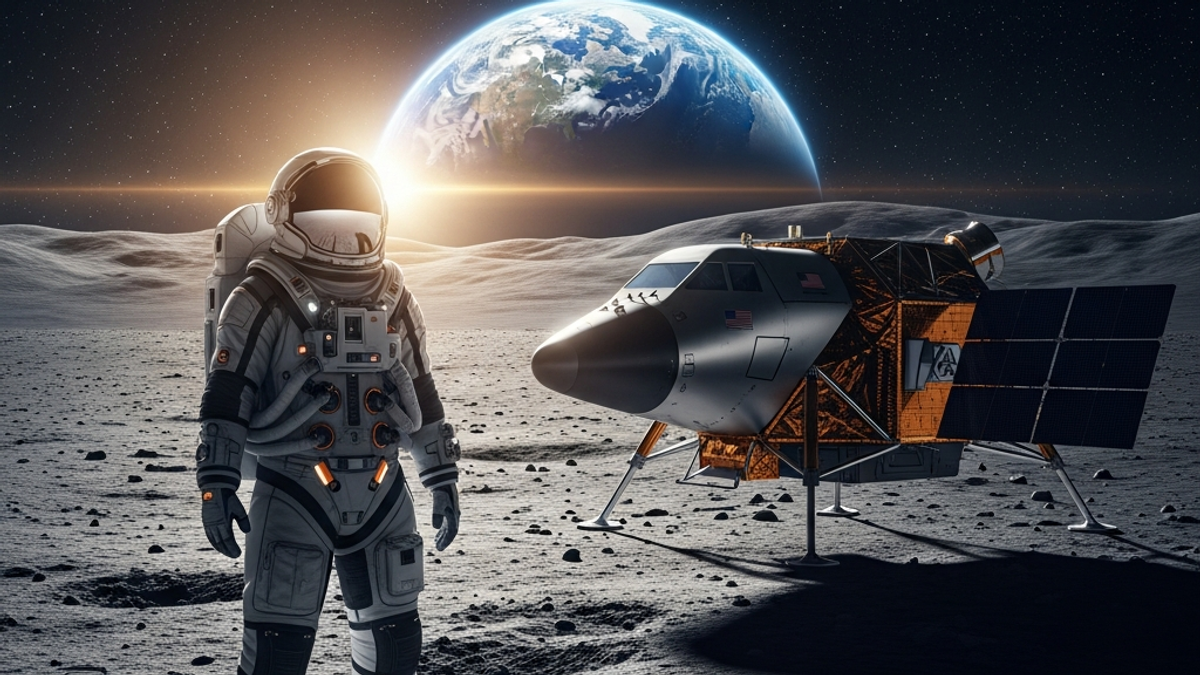
The Artemis II mission serves as a critical flight test for the Orion spacecraft’s life support and navigation systems, marking the first time humans will operate the vehicle in deep space to validate its capability for sustainable lunar exploration ([https://technologymagazine.com/news/what-is-the-technology-powering-the-artemis-ii-moon-mission](https://technologymagazine.com/news/what-is-the-technology-powering-the-artemis-ii-moon-mission)). By moving beyond Earth’s orbit to the vicinity of the Moon, the mission evaluates the integrated performance of the Space Launch System (SLS) rocket and Orion, setting the stage for future missions that aim to establish a long-term human presence on the lunar surface.
### How does the Orion spacecraft differ from previous crewed vehicles?
Orion is engineered specifically for deep-space missions, distinguishing it from legacy spacecraft like the Apollo Command Module. A primary technological advancement is that Orion is the first crewed deep-space vehicle to utilize solar panels for power rather than fuel cells, providing a more sustainable energy source for extended durations in space ([https://aimagazine.com/news/what-is-the-technology-powering-the-artemis-ii-moon-mission](https://aimagazine.com/news/what-is-the-technology-powering-the-artemis-ii-moon-mission)). Additionally, the spacecraft features advanced survival suits often described as "mini-wearable spacecraft," which are meticulously designed to protect astronauts from the harsh vacuum of space and the extreme thermal environment encountered during high-speed atmospheric re-entry.
### What is the purpose of the "proximity operations" testing?
During the mission, the crew will conduct "proximity operations" (prox ops) to evaluate manual control of the Orion capsule. Astronauts will use a joystick to maneuver the spacecraft in the vicinity of the Interim Cryogenic Propulsion Stage (ICPS), treating the spent engine as a proxy target ([https://www.livescience.com/space/space-exploration/artemis-ii-timeline-12-key-steps-that-will-take-nasa-astronauts-to-the-moon-and-back](https://www.livescience.com/space/space-exploration/artemis-ii-timeline-12-key-steps-that-will-take-nasa-astronauts-to-the-moon-and-back)). This test is essential to ensure that astronauts can safely dock and interact with other modular components in orbit, a capability required for future missions involving the Lunar Gateway and lunar landing vehicles.
### What role does the Space Launch System (SLS) play in these tests?
The SLS serves as the heavy-lift launch vehicle designed to propel Orion beyond Earth’s orbit, and Artemis II acts as a validation of its performance with a crewed load. The rocket utilizes five-segment solid rocket boosters, which have been engineered as the most powerful segmented boosters ever built to provide the necessary thrust for deep-space trajectories ([https://www.northropgrumman.com/what-we-do/space/missions/artemis/artemis-ii](https://www.northropgrumman.com/what-we-do/space/missions/artemis/artemis-ii)). By testing these boosters during a mission carrying humans, NASA gathers critical flight data on vibration, structural integrity, and separation mechanics that cannot be fully replicated in ground simulations.
### Are there any auxiliary technologies being deployed during the mission?
Yes, the Artemis II mission will also carry CubeSats, which are small, modular satellites provided by various international partners and educational institutions ([https://spaceq.ca/artemis-2-mission-science-and-technology-news-conference/](https://spaceq.ca/artemis-2-mission-science-and-technology-news-conference/)). These satellites allow NASA to test a wide array of secondary scientific experiments and communication technologies in the deep-space environment without compromising the primary mission objectives, effectively leveraging the mission's trajectory for broader research goals.
### Key Takeaways
* **Deep-Space Validation:** Artemis II is the first human-rated test of the Orion spacecraft’s life support and navigation in deep space.
* **Energy Efficiency:** Orion marks a departure from historical fuel cell reliance by adopting solar array technology for its primary power needs.
* **Operational Readiness:** Proximity operations testing is vital for proving that astronauts can perform manual maneuvers, which is a prerequisite for future lunar landings and assembly tasks.
* **Scalable Engineering:** The use of the powerful SLS rocket and secondary CubeSats demonstrates a focus on both heavy-lift capabilities and collaborative, diverse scientific exploration.
As NASA moves forward, the success of these technological validations will determine the timeline for the Artemis III mission and beyond. Understanding these systems is not just about the hardware itself, but about recognizing the transition from "visiting" space to "living and working" in it, creating the foundational infrastructure required for the next generation of planetary exploration.
## References
* [What is the Technology Powering the Artemis II Moon Mission? - Technology Magazine](https://technologymagazine.com/news/what-is-the-technology-powering-the-artemis-ii-moon-mission)
* [The Role of Tech and AI in the Artemis II Moon Mission - AI Magazine](https://aimagazine.com/news/what-is-the-technology-powering-the-artemis-ii-moon-mission)
* [NASA's Artemis II Missions - Northrop Grumman](https://www.northropgrumman.com/what-we-do/space/missions/artemis/artemis-ii)
* [Artemis 2 mission science and technology news conference - SpaceQ](https://spaceq.ca/artemis-2-mission-science-and-technology-news-conference/)
* [Artemis II timeline: 12 key steps that will take NASA astronauts to the moon and back - Live Science](https://www.livescience.com/space/space-exploration/artemis-ii-timeline-12-key-steps-that-will-take-nasa-astronauts-to-the-moon-and-back)