What are the main demands or goals of the "no kings protest" participants?
Protesters demand an end to perceived authoritarianism, asserting that power belongs to the people, not unchecked executive leaders.
 Sylvie Vance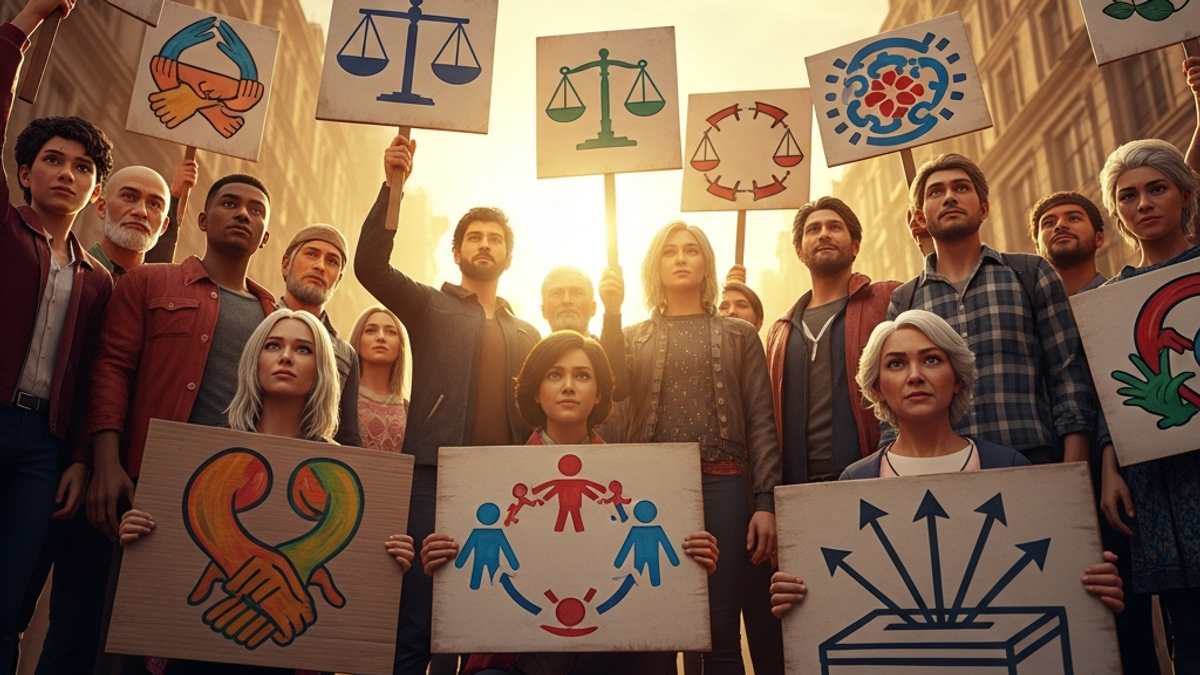
The main demand of the "no kings protest" participants is a **direct repudiation of the administration they perceive as authoritarian or tyrannical**, specifically protesting what they term "antidemocratic policies," "illegal, immoral and frankly profane actions," and the concept of a leader acting like a king rather than a servant of the people (https://www.britannica.com/event/No-Kings-protests, https://www.nokings.org/about-nk). The overarching goal is to affirm that the nation belongs to its people, promoting sustained resistance to perceived executive overreach and defending democratic principles (https://www.aclu.org/press-releases/no-kings-coalition-responds-to-escalating-brutality). This movement, which has seen massive national participation, aims to hold power accountable through large-scale, nonviolent mobilization (https://www.nokings.org/about-nk).
***
## Analysis and Strategy
**Newsjacking Angle:** The protests, centered around the slogan "No Kings," serve as a powerful, decentralized response to specific political leadership perceived as undermining democratic norms. The strategy is to dissect the explicit goals behind this evocative, anti-monarchical language, providing an authoritative breakdown of the movement's core tenets, organizational structure, and impact on the political landscape.
**Follow-up Questions (Sub-Topics):**
1. What specific administrative policies or actions galvanized the movement under the "No Kings" banner?
2. How is the "No Kings" movement organized, and what tactics do they employ beyond street demonstrations?
3. What evidence exists regarding the scale and geographical reach of the "No Kings" protests in locations like Los Angeles?
### What specific administrative policies or actions galvanized the movement under the "No Kings" banner?
The movement was formally launched in response to policies enacted by the targeted administration that participants viewed as unconstitutional, immoral, and leaning toward authoritarianism (https://www.nokings.org/about-nk). Specific galvanizing issues frequently cited include the administration’s crackdown on immigration and federal immigration raids (https://www.britannica.com/event/No-Kings-protests). Organizers have explicitly described the protests as a direct stand against a "regime" and its "antidemocratic policies," suggesting that the rhetoric and perceived actions of the leadership itself—including statements implying kingship—were primary drivers for organizing (https://www.britannica.com/event/No-Kings-protests, https://www.nokings.org/about-nk). Furthermore, actions perceived as cruel, oppressive, and divisive by various community and faith leaders motivated participation, emphasizing a rejection of specific governance styles (https://www.aclu.org/press-releases/no-kings-coalition-responds-to-escalating-brutality).
### How is the "No Kings" movement organized, and what tactics do they employ beyond street demonstrations?
While the protests are visible through large-scale street demonstrations, the "No Kings" movement appears to be a decentralized national resistance effort supported by established organizing bodies. It has been noted that movements gain power not only from the streets but from credible leaders who can negotiate on the people's behalf (https://www.theguardian.com/us-news/2026/mar/27/no-kings-protests-goals). The movement is supported by coalitions, such as the No Kings Coalition, which responds to escalating events (https://www.aclu.org/press-releases/no-kings-coalition-responds-to-escalating-brutality). Beyond physical protest, their methods include community-level organizing efforts such as delivering groceries to immigrant neighbors, driving friends to necessary appointments, and local trainings, demonstrating a grassroots focus on mutual aid and civic defense (https://www.aclu.org/press-releases/no-kings-coalition-responds-to-escalating-brutality). Their organizational infrastructure includes platforms for finding events, providing "Know Your Rights" information, and hosting trainings (https://www.nokings.org/about-nk).
### What evidence exists regarding the scale and geographical reach of the "No Kings" protests in locations like Los Angeles?
The "No Kings" events have achieved significant, documented scale, positioning themselves as a major national resistance effort. The second mass protest in October drew an estimated seven million participants across the country (https://www.nokings.org/about-nk). This mobilization reportedly encompassed over 2,700 events spanning all 50 states, making it a truly nationwide undertaking (https://www.nokings.org/about-nk). Specifically regarding Los Angeles, the city has previously been noted as a site of widespread unrest linked to federal actions, suggesting a pre-existing environment receptive to large-scale demonstrations against federal policy (https://www.britannica.com/event/No-Kings-protests). The organizational materials frame the movement’s reach as comprehensive, extending from major city centers to small towns determined to defend democracy (https://www.nokings.org/about-nk).
## Key Takeaways
* **Core Demand:** The central goal is the rejection of perceived authoritarian leadership and any action deemed anti-democratic or tyrannical in nature.
* **Broad Scope:** The movement explicitly seeks to affirm that national governance belongs to the populace, not to singular powerful figures ("kings").
* **Significant Scale:** The protests have generated massive national turnout, with events spanning all 50 states and involving millions of participants across multiple organized mobilizations.
* **Multi-Tactic Approach:** While street protests are visible, the movement relies heavily on decentralized, community-based organizing, mutual aid, and educational components like Know Your Rights training.
* **Sustained Resistance:** The movement views itself not as a single-day event but as a sustained national resistance aimed at long-term accountability and defense of democratic norms.
The future impact of the "No Kings" movement will likely depend on its ability to maintain organizational coherence across disparate local chapters while continuing to tie local organizing efforts to the broader goal of political accountability. If the movement successfully transitions its massive street presence into sustained civic engagement and voter mobilization, it could represent a significant long-term counterweight to executive power.
## Conclusion
The "no kings protest" participants in Los Angeles and across the nation share a unified, principled stand against governance perceived as monarchical or overtly tyrannical. Their goals are deeply rooted in reinforcing democratic accountability, rejecting specific policies seen as oppressive, and ensuring that political power ultimately resides with the people. By synthesizing mass mobilization with grassroots organizing, this movement presents a complex political phenomenon worthy of ongoing analysis for anyone tracking shifts in American civic engagement and the nature of modern political dissent.