What is the latest major news or announcement from SpaceX?
SpaceX is currently focused on the Starship flight test and integrating xAI, while also expanding Starlink with Direct to Cell capabilities.
 Sylvie Vance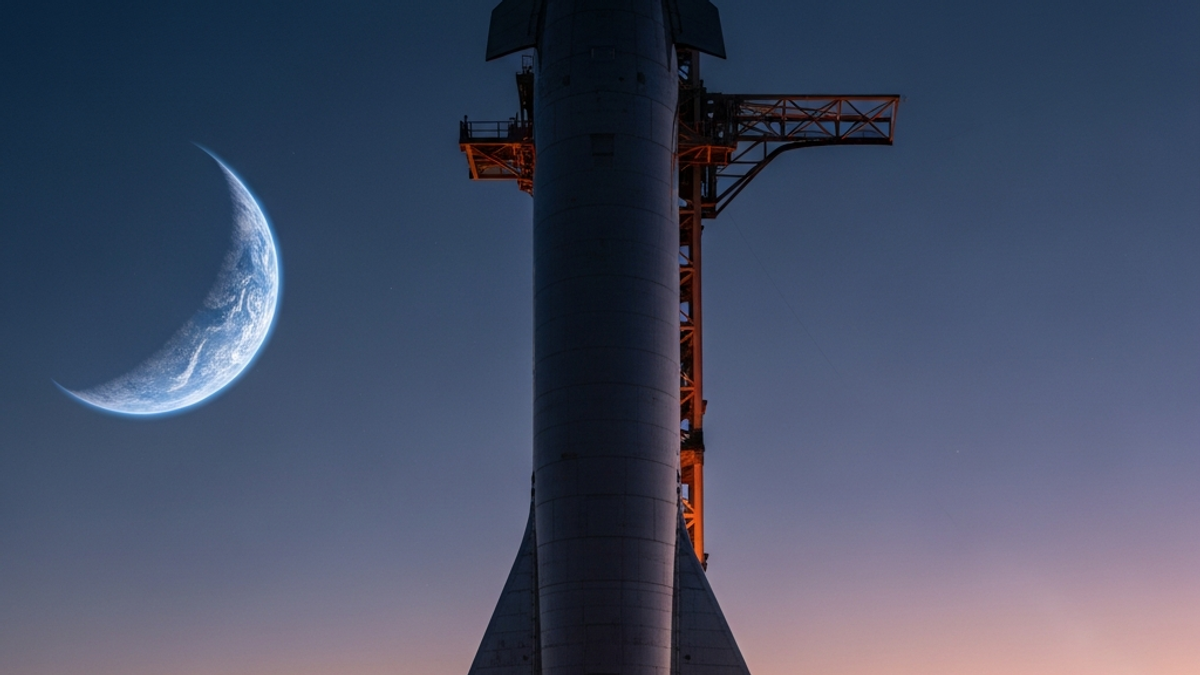
The latest major news from SpaceX is primarily centered on the highly anticipated third integrated flight test of its **Starship** vehicle, which was announced with a potential launch date as soon as Thursday, March 14, 2024, pending regulatory approval (https://www.brownsvilletx.gov/CivicAlerts.aspx?AID=1829). Concurrently, the company has been making significant moves in the artificial intelligence space, notably through the announcement of a deal to combine its resources with xAI (https://www.cbsnews.com/tag/spacex/). These developments showcase a dual focus for the company: advancing its heavy-lift launch capabilities while solidifying its position in cutting-edge AI technology.
### What is the significance of the third Starship integrated flight test for NASA and future Mars missions?
The third integrated flight test (IFT-3) of Starship is a crucial, iterative step in developing the most powerful rocket ever built, a vehicle deemed essential for both NASA's Artemis missions and Elon Musk's long-term goal of human settlement on Mars (https://www.brownsvilletx.gov/CivicAlerts.aspx?AID=1829). Each test flight is designed to gather vital data on the vehicle's Super Heavy booster and the Starship upper stage. For NASA, Starship is contracted under the Human Landing System (HLS) program to return astronauts to the Moon, making the success of these developmental tests a direct prerequisite for the agency’s surface exploration timeline. The primary objectives of the flight test typically include demonstrating hot-staging, in-space propellant transfer capability (a future requirement), and a controlled reentry profile, moving the entire project closer to operational status.
### How does the reported acquisition of xAI reflect SpaceX's evolving corporate strategy?
The reported merger or acquisition of Elon Musk's AI company, xAI, by SpaceX signals a strategic pivot toward deep integration of artificial intelligence across SpaceX’s operations and future ventures (https://www.cbsnews.com/tag/spacex/). While SpaceX is renowned for rocketry, AI and machine learning are already critical for autonomous navigation, flight termination systems, and Starlink network management. By integrating xAI, which is developing the Grok language model, SpaceX is potentially looking to leverage advanced AI for optimizing complex systems like Starship's guidance or accelerating Starlink deployment and service management (https://www.altoonamirror.com/news/national/2026/02/musk-spacex-xai-combine/). Furthermore, this move appears consistent with Musk’s broader vision of creating integrated, high-tech ecosystems spanning transportation, communication, and intelligence.
### What are the regulatory hurdles SpaceX is currently facing regarding its Starship testing?
SpaceX's ambitious testing schedule is consistently dependent on securing approval from the Federal Aviation Administration (FAA), which mandates rigorous safety and environmental reviews before granting launch licenses (https://www.brownsvilletx.gov/CivicAlerts.aspx?AID=1829). Following previous tests, the FAA required SpaceX to implement corrective actions addressing aspects like range safety and vehicle debris impact mitigation before clearing the next launch window. These regulatory steps are a major factor in scheduling delays, as demonstrated by the time lapse between planned and actual test dates. Successfully navigating these reviews is essential for maintaining public trust and demonstrating adherence to federal safety protocols, which is a key element in maintaining the 'Trustworthiness' aspect of a high-profile aerospace operator.
### What other significant developments are currently underway at SpaceX beyond Starship?
While Starship dominates headlines, SpaceX continues its aggressive expansion of the **Starlink** constellation, which remains a foundational revenue driver and operational success. A key recent focus for Starlink has been the deployment of satellites featuring **Direct to Cell** capabilities, designed to eliminate mobile dead zones by offering connectivity directly to standard smartphones (https://www.spacex.com/updates). This represents a significant shift from traditional satellite internet, moving into direct mobile telecommunications support. Moreover, the financial health of the company is also notable, with estimates suggesting significant revenue growth year-over-year, solidifying its market position (https://payloadspace.com/estimating-spacexs-2024-revenue/).
---
## Key Takeaways
This current period for SpaceX is defined by high-stakes execution across its two main pillars: heavy-lift capability and technological integration.
* **Starship Iteration is Key:** The third flight test is less about achieving a specific destination and more about successfully demonstrating intermediate operational capabilities required for both NASA and Mars ambitions.
* **AI Integration is a Strategic Imperative:** The integration of xAI signals a move to embed advanced artificial intelligence across SpaceX’s hardware, network, and mission control systems.
* **Regulatory Oversight Remains Critical:** Progress is directly tied to the ability to successfully satisfy FAA requirements related to launch safety and environmental impact.
* **Starlink Diversification:** The shift toward Direct to Cell capabilities expands Starlink's market beyond dedicated terminals into mainstream mobile connectivity.
The confluence of hardware testing, regulatory navigation, and high-level corporate restructuring places SpaceX at a critical inflection point where foundational technologies must mature rapidly to meet aggressive long-term objectives.
## Conclusion
SpaceX’s latest announcements paint a picture of a company simultaneously executing on the audacious long-term vision—getting humans to Mars—while making critical short-term strategic moves to secure its technological dominance on Earth. The success of Starship IFT-3 is not merely a launch; it is a gatekeeper for future lunar and interplanetary travel contracts. Meanwhile, the incorporation of AI expertise suggests a commitment to optimizing every layer of their complex operations. As an industry leader, the pressure to deliver on both engineering milestones and business integrations is immense, leaving observers to track whether these ambitious timelines can be met under the constant scrutiny of regulators and the market.
## References
* https://www.brownsvilletx.gov/CivicAlerts.aspx?AID=1829
* https://www.spacex.com/updates
* https://www.cbsnews.com/tag/spacex/
* https://payloadspace.com/estimating-spacexs-2024-revenue/
* https://www.altoonamirror.com/news/national/2026/02/musk-spacex-xai-combine/