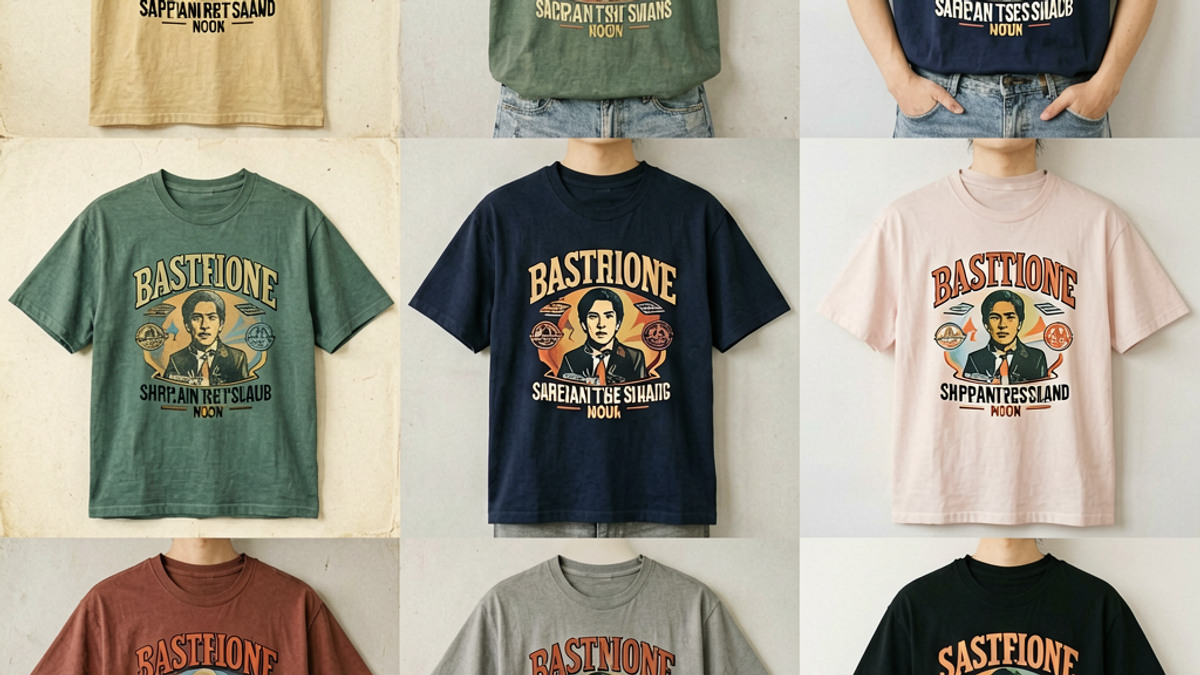
Graphic tees are still trending in 2026 because they are the cheapest garment that combines self-expression, subculture signaling, and wearable versatility. No other category delivers all three at...
Sylvie Vance
•
Graphic tees are still trending in 2026 because they are the cheapest garment that combines self-expression, subculture signaling, and wearable versatility. No other category delivers all three at the same price point. As long as that combination remains rare, the tee will keep its cultural weight.
Trend cycles in fashion usually end when a category becomes too easy to copy or too disconnected from the values of the moment. The graphic tee has survived both pressures because the format itself keeps adapting.
Why trends keep cycling back to graphics
Three reasons the format is durable:
The format is a canvas, not a silhouette. Tees themselves are a stable silhouette; what changes is what gets printed on them. The garment survives every trend cycle because the trend lives in the print, not in the cut.
Prints age independently of shirts. A 1975 tour tee is still wearable today even though the print is from another era. Few other garments offer that archival quality.
A small brand can produce 50 tees with original artwork in two weeks. The format's low production barrier keeps the supply side fresh.
Production is fast and cheap.
The 2026 forces driving the trend
Three current dynamics are accelerating the format's relevance:
AI-generated and AI-assisted art. Independent designers can now produce original artwork at a pace and quality that would have required a studio a decade ago. The supply of fresh graphic content has exploded.
Nostalgia cycles accelerating. Generational turnover means the 1990s and early 2000s keep getting rediscovered by new buyers. Each cycle pulls the graphic tee back into rotation.
Drop culture maturing. Limited drops and numbered runs have become mainstream retail mechanics, not just streetwear tactics. The tee is the format that benefits most because it is the easiest product to drop.
Generational shifts in how tees are worn
Each generation since the 1990s has worn graphic tees differently:
1990s generation. Graphic tees were identity markers — band tees, sports tees, brand tees. Worn as the loudest piece in a relatively simple outfit.
2000s generation. Ed Hardy and Affliction-era graphic tees pushed the format toward maximalism — rhinestones, large back prints, and ironic slogans. The format drifted toward costume.
2010s generation. Supreme, Bape, and the rise of drop culture pulled the format back toward minimalism. Smaller front prints, recognizable logos, scarcity-based value.
2020s generation. Independent labels, AI-assisted art, oversized fits, and the post-pandemic shift toward relaxed silhouettes. The format is louder than the 2010s but more curated than the 2000s.
Why graphic tees survived the minimalist backlash
The mid-2010s minimalist trend threatened to push graphic tees out of the conversation. The format survived for two reasons:
Independent labels kept the format interesting. Small brands continued to ship original artwork that mainstream retailers wouldn't carry. The energy of the format stayed alive even when the wider trend cooled.
Vintage and resale markets kept demand visible. A thriving secondhand market for genuine 1970s-1990s tees reminded new buyers that graphic tees are wearable archives, not disposable trend pieces.
Both forces pulled the format toward quality over quantity, which is the position it occupies today. The current generation of buyers is more willing to spend $50-80 on a single considered tee than $20 on five forgettable ones.
Where the trend is heading next
Three directions worth watching:
More independent labels, fewer mega-brands. The buyer is shifting toward smaller drops with more original artwork, away from mass-market prints.
Prints as wearable content. Some brands are starting to treat tees as physical media — limited series with narrative arcs, collaboration drops with musicians or artists, and seasonal themes that connect across releases.
Sustainability as a print subject. Expect more tees carrying environmental and ethical messaging — and more buyers paying attention to how those tees were actually made.
Frequently Asked Questions
Why are graphic tees still trending?
Because they are the cheapest garment that combines self-expression, subculture signaling, and wearable versatility. The format is a canvas, not a silhouette — trends live in the print, not in the cut, which lets the tee survive every fashion cycle.
Will graphic tees ever go out of style?
Unlikely in the near term. The format's combination of low price, high expressiveness, and easy production keeps the supply side fresh and the demand side engaged. What changes is the print aesthetic, not the format itself.
What makes graphic tees trend-proof?
Three structural features: the silhouette is stable (a tee is a tee), prints age independently of the garment, and production is cheap enough that small brands can ship original artwork quickly. These three features keep the format viable through every cycle.
What is the next big graphic tee trend?
Three directions are accelerating: more independent labels shipping smaller drops with original artwork, prints as wearable content (narrative series and seasonal themes), and sustainability as both a print subject and a production priority.
Why Are Graphic Tees Still Trending in 2026? | Stryxen Studio Blog
 Sylvie Vance