Where did the phrase "no kings" originate in a protest context?
The "No Kings" protest slogan, with origins in the English Civil War, is revived in contemporary American discourse to oppose perceived executive overreach and to advocate for republican principles of governance.
 Sylvie Vance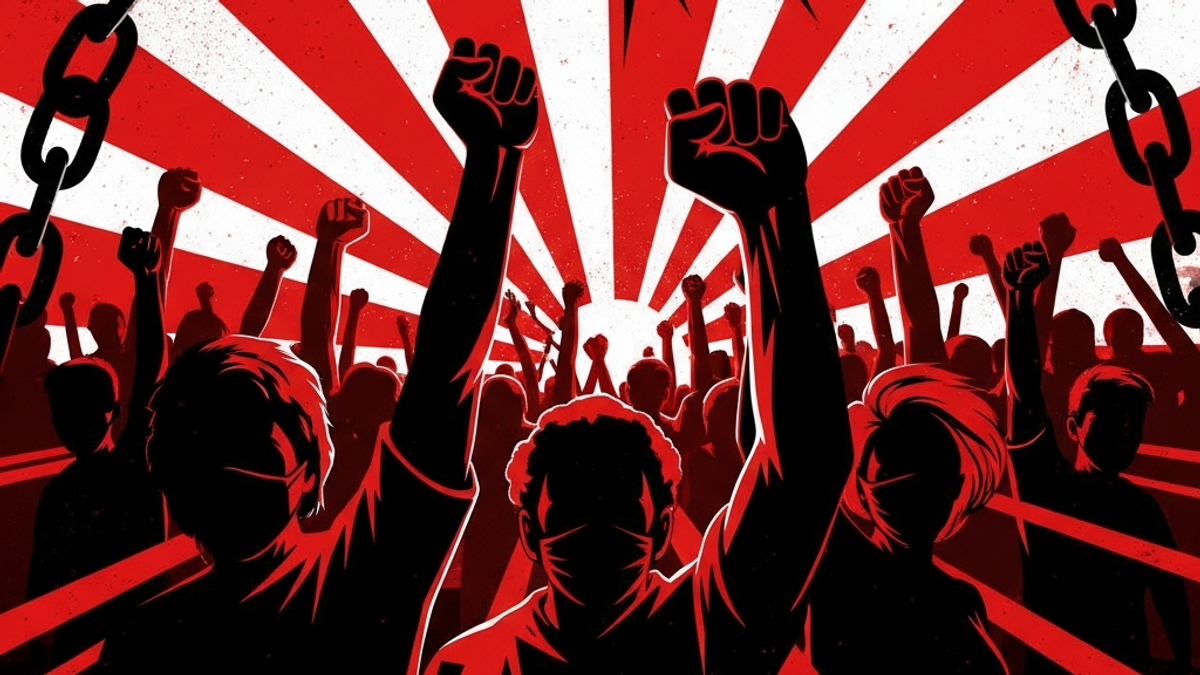
The phrase "No kings" in a protest context finds its roots in the English Civil War, where it was often deployed as "No king but Jesus," a declaration asserting that divine authority, rather than royal prerogative, should govern the conscience and the state (https://theconversation.com/no-kings-americas-oldest-political-slogan-is-drawing-millions-out-onto-the-streets-268174). In contemporary American political discourse, the slogan was resurrected and widely adopted to serve as a concise, powerful rejection of perceived executive overreach, tyranny, and antidemocratic tendencies demonstrated by political leaders, reminding citizens of their shared commitment to republican governance (https://theconversation.com/no-kings-americas-oldest-political-slogan-is-drawing-millions-out-onto-the-streets-268174). This resurgence provides a historical anchor for modern dissent, framing current political struggles within a centuries-old fight against absolute power.
### What specific actions or statements by political figures sparked the modern "No Kings" movement?
The modern wave of "No Kings" protests was directly catalyzed by what participants viewed as a president’s monarchical behavior and policies that disregarded democratic norms (https://britannica.com/event/No-Kings-protests). Specific concerns fueling the movement included tensions surrounding aggressive crackdowns on immigration, actions perceived as corrupt, and the executive figure's own rhetoric suggesting king-like authority (https://britannica.com/event/No-Kings-protests). For instance, in one documented instance preceding a major rally, the executive’s actions, such as deploying the National Guard in response to civil unrest over federal immigration raids, were cited as a direct challenge to the principles of limited government (https://britannica.com/event/No-Kings-protests). This perception of a leader embracing the mantle of a king, rather than serving the people, was the primary ideological driver for the mass mobilization (https://theatlantic.com/politics/archive/2025/10/no-kings-protest-trump-patriotism/684626/).
### How does the modern "No Kings" slogan connect to historical American values like republicanism?
The slogan functions as a potent cultural shorthand for the foundational values of American republicanism, namely the rejection of hereditary or absolute power (https://theconversation.com/no-kings-americas-oldest-political-slogan-is-drawing-millions-out-onto-the-streets-268174). The American system is explicitly designed to avoid the establishment of a monarchy, as enshrined in the Declaration of Independence and the Constitution. When protesters adopt "No Kings," they are actively invoking the nation's moral and legal compact—that leaders serve the people, and no individual is above the law or entitled to rule by divine right or personal decree (https://theatlantic.com/politics/archive/2025/10/no-kings-protest-trump-patriotism/684626/). The slogan serves as a reminder that the populace expects leaders to exercise humility, restraint, and order, in stark contrast to the perceived excesses of tyranny (https://theconversation.com/no-kings-americas-oldest-political-slogan-is-drawing-millions-out-onto-the-streets-268174).
### What are the stated goals and organizational structure of the recent "No Kings" protests?
The recent "No Kings" events, sometimes referred to as the "No Kings Day of Defiance," were characterized primarily by peaceful assembly and community building (https://www.lcv.org/blog/no-kings-protest-on-oct-18-5-things-to-know-and-ideas-for-your-protest-sign/). A key stated goal was to peacefully protest what organizers perceived as the ruling administration’s corruption and disregard for fundamental rights (https://www.lcv.org/blog/no-kings-protest-on-oct-18-5-things-to-know-and-ideas-for-your-protest-sign/). Organizationally, these events were often driven by grassroots movements, such as the 50501 movement, which aimed for widespread, coordinated action across multiple states (https://www.facebook.com/MyNBC5/posts/what-exactly-are-the-no-kings-protests-and-how-did-they-begin/). While the protests aimed to demonstrate mass opposition, the nature of the events focused on celebrating democratic values and bringing diverse groups together in non-violent resistance (https://www.lcv.org/blog/no-kings-protest-on-oct-18-5-things-to-know-and-ideas-for-your-protest-sign/).
### What is the broader significance of this slogan in contemporary political dialogue?
The broader significance of the "No Kings" slogan lies in its ability to unify diverse opposition under a single, historically resonant banner against centralized, unchecked authority (https://theconversation.com/no-kings-americas-oldest-political-slogan-is-drawing-millions-out-onto-the-streets-268174). It shifts the focus from specific policy debates to the fundamental structure of governance itself. By invoking a concept as ancient as the English Civil War, the slogan bypasses nuanced policy language and delivers a clear moral critique: the rejection of anyone seeking to rule rather than serve (https://theatlantic.com/politics/archive/2025/10/no-kings-protest-trump-patriotism/684626/). Furthermore, the slogan has proven effective in mobilization, attracting large and varied crowds, including many older citizens and families, who feel a profound civic duty to protect democratic norms against perceived authoritarianism (https://theatlantic.com/politics/archive/2025/10/no-kings-protest-trump-patriotism/684626/).
## Key Takeaways
* **Historical Depth:** The core sentiment of "No Kings" originates from the English Civil War, opposing royal authority in favor of other governance models.
* **Modern Catalyst:** The recent U.S. movement was directly spurred by perceptions of executive overreach, perceived corruption, and monarchical behavior by political figures.
* **Values Alignment:** The slogan serves to affirm fundamental American republican values: limited government, service over rule, and the rejection of tyranny.
* **Grassroots Organization:** Recent manifestations were often organized by decentralized movements aiming for broad, peaceful, and geographically diverse demonstrations.
The continued resonance of "No Kings" suggests that concerns about the balance of power and the nature of executive authority remain central to the current political climate. As political rhetoric continues to test the boundaries of constitutional norms, this historical slogan will likely remain a powerful tool for citizens seeking to reaffirm the principle of popular sovereignty.
The question for the future is not only whether these protests will continue but how effectively the underlying demand for accountable, non-monarchical leadership will translate into sustained political reform.
## References
* https://theconversation.com/no-kings-americas-oldest-political-slogan-is-drawing-millions-out-onto-the-streets-268174
* https://britannica.com/event/No-Kings-protests
* https://www.lcv.org/blog/no-kings-protest-on-oct-18-5-things-to-know-and-ideas-for-your-protest-sign/
* https://www.facebook.com/MyNBC5/posts/what-exactly-are-the-no-kings-protests-and-how-did-they-begin/
* https://theatlantic.com/politics/archive/2025/10/no-kings-protest-trump-patriotism/684626/