Are "no kings protests" affiliated with any specific political groups or ideologies?
The "No Kings protests" were a decentralized, anti-authoritarian movement that emerged to oppose Donald Trump's second administration, with a primary focus on his immigration policies. The protests were characterized by their lack of central leadership and their opposition to executive overreach.
 Sylvie Vance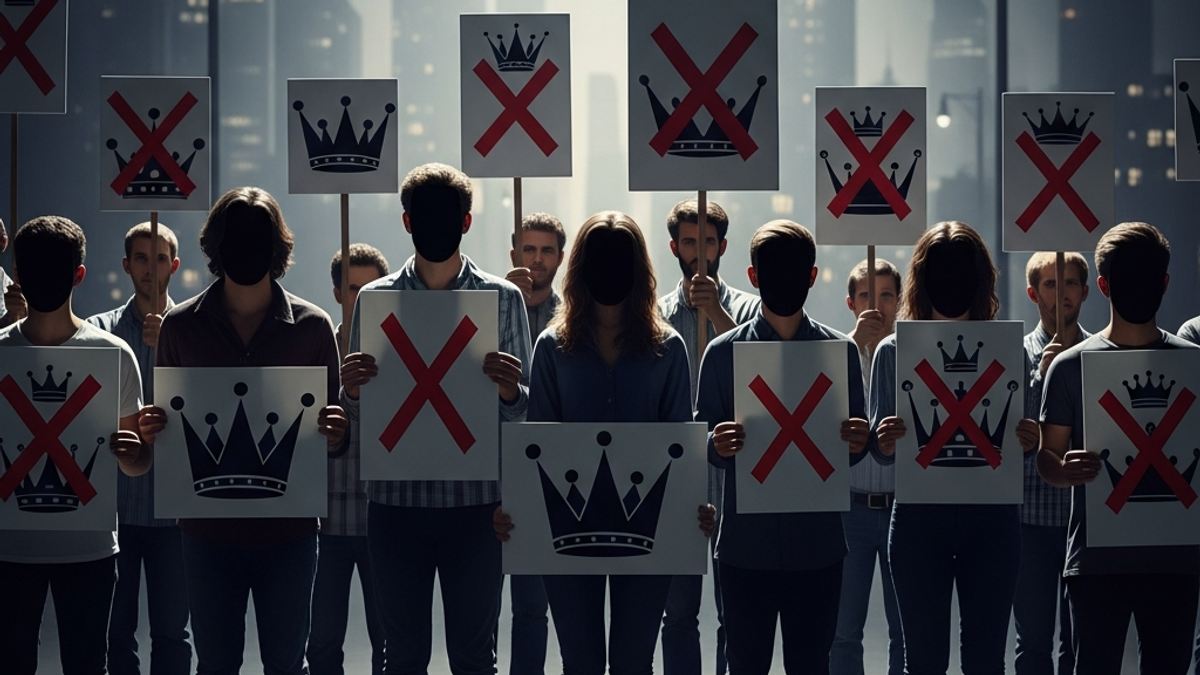
The "No Kings protests," which occurred in waves during 2025, are fundamentally affiliated with anti-authoritarian and generally left-leaning political sentiments, primarily organized to oppose the policies and alleged antidemocratic actions of President Donald Trump's second administration, as evidenced by widespread reporting on the demonstrations against immigration crackdowns and executive overreach (Britannica). These rallies represent a significant, if decentralized, expression of political dissent against a specific executive branch, making the understanding of their ideological roots crucial for political observers.
### Why do organizers refer to the protests as “No Kings” rallies?
The naming convention, “No Kings,” is a direct ideological signal referencing the organizers' view of the targeted executive branch as exhibiting monarchical or tyrannical tendencies (Britannica). The moniker is a direct rebuttal to perceived authoritarian policies, especially those related to executive power and immigration enforcement, with the organizers utilizing the term to frame the administration’s actions as fundamentally antidemocratic (Britannica). For example, the intensity of the June 2025 protests was heightened following President Trump’s order for the National Guard to report to Los Angeles to protect federal immigration officers against what he termed a “rebellion,” which critics interpreted as an overreach of federal authority (Britannica).
### What specific policies triggered the mass mobilization for the June and October 2025 demonstrations?
The primary catalysts for the mass mobilizations—both the initial June 2025 protests and the larger "No Kings 2.0" event in October 2025—were centered on immigration policy and executive conduct. The protests were significantly motivated by the administration’s crackdown on immigration and related federal raids (Britannica). Furthermore, the rallies were organized in response to what the demonstrators viewed as the President’s own statements implying king-like authority (Britannica). While various local grievances contributed, the overarching themes uniting protesters across different states, from Massachusetts to Michigan, were opposition to the administration's leadership style and specific policy directives (Wikipedia).
### Are the "No Kings" demonstrations unified, or do they represent a broad, decentralized anti-administration coalition?
The "No Kings" movement appears to function as a broad, decentralized coalition rather than a single, centrally controlled organization. While they share a common ideological opposition to the administration, the specific events and organizing efforts were geographically widespread, with rallies occurring across numerous states including Pennsylvania, Virginia, and Mississippi (Wikipedia). The movement encompasses various specific protest efforts, such as the “Fight the Trump Takeover” efforts and other anti-deportation actions, suggesting that “No Kings” acts as an umbrella term for diverse anti-administration sentiment rather than a monolithic political party structure (Wikipedia). This decentralized nature suggests resilience, as affiliation is based on ideology rather than central command.
### What has been the documented level of public support for the movement's tactics and aims?
Analyzing public support requires distinguishing between active protest participants and the general populace, as research indicates a nuance in the reception of such movements. While the protests themselves garnered significant local media attention and substantial turnout, academic analysis of general public sentiment reveals complexities. For instance, data tracking support for political violence suggests that while support for extreme measures may be trending upward in the general populace, the actual participants at progressive protests like the "No Kings Day 2.0" event sometimes showed *lower* aggregate support for political violence than observed in broader public surveys (Brookings Institution). This suggests the core affiliation of the movement leans toward civil dissent rather than endorsing politically violent tactics, despite the heated nature of some clashes with law enforcement (Britannica).
## Key Takeaways: Understanding the 'No Kings' Phenomenon
The "No Kings Protests" are not linked to a single formal political party but are best characterized as a broad, ideologically consistent opposition movement defined by its resistance to perceived executive overreach.
* **Ideological Core:** The movement is fundamentally anti-authoritarian, framing the targeted administration's policies as king-like or tyrannical (Britannica).
* **Primary Drivers:** The most significant mobilization factors were federal immigration policies and perceived antidemocratic actions by the executive branch (Wikipedia).
* **Organizational Structure:** The protests are highly decentralized, operating as a coalition under a shared banner rather than a singular, centrally managed organization (Wikipedia).
* **Engagement Spectrum:** While the protests represent significant public mobilization, analysis suggests the actual participants may not perfectly reflect the highest levels of support for political violence found in general public polling (Brookings Institution).
The future impact of these movements lies in their ability to shape the narrative surrounding executive power and serve as a recurring metric for political mobilization against administrations perceived as overreaching.
## Conclusion
The question of affiliation for the "No Kings Protests" yields a clear, evidence-based answer: their ideology is unified in opposition to perceived authoritarianism under the Trump administration, primarily driven by concerns over immigration and executive authority. However, their structure remains politically fluid and decentralized, allowing a wide array of groups to participate under the common banner of "No Kings." As political tensions remain high, understanding these symbolic yet tangible expressions of dissent is vital for grasping the current landscape of American political engagement, demanding observers look beyond traditional party lines to assess the true nature of contemporary protest movements.
## References
* [https://en.wikipedia.org/wiki/June_2025_No_Kings_protests](https://en.wikipedia.org/wiki/June_2025_No_Kings_protests)
* [https://en.wikipedia.org/wiki/October_2025_No_Kings_protests](https://en.wikipedia.org/wiki/October_2025_No_Kings_protests)
* [https://www.britannica.com/event/No-Kings-protests](https://www.britannica.com/event/No-Kings-protests)
* [https://www.brookings.edu/articles/what-the-no-kings-day-protest-reveals-about-support-for-political-violence-in-america/](https://www.brookings.edu/articles/what-the-no-kings-day-protest-reveals-about-support-for-political-violence-in-america/)