
Why Are Graphic Tees Still Trending in 2026?
Graphic tees survive because they are the cheapest canvas for personal style with the longest shelf life. Every other garment on the rack is a silhouette; a graphic tee is a billboard, a zine...
 Sylvie Vance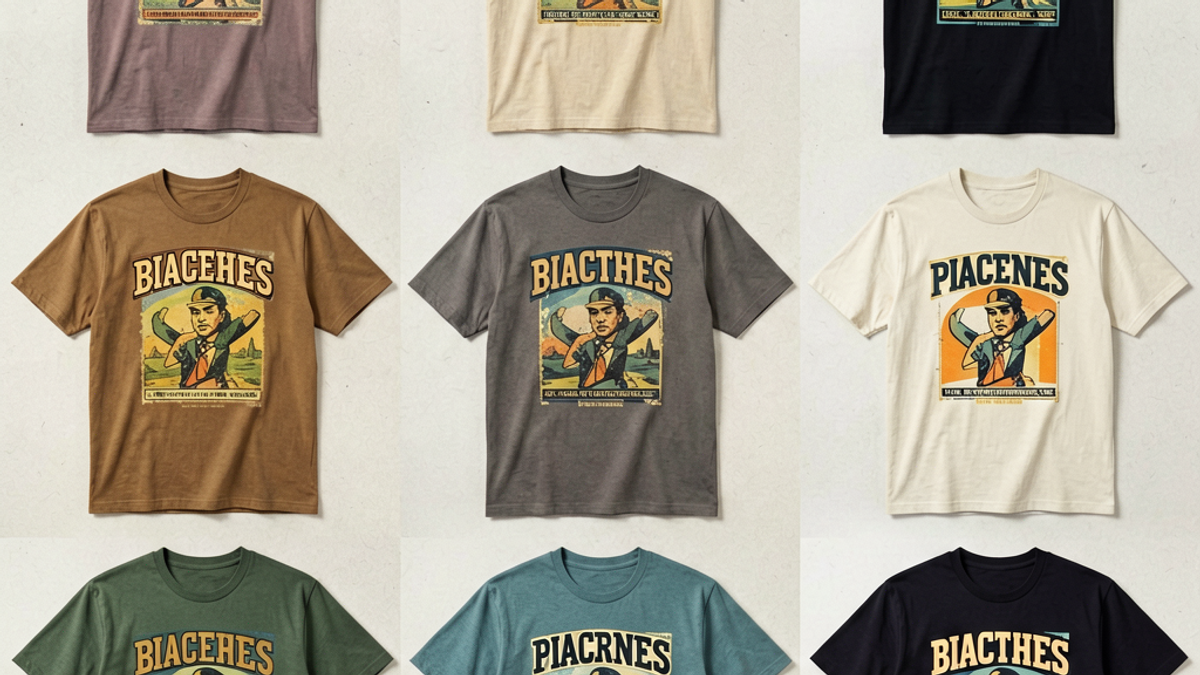
Graphic tees survive because they are the cheapest canvas for personal style with the longest shelf life. Every other garment on the rack is a silhouette; a graphic tee is a billboard, a zine cover, a one-line joke you can throw on with jeans and walk out the door. When budgets tighten and wardrobes shrink, the piece that does the most talking per dollar wins. That's the tee, and that's why 2026 is its year again.
Why trends keep cycling back to graphics
Fashion moves in long, lopsided loops. Tailored outerwear and tailored trousers swing back roughly every 25 to 30 years. Graphic tees never really leave. What changes is the print, not the garment. A 1992 skate-brand box logo and a 2024 AI-rendered monster share the same cotton rectangle — only the ink is new.
The reason is structural. A jacket is a technical object: shoulder shape, lapel width, button stance, lining. A graphic tee is a frame around a picture. The frame rarely dates because the eye reads the image first and the cut second. Designers discovered decades ago that if you want a trend to be easy to enter and hard to get bored of, you put it on a tee.
Three forces keep the wheel turning. First, the barrier to making a print is almost zero — anyone with a screen and a computer can drop a design. Second, prints expire in 18 to 36 months, which gives every brand a built-in reason to reissue. Third, secondhand markets price old graphics like trading cards, so each cycle has a heritage pull of its own.
There's also a cultural math problem working in the tee's favor. Younger buyers have less disposable income than any cohort in twenty years, and they spend a higher share of it on items that signal identity rather than status. A $45 graphic tee with a print your friends recognize is a more efficient signal than a $200 plain sweatshirt that says nothing. When the budget shrinks, the garment that compresses the most meaning per dollar wins, and the tee has been winning that contest for forty years.
The 2026 forces driving the trend
What's different about this cycle is the supply side. Three forces are pushing graphics harder than the last few revivals combined.
AI-generated art turned every brand into a print studio
Two years ago, launching a graphic line meant commissioning illustrators, negotiating rights, and waiting six weeks. Now a small label can produce 200 unique prints in a week using generative tools, then filter the strongest. The cost per design has collapsed, and so has the cost of failure. Brands that used to release six tees a season are releasing sixty, and the format is built for that volume.
Nostalgia is on a 25-year delay
The Y2K wave peaked around 2020. The 90s skate wave peaked around 2015. In 2026, the cultural memory being mined is the late-2000s Tumblr era — band tees, ironic slogans, low-fi photo prints, and the first wave of streetwear-as-streetwear. For a generation that was 12 in 2009, those references now read as the original. They never got to wear them the first time, so they're wearing them now.
Drops replaced seasons
Fast fashion used to mean restocking. The streetwear playbook replaced that with a single Friday drop, 200 units, sold out by noon. A graphic tee is the perfect drop product: cheap to make in small runs, easy to ship, and the print itself does the marketing. Every brand that moved to drops moved to tees, and every brand still on a seasonal calendar is being forced to copy the format.
The economics matter. A hoodie or a jacket carries higher production risk, longer lead times, and stricter size runs. A tee can be printed, packed, and shipped in a week, which means brands can test a print in 50 units and reorder in 500 if it moves. That flexibility is what lets small labels punch above their weight — and it's why even heritage houses now treat the tee as the front line of every collection.
Generational shifts in how tees are worn
The tee used to be a base layer. In 2026 it's the top layer. That sounds small. It is actually the entire shift.
Gen Z treats the graphic as the outfit. The cut, the fabric, the fit of the shoulders — all of that has receded into the background. A two-dollar blank from a wholesale site will sell for $45 if the print is right, because the print is the reason to buy it. Older generations treated the tee as something to wear under a jacket; the current generation treats the jacket as something to wear over the tee.
The styling has changed too. Oversized is the default fit now — a 1995 medium reads as a 2026 small. Tees are layered over long sleeves, under open knits, with wide-leg denim and technical pants. The garment has become modular. A print that looked out of place in 2014 looks like a focal point in 2026, because the silhouette around it is doing something different.
There's also a quieter shift. Vintage and deadstock have moved from a niche hobby to a default shopping channel. Resale platforms have made it normal to pay $80 for a 2004 tee in good condition, which has trained a whole cohort of buyers to see the graphic as the durable asset and the cotton as the disposable wrapper.
Where the trend is heading next
Graphics aren't going anywhere. What's changing is the supply curve and the production rhythm. Expect more micro-drops, more collaboration prints (a designer plus a band, plus a brand, plus an algorithm), and more tees that exist as objects rather than apparel — the kind you frame, the kind you patch, the kind that comes with a download code.
Expect the format to keep stretching too. Cut-and-sew hoodies, rugby shirts, and boxy button-downs are starting to take the print-first treatment, but the tee remains the cleanest canvas. As long as a 100% cotton rectangle is cheaper to print on than almost any other surface, the graphic tee will keep winning the cost-per-impression race against every other garment in the closet.
Key takeaways
Graphic tees are the cheapest self-expression available — the print does the work the silhouette used to.
The 2026 cycle is being driven by AI art, late-2000s nostalgia, and a drop-based release calendar.
Gen Z wears the tee as the top layer, not a base — oversized fits and modular layering are now the default.
The garment is moving toward object status: framed, patched, archived, and resold like trading cards.
Expect more micro-drops and collaboration prints, with the tee remaining the cleanest canvas in any closet.
The bottom line
Trends that survive two decades usually survive for a structural reason, not a stylistic one. The graphic tee is the only garment in your closet that can change its meaning every year without changing its shape. If you're rebuilding a wardrobe around pieces that earn their space, the tee is the highest-ROI item per dollar you can buy — and right now is when the prints are strongest. Browse the current drops in the Stryxen Studio collection to see which 2026 graphics are worth their weight in cotton.
Frequently Asked Questions
Why are graphic tees still popular in 2026?
Graphic tees are still popular because they are the cheapest way to express personal style and the print — not the cut — is what changes with each trend. A 2026 tee and a 1996 tee share the same shape; only the artwork is new. That makes them the easiest garment to reissue, restyle, and resell, which keeps demand high across every generation.
What kind of graphic tees are trending right now?
The strongest 2026 trends are AI-generated artwork, late-2000s Tumblr-era nostalgia (band tees, ironic slogans, low-fi photo prints), and collaboration drops between small labels and individual artists. Oversized fits, heavyweight cotton, and distressed or vintage-washed finishes are dominating the silhouette.
How should a graphic tee fit in 2026?
In 2026 the default fit is oversized — what would have been a 1995 medium is now a small. Tees are styled as the top layer, often over a long sleeve or under an open knit, paired with wide-leg denim or technical pants. The graphic is treated as the focal point of the outfit, not a base layer.
Are graphic tees a good investment piece?
As a pure price-per-wear item, yes — a quality graphic tee at $40 to $60 worn weekly costs less per year than most denim. The caveat is that most prints lose cultural value after 18 to 36 months, so the investment is in the cotton and construction, not the artwork. The exception is limited drops and deadstock, which can appreciate like collectibles.