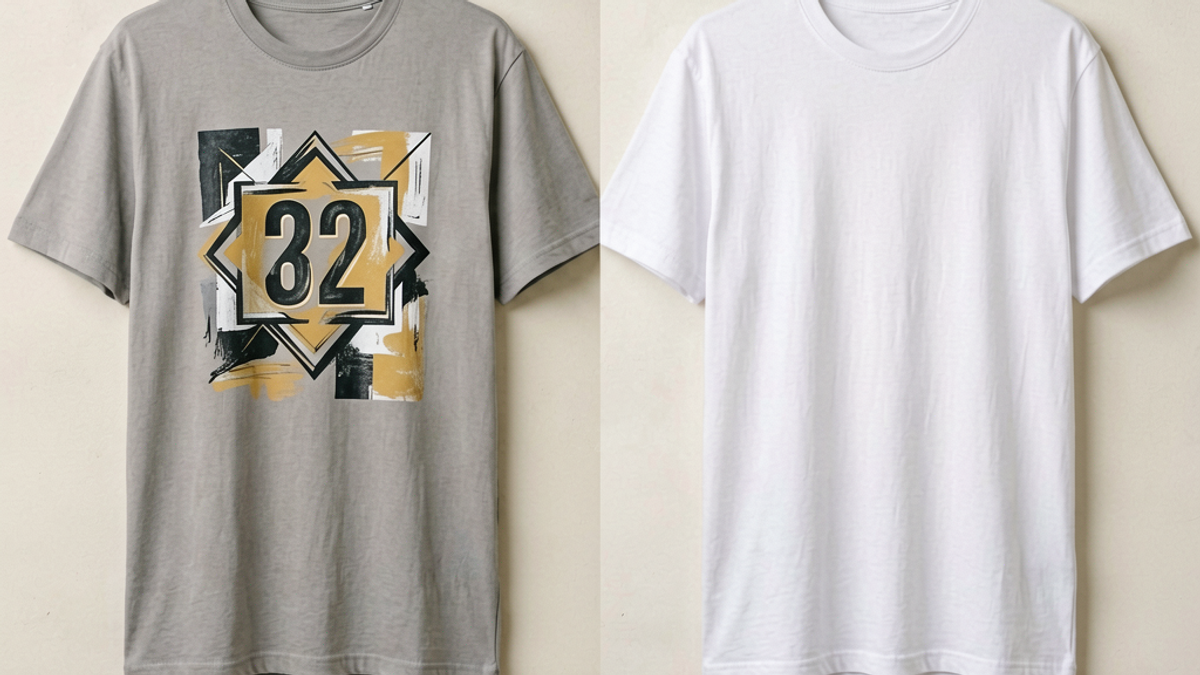
Graphic Tee vs Plain Tee: Which One Should You Actually Buy?
The honest answer: own both, but the ratio depends on how often you actually leave the house vs. how often you want to be noticed when you do. A plain tee is the most versatile piece in any...
Sylvie Vance
•
The honest answer: own both, but the ratio depends on how often you actually leave the house vs. how often you want to be noticed when you do. A plain tee is the most versatile piece in any wardrobe — it disappears into outfits, absorbs layering, and survives every trend. A graphic tee is a deliberate signal: it announces taste, mood, and brand loyalty. Most streetwear-leaning wardrobes settle around a 3 graphic : 5 plain ratio as a starting point, then shift based on lifestyle, climate, and how often you socialize in person.
Key Takeaways
Plain tees win on versatility and cost-per-wear — a $25 heavyweight tee worn twice a week pays for itself in under three months.
Graphic tees win on identity and memorability — they're the pieces people actually remember you wearing.
Occasion coverage is the deciding variable — remote workers lean 2:6, social/lifestyle buyers lean 4:4 or 5:3 toward graphic.
Quality matters more on plain tees because flaws show on solid color; on graphic tees, print durability is the failure point.
The 3:5 ratio is a starting line, not a finish line — track what you actually reach for over a month, then rebalance.
Graphic Tee vs Plain Tee: The Honest Comparison
Side-by-side, the two categories trade wins on different axes. A plain tee is a chameleon — it adopts the personality of whatever you pair it with. A graphic tee is a lead actor — it demands the rest of the outfit support the story. Neither is objectively better. The right choice depends on what you need from the piece on a given day, and over a season, on what your calendar actually looks like.
Below is the comparison most product pages skip. The ratings are calibrated for an adult streetwear buyer who owns jeans, one or two jackets, and rotates sneakers — not a fashion editor with unlimited budget, and not a 16-year-old building a first wardrobe from scratch.
Versatility: plain tees score higher, full stop. A black or white plain tee works under a suit jacket, under a flannel, with tailored trousers, or solo with denim. A graphic tee locks you into a narrower styling window — the wrong jacket and the look collapses.
Identity expression: graphic tees win decisively. A plain tee says nothing about you beyond "I own a plain tee." A well-chosen graphic tee says what genres you like, what brands you follow, what mood you're in. For streetwear fans, that's the whole point.
Cost-per-wear: plain tees almost always win on paper. A $25 premium plain tee worn 50 times over its lifespan is $0.50 per wear. A $45 graphic tee worn the same 50 times is $0.90 — still cheap, but less efficient. The catch: graphic tees rarely get worn 50 times unless you genuinely love them, which is why the right graphic tee and the wrong graphic tee look so different on a spreadsheet.
Occasion coverage: plain tees cover more ground. Date that might be upscale? Plain tee under a blazer. Lazy Sunday? Plain tee with sweats. Job interview at a creative agency? Plain tee with chinos. Graphic tees cover fewer scenarios but dominate the ones they do cover — concerts, street-style outings, friend dinners where you actually want to be looked at.
Trend longevity: plain tees age like a hardcover book. Graphic tees age like a magazine cover — sometimes for decades, often for a season. The variable is design quality, not category. A graphic tee built around a timeless motif (typography, monochrome art, brand-coded iconography) lasts years. A graphic tee built around a meme or a current event is a six-month piece.
When a Graphic Tee Is the Right Call
Reach for a graphic tee when the goal is recognition, not camouflage. Concerts, street-style outings, art openings, and weekend hangs with people you've just met are all graphic-tee territory. So is any day where your mood matters more than your versatility — a graphic tee is a low-stakes way to declare taste without saying a word.
Graphic tees also earn their spot when they replace an accessory. A loud graphic tee means you can wear plain pants, plain shoes, and a plain jacket without looking underdressed. For people who own minimal accessories, a graphic tee is effectively the cheapest jewelry you can buy. Brands like Stryxen Studio, Stüssy, and Represent design around exactly this — pieces that do the styling work so the rest of the outfit can stay quiet.
The risk is buying graphic tees you only "kind of like." Those end up at the back of the drawer because they require effort to style. A graphic tee you love is the easiest piece in your closet — you put it on, walk out, and stop thinking about it. That distinction is what separates a wearable collection from a merch pile.
When a Plain Tee Is the Right Call
Reach for a plain tee when the rest of the outfit is doing the work. If your jacket, pants, and shoes are the focus — or if you need to blend into a semi-formal setting — a plain tee in black, white, charcoal, or olive is the default. Plain tees are also the right call when you genuinely don't know what to wear, which is more days than most buyers admit.
Plain tees are also the correct foundation layer under anything heavier. A graphic tee under a flannel looks confused; a plain tee under a flannel looks intentional. Same under chore coats, overshirts, leather jackets, and most knitwear. If your wardrobe includes any layering pieces, the plain tees are doing more structural work than the graphic tees are — they just don't get the credit.
The mistake most buyers make is buying cheap plain tees. Because the surface is uncluttered, every flaw shows — pilling at the cuffs, twisting at the hem, thinning at the elbows after eight washes. A $25–$35 heavyweight plain tee (200+ GSM, quality cotton) will outlast three $12 tees and look better the whole time. This is the single easiest quality upgrade in any wardrobe.
The Recommended Streetwear Wardrobe Ratio
For most buyers, the right starting ratio is 3 graphic tees to 5 plain tees, with the plain tees skewed toward black, white, and one mid-tone (charcoal, olive, or navy). That's eight tees total — enough variety to cover a week without repeating, small enough to live in a single drawer. From there, the ratio shifts based on lifestyle.
Remote workers, creatives, and introverts should drift toward 2 graphic : 6 plain. Most of your day is on camera or in low-key environments, where the plain tees do more work and the graphic tees become weekend-only signals.
Social-first buyers, nightlife regulars, and streetwear enthusiasts should drift toward 4 graphic : 4 plain or even 5 graphic : 3 plain. You wear tees to be seen, and the cost-per-wear math shifts because graphic tees get worn more often.
Travelers and one-bag buyers should consider inverting to 1 graphic : 6 plain. The plain tees mix with everything, hide stains better in dark colorways, and reduce decision fatigue on the road. The single graphic tee earns its slot for the one or two nights you want to feel dressed.
Whatever ratio you start with, track what you actually reach for over 30 days. The honest data will surprise most buyers — you probably wear three tees 80% of the time and ignore the rest. Cut the ignored ones, replace with what you actually reach for, and the closet starts to look like your real life instead of an aspirational mood board.
The Bottom Line
Graphic vs plain isn't a real rivalry — they're different tools. Plain tees are the foundation, graphic tees are the accent. Most wardrobes need both, and the right ratio is the one that matches your actual calendar. If you spend more time in front of a screen than a crowd, lean plain. If you treat your clothes as a way to declare taste, lean graphic. Either way, buy fewer pieces, buy better quality, and rotate honestly. For a starting collection built around this exact balance — heavy plain staples alongside graphic tees designed to do the styling work — explore the Stryxen Studio collection and see how the 3:5 ratio shows up in a real drop.
Frequently Asked Questions
Should I buy a graphic tee or a plain tee?
Buy both, but skew toward plain if versatility matters more than self-expression, and toward graphic if you want your tees to do the styling. A common starting ratio for streetwear buyers is 3 graphic : 5 plain — eight tees total, enough variety for a full week.
Are graphic tees worth the extra cost vs plain tees?
On pure cost-per-wear, usually no — a plain tee at $25 worn 50 times beats a $45 graphic tee worn the same number of times. But graphic tees earn their premium in identity and styling: a strong graphic tee replaces an accessory and pulls a whole outfit together.
How many plain tees should I own?
Most adults land between five and eight plain tees as a working rotation, dominated by black, white, and one mid-tone like charcoal or olive. That covers a full week of daily wear with room for laundry and travel.
Can you wear a graphic tee to a semi-formal event?
Rarely, and only in creative industries. The safer move is a plain tee under a structured blazer with tailored trousers. Save the graphic tees for venues that invite them — concerts, creative workplaces, street-style outings.
Graphic Tee vs Plain Tee: Which One Should You Actually Buy? | Stryxen Studio Blog

 Sylvie Vance