When is the targeted launch date for the Artemis II mission?
The Artemis II mission successfully launched on April 1, 2026, carrying a crew to lunar orbit to test systems for future moon landings and deep space missions.
 Sylvie Vance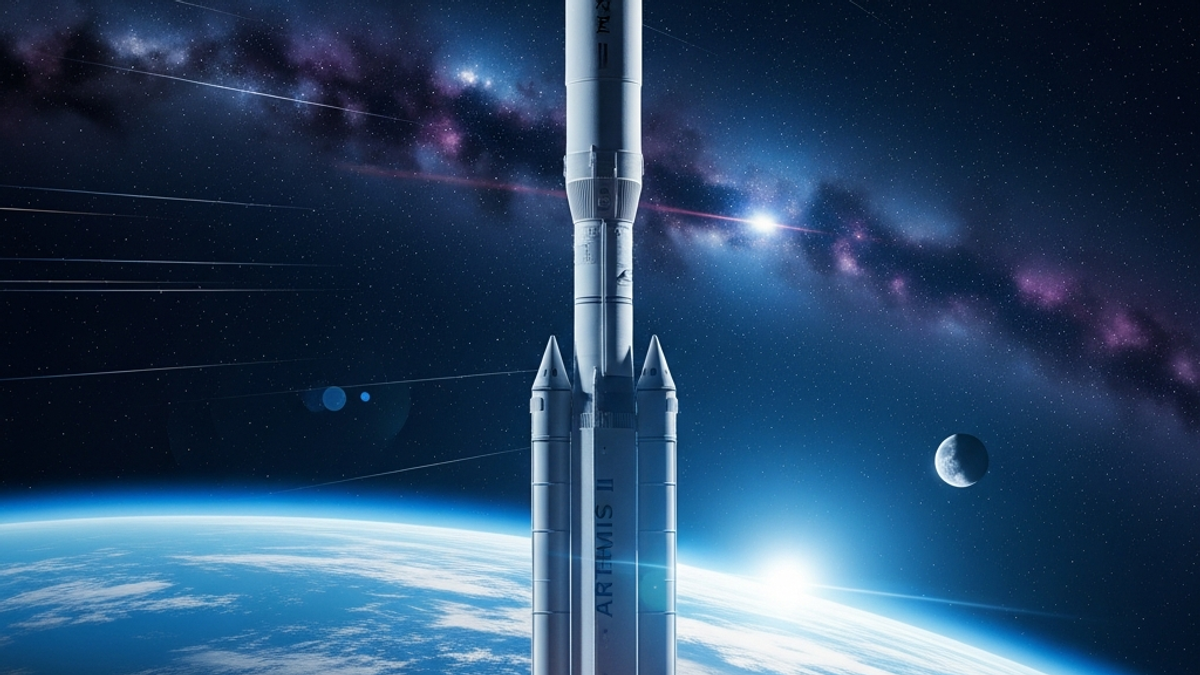
The Artemis II mission, which marks the first crewed flight of the Space Launch System (SLS) rocket and Orion spacecraft to lunar orbit, successfully launched on April 1, 2026 ([NASA.gov](https://www.nasa.gov/image-article/artemis-ii-astronauts-launch-to-moon/)). This historic mission serves as a critical milestone in humanity’s return to deep space, paving the way for future long-term lunar habitation and eventual crewed expeditions to Mars.
### Who are the astronauts selected for the Artemis II mission?
The crew of Artemis II represents a diverse team of experienced professionals tasked with testing the life support and communication systems of the Orion spacecraft during its flight around the Moon. The crew consists of NASA astronauts **Reid Wiseman** (Commander), **Victor Glover** (Pilot), and **Christina Koch** (Mission Specialist), along with Canadian Space Agency (CSA) astronaut **Jeremy Hansen** (Mission Specialist) ([SkyAtNightMagazine.com](https://www.skyatnightmagazine.com/news/when-will-artemis-ii-launch)).
### What is the primary objective of this mission?
The primary objective of Artemis II is to perform a crewed lunar flyby to evaluate the Orion spacecraft's performance and the crew's ability to operate in deep space environments. Unlike the uncrewed Artemis I, this mission is designed to provide real-time data on how life support systems, navigation, and thermal protection fare with humans on board. This mission also serves to validate the systems required for the subsequent landing missions of the Artemis program, which aims to establish a sustainable presence on the lunar surface ([NASA.gov](https://www.nasa.gov/mission/artemis-ii/)).
### Why was the mission delayed from its original targets?
Large-scale space exploration programs, particularly those involving new, complex hardware like the SLS, often face scheduling shifts to ensure absolute mission safety. Leading up to the April 2026 launch, NASA managed various technical hurdles, including a notable rollback of the rocket to the Vehicle Assembly Building (VAB) earlier in the year due to a helium issue identified during fueling tests. These conservative safety protocols are standard in human spaceflight to mitigate risks before committing the crew to the rigors of a deep-space trajectory ([Space.com](https://www.space.com/news/live/artemis-2-nasa-moon-mission-launch-updates-april-2-2026)).
### What does this mission signify for future space exploration?
The success of the Artemis II mission is considered a foundational step for the future of human exploration beyond Low Earth Orbit. By successfully navigating the cislunar environment, NASA and its international partners are gathering essential data on space weather and long-duration life support sustainability. This knowledge is not only vital for recurring lunar missions but is a prerequisite for the more ambitious, longer-duration requirements of a crewed mission to Mars, a feat that has never been accomplished in human history ([Wikipedia.org](https://en.wikipedia.org/wiki/Artemis_II)).
### Key Takeaways
* **Mission Achievement:** Artemis II successfully launched on April 1, 2026, marking a return to crewed lunar exploration.
* **International Collaboration:** The mission features a diverse crew, including international participation from the Canadian Space Agency.
* **Technical Rigor:** The mission launch was finalized only after stringent safety tests, reflecting the extreme demands of human spaceflight.
* **Future Impact:** The data collected during this flyby will directly inform the design and safety requirements for future lunar surface missions and long-term Mars exploration goals.
The transition from uncrewed testing to human-rated deep space exploration represents a massive shift in space policy and technological capability. As we look toward the later stages of the Artemis program, it is clear that these initial missions are the bedrock upon which the next century of cosmic discovery is built. The successful departure of the Artemis II crew serves as a testament to the meticulous planning and interdisciplinary engineering that defines modern space exploration.
## References
* [NASA.gov - Artemis II: NASA's First Crewed Lunar Flyby in 50 Years](https://www.nasa.gov/mission/artemis-ii/)
* [NASA.gov - Artemis II Astronauts Launch to Moon](https://www.nasa.gov/image-article/artemis-ii-astronauts-launch-to-moon/)
* [Sky at Night Magazine - NASA Artemis II Launch Dates](https://www.skyatnightmagazine.com/news/when-will-artemis-ii-launch)
* [Space.com - Artemis 2 LIVE: Orion astronauts headed to the moon](https://www.space.com/news/live/artemis-2-nasa-moon-mission-launch-updates-april-2-2026)
* [Wikipedia - Artemis II](https://en.wikipedia.org/wiki/Artemis_II)