What type of rocket will be used to launch Artemis II?
NASA will utilize the powerful Space Launch System Block 1 rocket to propel the Orion spacecraft and its crew on a critical lunar trajectory for Artemis II.
 Sylvie Vance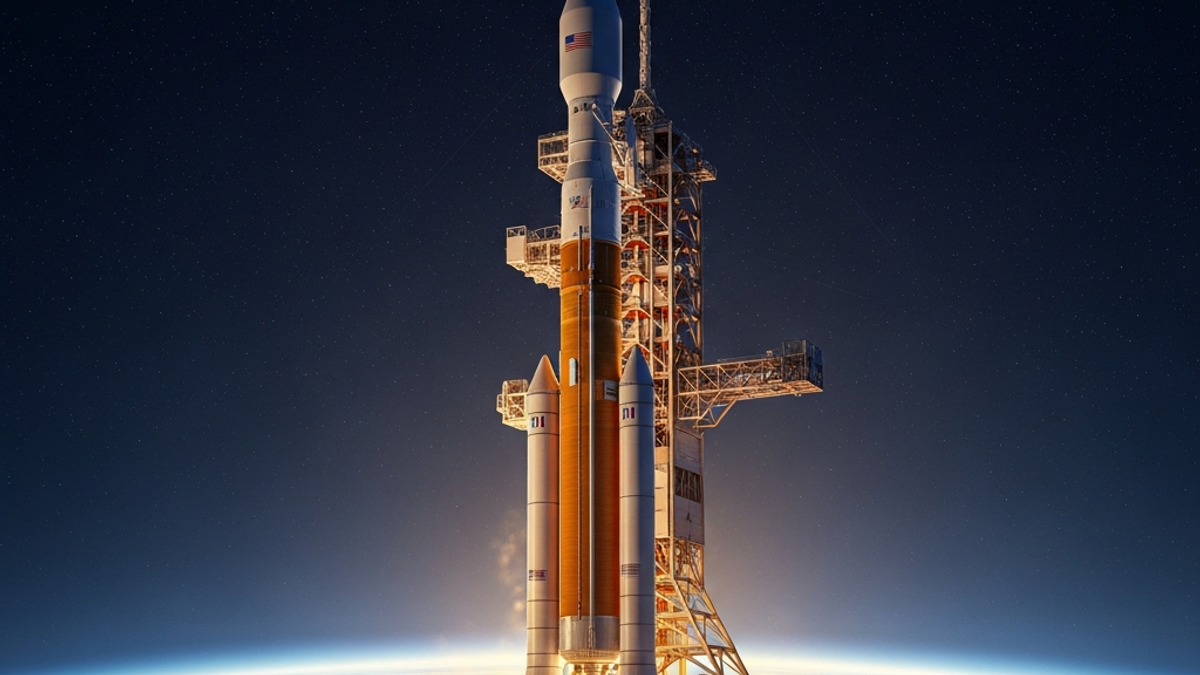
NASA will use the **Space Launch System (SLS)**, a super heavy-lift launch vehicle, to launch the Artemis II mission [https://www.houstonchronicle.com/news/houston-texas/space/article/artemis-ii-nasa-sls-orion-21331298.php]. Specifically, the mission will utilize the **SLS Block 1** configuration, which is designed to propel the Orion spacecraft—carrying its four-person crew—out of Earth's orbit and on a trajectory around the Moon [https://nextspaceflight.com/launches/details/116/]. As NASA’s primary vehicle for deep space exploration, the SLS represents the backbone of the Artemis program, designed to facilitate the first crewed lunar flight since 1972 [https://www.nasa.gov/humans-in-space/space-launch-system/].
### What are the key components of the SLS Block 1 rocket?
The SLS Block 1 configuration is a massive, multi-stage structure composed of several critical elements that work in tandem to achieve the thrust necessary for deep space travel. Its core stage is powered by four heritage RS-25 engines, which are flanked by two five-segment solid rocket boosters—the largest and most powerful boosters ever built for spaceflight [https://www.northropgrumman.com/what-we-do/space/missions/artemis/artemis-ii]. Topping the core stage is the Interim Cryogenic Propulsion Stage (ICPS), which features a single RL10 engine designed to provide the in-space propulsion needed to place the Orion spacecraft on its lunar trajectory [https://www.nasa.gov/wp-content/uploads/2025/12/sls-5558-artemis-ii-sls-reference-guide.pdf].
### How does the SLS compare to previous NASA rockets?
In terms of sheer scale and capability, the SLS is often compared to NASA’s iconic Saturn V moon rocket. While the Saturn V remains slightly taller at 363 feet, the SLS stands at approximately 322 feet, providing the necessary power to carry significantly more complex payloads into deep space [https://www.floridatoday.com/story/tech/science/space/2026/03/27/nasa-sls-rocket-size-florida/89334298007/]. The SLS is significantly more powerful than the Space Shuttle stack, and its design reflects modern aerospace engineering, specifically tailored to support human life in deep space environments rather than the low-Earth orbit missions characteristic of the shuttle era [https://mashable.com/article/nasa-sls-artemis-ii-rollout-facts].
### Why is the SLS essential for the success of Artemis II?
The SLS is critical for Artemis II because it provides the immense power required to transition the Orion spacecraft from a low-Earth orbit into a lunar free-return trajectory [https://www.nasa.gov/wp-content/uploads/2025/12/sls-5558-artemis-ii-sls-reference-guide.pdf]. Unlike smaller commercial launch vehicles, the SLS is uniquely configured to handle the mass of the Orion capsule and its life-support systems, ensuring the crew can safely travel beyond the Moon and return to Earth [https://www.nasa.gov/humans-in-space/space-launch-system/]. The reliability of the SLS is the foundational component of NASA's broader "Golden Age" of lunar exploration, paving the way for future surface missions and potential human travel to Mars [https://www.nasa.gov/directorates/esdmd/common-exploration-systems-development-division/space-launch-system/nasa-artemis-ii-moon-rocket-ready-to-fly-crew/].
### Key Takeaways
* **Rocket Type:** The mission uses the Space Launch System (SLS) Block 1.
* **Mission Role:** The SLS is responsible for launching the crewed Orion capsule on a lunar flyby trajectory.
* **Technical Scale:** It features four RS-25 core engines and two massive solid rocket boosters, making it one of the most powerful launch vehicles ever constructed.
* **Strategic Importance:** It acts as the primary heavy-lift vehicle for the Artemis program, bridge-building the gap between the Apollo era and the future of human exploration to Mars.
The development and deployment of the SLS signify a major transition for NASA toward sustained human presence in deep space. As we approach the launch window for Artemis II, the performance of this vehicle remains the primary indicator of the success of the modern lunar campaign. The successful integration of these complex systems—from the core stage to the ICPS—highlights the evolution of aerospace engineering in the 21st century. As this mission unfolds, the world will be watching to see how these advancements translate into the next chapter of human exploration.
## References
* [How Artemis II rocket will get NASA astronauts to the moon and back - Houston Chronicle](https://www.houstonchronicle.com/news/houston-texas/space/article/artemis-ii-nasa-sls-orion-21331298.php)
* [Artemis II | SLS Block 1 - Next Spaceflight](https://nextspaceflight.com/launches/details/116/)
* [Space Launch System (SLS) - NASA](https://www.nasa.gov/humans-in-space/space-launch-system/)
* [NASA's Artemis II Missions - Northrop Grumman](https://www.northropgrumman.com/what-we-do/space/missions/artemis/artemis-ii)
* [SPACE LAUNCH SYSTEM - REFERENCE GUIDE for ARTEMIS II (PDF)](https://www.nasa.gov/wp-content/uploads/2025/12/sls-5558-artemis-ii-sls-reference-guide.pdf)
* [What is NASA's SLS moon rocket? How, where to see it in Florida - Florida Today](https://www.floridatoday.com/story/tech/science/space/2026/03/27/nasa-sls-rocket-size-florida/89334298007/)
* [Is SLS still the most powerful rocket? 5 facts as Artemis 2 rolls out - Mashable](https://mashable.com/article/nasa-sls-artemis-ii-rollout-facts)
* [NASA Artemis II Moon Rocket Ready to Fly Crew - NASA](https://www.nasa.gov/directorates/esdmd/common-exploration-systems-development-division/space-launch-system/nasa-artemis-ii-moon-rocket-ready-to-fly-crew/)