What are the key differences between Spider-Noir and the main Spider-Man?
Spider-Noir contrasts sharply with Peter Parker through his gritty, 1930s pulp setting, mystical origins, and morally ambiguous methods.
 Sylvie Vance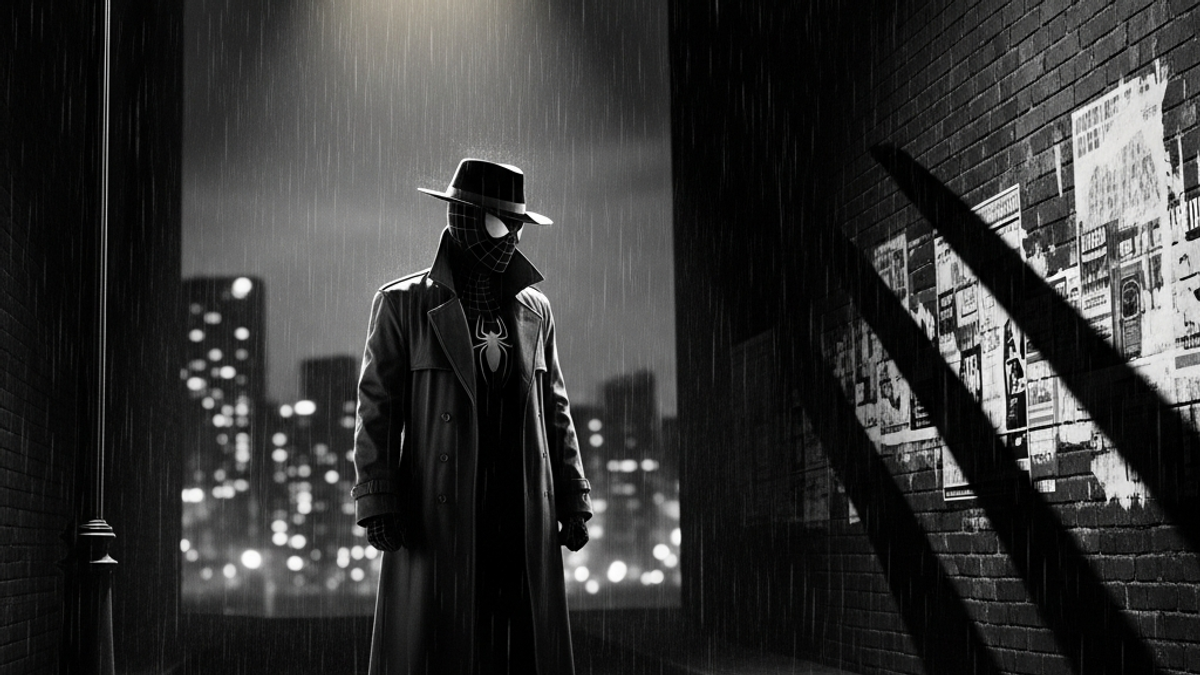
The key differences between Spider-Noir and the main Spider-Man (Peter Parker) center on his gritty, pulp-fiction origins, his moral ambiguity, and the source of his abilities, as he is a version from an alternate Earth (Earth-90214) where he operates in a dark, Depression-era New York, often described as being older, more jaded, and significantly rougher than his mainstream counterpart (https://www.polygon.com/spider-noir-ben-reilly-marvel-comics-explainer/23967929). This contrast between the lighthearted, scientifically-minded Peter Parker and the dark, street-level Noir Spider-Man makes for compelling narrative tension, especially as he is set to feature in a new upcoming series (https://www.polygon.com/spider-noir-ben-reilly-marvel-comics-explainer/23967929).
***
### What is the core environmental and tonal difference between their respective worlds?
Spider-Man, as generally known, operates primarily in the bright, technologically advanced, modern-day New York City, facing threats that often scale to global or interdimensional levels. In contrast, Spider-Noir exists in Earth-90214, a reality steeped in a **pulp-noir aesthetic** inspired by 1930s detective fiction and the Great Depression (https://www.quora.com/What-makes-Spider-Man-Noir-different-from-the-regular-Spider-Man-we-all-know-and-why-should-I-be-excited-about-this-Amazon-series). This tonal shift results in a much darker, more grounded, and often more violent take on the Spider-Man mythos. While Peter Parker deals with super-science and abstract moral quandaries, Noir deals with organized crime, corruption, and survival in a deeply cynical setting (https://www.polygon.com/spider-noir-ben-reilly-marvel-comics-explainer/23967929). Producers have noted this version is significantly **older, more jaded, and far rougher** than the film versions of Peter Parker (https://www.instagram.com/p/DUmB4x9krYB/).
### How do their powers and origin stories diverge?
The primary difference in power stems from the mechanism by which they gained their abilities. While the main Spider-Man (Peter Parker) gains his powers through a scientifically accidental radioactive spider bite, granting him proportional strength, agility, and the Spider-Sense, Spider-Noir’s origin is markedly different and mystical (https://www.quora.com/What-makes-Spider-Man-Noir-different-from-the-regular-Spider-Man-we-all-know-and-why-should-I-be-excited-about-this-Amazon-series). In the comics, Spider-Man Noir often receives his powers from a **mystical amulet** rather than a bite (https://www.quora.com/What-makes-Spider-Man-Noir-different-from-the-regular-Spider-Man-we-all-know-and-why-should-I-be-excited-about-this-Amazon-series). Furthermore, his powers are often depicted as less overtly superhuman than Peter Parker’s, sometimes lacking a strong "Spider-Sense" or relying more heavily on detective skills and firearms appropriate for his grim setting (https://www.reddit.com/r/Spiderman/comments/cya4eq/in_terms_of_powers_what_separates_one/). This shift grounds him more in the detective archetype, aligning him closer tonally to characters like Batman.
### What are the differences in their typical methods and morality?
Peter Parker is fundamentally defined by his guiding mantra: "With great power comes great responsibility," leading him to prioritize saving everyone and upholding a strict moral code, rarely resorting to lethal force. Spider-Noir, conversely, embodies a **darker, more ambiguous morality** necessitated by his brutal environment (https://www.quora.com/What-makes-Spider-Man-Noir-different-from-the-regular-Spider-Man-we-all-know-and-why-should-I-be-excited-about-this-Amazon-series). His methods are often more aggressive, sometimes involving intimidation or even lethal action against truly corrupt figures—a necessity born from the lack of clear legal justice in his world. While the core hero complex remains (he still fights for the innocent), his execution is significantly less polished and more pragmatic, leaning into the "pulp noir" style of resolving conflicts permanently (https://www.esquire.com/entertainment/tv/a70288166/spider-noir-spider-verse-color-transformation-explained-exclusive/).
### How has his identity (Alter Ego) evolved in recent adaptations?
A crucial point of differentiation, particularly relevant to current discussions, concerns the character's alter ego. While the character initially originates from the comic book Spider-Man alternate universes established in *Into the Spider-Verse* (https://www.esquire.com/entertainment/tv/a70288166/spider-noir-spider-verse-color-transformation-explained-exclusive/), recent adaptations, such as the upcoming Amazon series, are taking significant liberties. In the comic source material, the identity is tied to Peter Parker, but adaptations have explicitly changed the character's alter ego to **Ben Reilly** for the new series (https://www.polygon.com/spider-noir-ben-reilly-marvel-comics-explainer/23967929). This signals a major shift in narrative focus, moving away from the classic Peter Parker template altogether and allowing creators to explore an entirely different set of motivations and consequences under the Noir persona.
***
## Key Takeaways: Decoding the Noir Variant
Understanding the differences between the core Spider-Man and Spider-Noir is essential for appreciating the vast scope of the Marvel Multiverse. The key distinctions distill down to:
* **Setting & Tone:** Noir is set in a gritty, Depression-era, pulp-fiction New York, contrasting sharply with the modern, bright setting of the main Spider-Man.
* **Power Source:** Noir’s powers are frequently rooted in mysticism (amulet) rather than pure science (spider bite).
* **Moral Compass:** He operates with a darker, more ambiguous morality, often employing rougher, more decisive methods to combat entrenched corruption.
* **Identity Flexibility:** Recent adaptations demonstrate that the "Spider-Noir" mantle is not exclusively tied to the Peter Parker identity, allowing for exploration under other characters like Ben Reilly.
The future impact of popularizing the Noir variant lies in providing a mature, grounded counterpoint to the usually high-stakes, cosmic threats faced by the main Spidey. It allows storytellers to explore themes of systemic corruption and personal cost outside the traditional superhero framework.
***
The existence of Spider-Noir demonstrates the incredible narrative flexibility inherent in the Spider-Man concept. By transplanting the core idea—a hero burdened by responsibility—into radically different genres and timelines, creators continually refresh the character's appeal. For fans, grappling with these variations—from the techno-optimism of Miles Morales to the rugged cynicism of Noir—offers a deeper appreciation for the enduring power of the mask, regardless of the darkness lurking in the city streets.
## References
* https://www.polygon.com/spider-noir-ben-reilly-marvel-comics-explainer/23967929
* https://www.instagram.com/p/DUmB4x9krYB/
* https://www.quora.com/What-makes-Spider-Man-Noir-different-from-the-regular-Spider-Man-we-all-know-and-why-should-I-be-excited-about-this-Amazon-series
* https://www.reddit.com/r/Spiderman/comments/cya4eq/in_terms_of_powers_what_separates_one/
* https://www.esquire.com/entertainment/tv/a70288166/spider-noir-spider-verse-color-transformation-explained-exclusive/