Who took the photos of Earth from the Artemis II mission?
Artemis II commander Reid Wiseman captured historic Earth photos from the Orion spacecraft, highlighting human space exploration and boosting public outreach.
 Sylvie Vance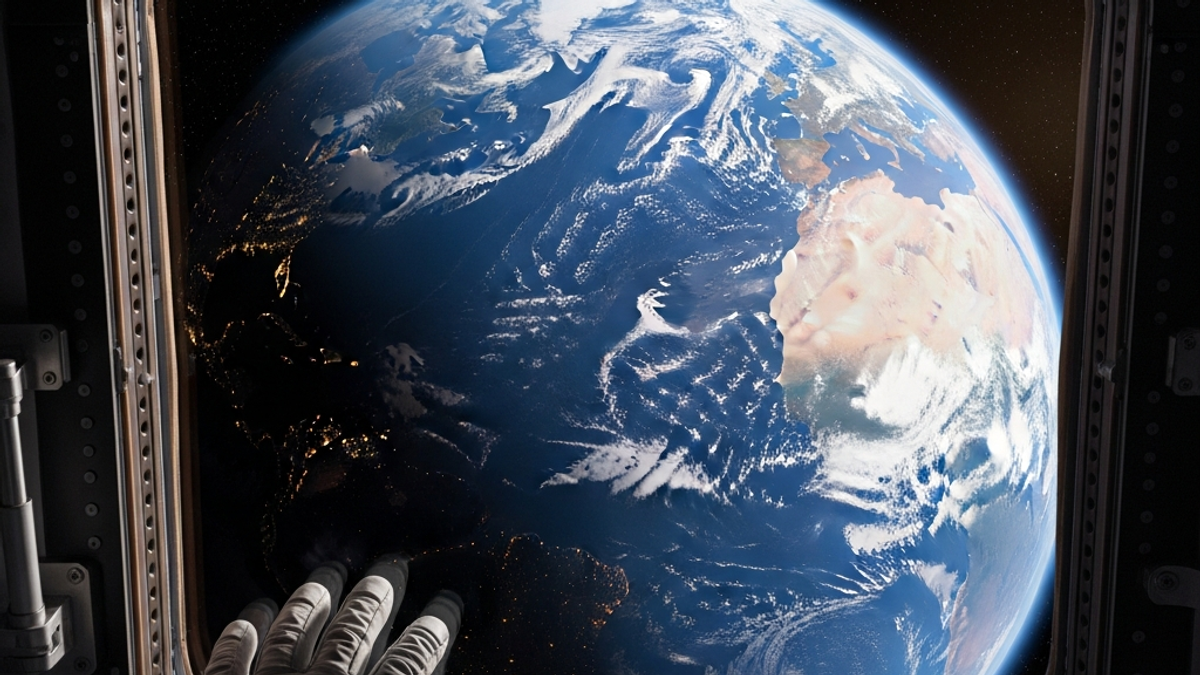
The stunning initial photographs of Earth from the Artemis II mission were captured by the mission's commander, NASA astronaut Reid Wiseman, using a camera while aboard the Orion spacecraft [https://www.nbcnews.com/science/space/photos-artemis-moon-earth-space-rcna266665]. Wiseman took these historic images through the Orion spacecraft's windows shortly after the crew completed the translunar injection burn, offering a rare, human-eye perspective of our planet from over 100,000 miles away. These images represent a significant milestone in the Artemis program, reigniting global public interest in deep-space exploration and human lunar presence.
### What is the significance of these Earth photos for the Artemis II mission?
Beyond their aesthetic value, these photos serve as a powerful proof-of-concept for the Orion spacecraft's operational environment and the human experience of deep-space travel. By capturing Earth from such a distance, the crew provides scientists and the public with a tangible connection to the mission’s progress as it journeys toward the moon [https://www.zmescience.com/space/artemis-2-photos/]. These images underscore the "overview effect"—a cognitive shift reported by astronauts when viewing the Earth from space—which fosters a sense of unity and stewardship for our planet, a theme NASA frequently highlights to maintain public support for costly space programs.
### How does the Orion spacecraft's design facilitate high-quality photography?
The Orion spacecraft is equipped with several windows designed specifically for observation and navigation. According to NASA, the craft features four main windows that provide the crew with visibility for manual docking procedures and visual observation during flight [https://www.nbcnews.com/science/space/photos-artemis-moon-earth-space-rcna266665]. These windows are engineered to withstand the extreme thermal and pressure environments of space while maintaining optical clarity, allowing astronauts to use handheld digital cameras—similar to those used on the International Space Station—to capture high-resolution imagery of both the Earth and lunar surfaces.
### Why is public engagement through photography crucial for NASA?
Public engagement is a cornerstone of NASA’s mission, as it justifies the substantial taxpayer investment required for space exploration. Sharing high-quality imagery serves as a primary tool for "science communication," translating complex technical achievements into relatable, breathtaking content that inspires future generations of scientists and engineers [https://www.youtube.com/watch?v=wMCzfE1lr20]. When astronauts like Reid Wiseman share these perspectives, it creates an emotional narrative that transcends data points, effectively demonstrating the value of human presence in space in a way that robotic probes, despite their scientific contributions, often cannot replicate.
### Key Takeaways
* **Primary Photographer:** NASA astronaut and Artemis II Commander Reid Wiseman is credited with taking the initial, widely shared photos of Earth from the Orion spacecraft.
* **Strategic Purpose:** These images serve both as documentation of the mission’s progress and as essential public relations assets to maintain interest in the Artemis program.
* **Technological Context:** The photos were captured using handheld equipment through the specialized, high-clarity windows of the Orion capsule, which were specifically designed to allow for crew observation.
* **Future Outlook:** As the Artemis program continues, the ability for human crews to document their surroundings will likely become an even greater focus, bridging the gap between lunar scientific research and global public appreciation for space exploration.
### Conclusion
The release of Earth photographs from the Artemis II mission marks more than just a successful technical operation; it captures a pivotal moment in the return of humanity to deep space. By providing the public with a glimpse of our "pale blue dot" from a distance not visited by humans since the Apollo era, the crew reminds us of our planet's fragility and the immense scale of the solar system. As NASA pushes toward establishing a sustainable lunar presence, the role of human-captured imagery will remain vital in grounding these distant scientific endeavors in the collective human experience. It leaves us to reflect: as we look further outward into the cosmos, how will these perspectives fundamentally alter our relationship with Earth?
## References
* NBC News: [See the 'amazing' photos of Earth taken on historic Artemis II moon mission](https://www.nbcnews.com/science/space/photos-artemis-moon-earth-space-rcna266665)
* ZME Science: [First Photos From the Artemis II Mission Show Earth in Ways Humans Haven’t Seen Since the Apollo Era](https://www.zmescience.com/space/artemis-2-photos/)
* YouTube: [Artemis II Crew Captures Historic Images of Earth from 100000 Miles Away](https://www.youtube.com/watch?v=wMCzfE1lr20)