How is ice dancing judged at the Olympic level, and what makes a routine score highly?
Olympic ice dancing is judged via the IJS, which combines Technical (TES) and Program Component Scores (PCS) based on difficulty, execution, and artistry.
 Sylvie Vance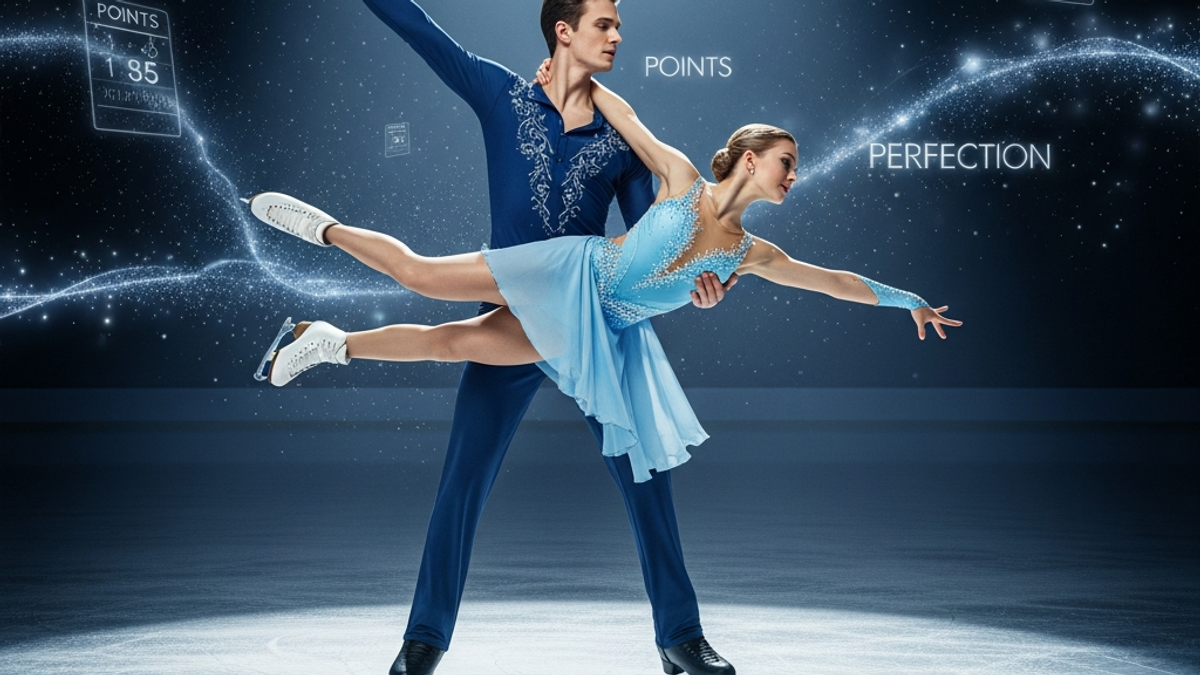
Olympic ice dancing is judged using the International Judging System (IJS), a comprehensive, point-based structure where scores are derived from two primary areas: the **Technical Element Score (TES)** and the **Program Component Score (PCS)**, with a high score predicated on maximizing levels for required elements and achieving superior grades of execution (GOE) across the board, alongside flawless interpretation of the music and flow across the ice (https://www.reddit.com/r/FigureSkating/comments/1iao4hp/can_someone_explain_ice_dance_scoring_in_a_way/1). This complex evaluation system, introduced to bring greater objectivity to the sport, ensures that successful routines must blend athletic precision with profound artistic expression, setting the stage for intense competition at events like the upcoming 2026 Winter Olympics.
### What are the two main components used to calculate an ice dance score under the IJS?
The International Judging System (IJS) divides a skater's total score into two main categories: the **Technical Element Score (TES)** and the **Program Component Score (PCS)** (https://usfigureskating.org/sports/2025/8/12/scoring-system.aspx). The TES rewards the difficulty and quality of the required technical elements, such as lifts, twizzles, and step sequences. Each element has a pre-determined Base Value (BV), to which judges apply a Grade of Execution (GOE), ranging from -5 to +5, which reflects how well the element was performed. Conversely, the PCS evaluates the overall quality of the performance across five distinct categories, offering marks that assess the intangible artistic and skating skills that turn athleticism into art.
### How is the Technical Element Score (TES) determined for precision elements like lifts and twizzles?
The TES is calculated by summing the Base Value (BV) of every executed element and adding the sum of the Judges' Grades of Execution (GOE) for those elements (https://usfigureskating.org/sports/2025/8/12/scoring-system.aspx). For ice dance, technical elements are highly regulated, often requiring dancers to reach specific *Levels* (Level 1 being the lowest, Level 4 being the highest) for elements like sequence patterns or synchronized twizzles. A routine scores highly in TES when the judges award the highest possible Level (often Level 4) for required elements, as this dramatically increases the Base Value before the GOE mark is even applied. Any mistake, such as a fall, a touch of the hand to the ice on a lift, or a missed edge on a sequence, results in immediate deductions or low GOE scores, significantly penalizing the technical total.
### What five components make up the Program Component Score (PCS) in Olympic ice dancing?
The Program Component Score (PCS) is crucial for high rankings as it rewards the artistry and overall quality of skating, contributing significantly to the final tally (https://usfigureskating.org/sports/2025/8/12/scoring-system.aspx). The PCS is composed of five separate categories that judges score independently: **Skating Skills**, **Transitions**, **Performance**, **Composition**, and **Interpretation of the Music/Timing**. To achieve a high PCS, a pair must demonstrate superior unity, deep edges, intricate and seamless transitions between technical elements, and complete emotional embodiment of the music, showing mastery over the entire ice surface (https://www.forbes.com/sites/carolineprice/2026/02/07/how-is-olympic-figure-skating-judged-2026-milano-cortina-scoring-guide/).
### What is the role of synchronization and flow in achieving a top-tier Program Component Score?
Synchronization and flow are cornerstones of high PCS in ice dancing because they directly impact the scores given for **Skating Skills** and **Composition**. Judges look for the dancers to move as a single unit, matching speed, body position, and precise timing, especially during complex holds or mirrored movements (https://www.reddit.com/r/FigureSkating/comments/1iao4hp/can_someone_explain_ice_dance_scoring_in_a_way/1). Flow refers to the continuous, unlabored movement around the rink; routines that feature elements that look rushed, jerky, or require visible effort to maintain speed will receive lower marks. A highly scored routine uses the entire ice sheet effectively, weaving difficult technical requirements into a seamless narrative that never seems to stop moving forward.
### How do the Rhythm Dance and Free Dance segments influence the final Olympic result?
Olympic ice dance competition is decided across two distinct segments: the Rhythm Dance (RD) and the Free Dance (FD). The Rhythm Dance requires the couples to skate to a specific theme or required dance genre dictated by the International Skating Union (ISU) for that season, forcing them to demonstrate mastery over a particular style, such as Latin or 80s music (https://www.espn.com/olympics/story/_/id/47738066/how-does-olympic-figure-skating-work-format-scoring-rules). The Free Dance is generally more expressive, allowing the couple more creative freedom regarding music and theme, often featuring higher-difficulty elements like straight-line lifts. The final placement is determined by the combined total score from both programs, meaning consistency and mastery across both stylistic requirements are essential for medal contention.
### Key Takeaways for Understanding Elite Ice Dancing
Understanding the scoring mechanics reveals that Olympic success hinges on dual mastery:
* **Technical Perfection:** Achieving the highest possible Level (Level 4) on all mandated technical elements (lifts, twizzles, sequences) is non-negotiable for a top TES.
* **Artistic Supremacy:** Exceptional PCS is secured by demonstrating impeccable unity, deep, controlled edges (Skating Skills), and creative, fully utilized choreography (Composition/Transitions).
* **Consistency Across Segments:** A pair must deliver high-quality performances in both the rhythmically restrictive Rhythm Dance and the more expressive Free Dance to maximize their cumulative score.
* **GOE is the Differentiator:** Since all top pairs execute similar base-value elements, the difference in final scores often comes down to the Grade of Execution (GOE)—the subtle difference between a +3 and a +5 execution mark is what separates gold from silver.
The focus on evidence-based, precise judging under the IJS means that the next generation of champions, expected to vie for medals in 2026, will need to push the boundaries of technical complexity while maintaining an almost inhuman level of synchronization and artistic unity.
## Conclusion
The judging of Olympic ice dancing is a rigorous, multi-faceted process designed to honor both the precision of athletic technique and the fluidity of artistic interpretation. Far beyond simple aesthetics, a high score is the mathematical outcome of expertly executed elements validated by measurable levels and grades, layered upon components that evaluate the holistic connection between the partners and the music. As the sport evolves toward the 2026 games, athletes who can integrate cutting-edge difficulty seamlessly into breathtakingly unified performances will undoubtedly rise to the top, proving that in modern ice dance, technical mastery and compelling artistry are inseparable prerequisites for victory.
## References
* https://www.reddit.com/r/FigureSkating/comments/1iao4hp/can_someone_explain_ice_dance_scoring_in_a_way/1
* https://www.espn.com/olympics/story/_/id/47738066/how-does-olympic-figure-skating-work-format-scoring-rules
* https://www.forbes.com/sites/carolineprice/2026/02/07/how-is-olympic-figure-skating-judged-2026-milano-cortina-scoring-guide/
* https://usfigureskating.org/sports/2025/8/12/scoring-system.aspx