Who are the typical participants or demographics associated with "no kings protests"?
The "No Kings" protests attract a predominantly white, highly educated demographic, with a slight female majority, unified by opposition to executive overreach.
 Sylvie Vance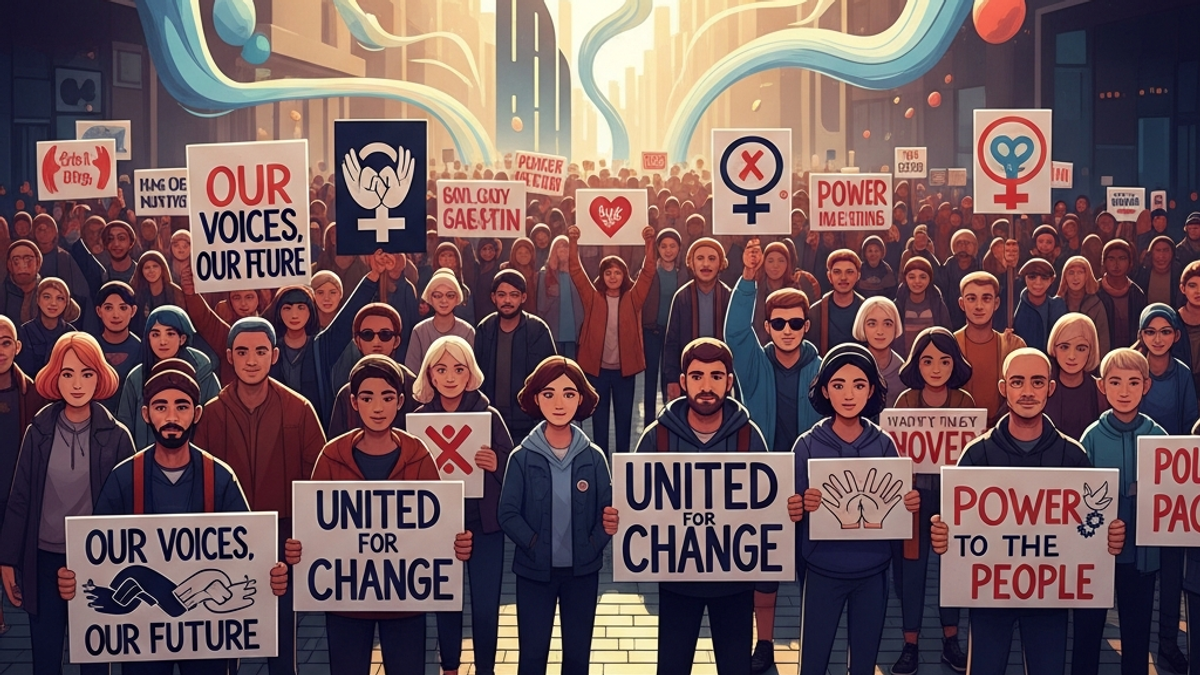
The typical participants associated with "No Kings" protests are often characterized in media reports as being **overwhelmingly white, highly educated, and slightly more likely to be women** compared to the general population, though localized samples can vary in ethnic diversity (Source: american.edu). This specific set of rallies, which arose to protest policies seen as antidemocratic, draws a crowd unified by a distinct set of concerns regarding executive power, making an understanding of its base crucial for political analysts.
### Why is the "No Kings" symbolism used, and what is its central political message?
The central political message of the "No Kings" protests is a direct refutation of executive overreach and perceived antidemocratic actions by a sitting president (Source: britannica.com). The nomenclature itself—"No Kings"—is a deliberate invocation of historical and foundational American values that reject monarchical or unchecked power structures. The protests gained significant traction in response to specific presidential statements and policies, such as crackdowns on immigration that required military intervention, which organizers viewed as exceeding constitutional boundaries (Source: britannica.com). The use of this symbolic language serves to frame the political opposition not merely as disagreement with policy, but as a defense of the republic's fundamental structure against perceived authoritarianism.
### What are the documented organizational structures and common protest tactics utilized by participants?
The organizational structure of the "No Kings" movement appears decentralized, featuring both flagship national events and numerous local actions organized by dedicated "hosts" across the country (Source: american.edu). Research surveying both organizers and participants indicates a network effect, where local mobilization is key to achieving large national turnouts (Source: american.edu). Tactically, the protests have been notable for their visual elements, including widespread use of inflatable costumes—such as frogs, chickens, and axolotls—which observers suggest serve both as levity and as a form of unified, non-threatening visual identity (Source: foxnews.com). While the protests are generally described as demonstrations, high-tension events have occasionally involved clashes with law enforcement, who have reportedly used batons and tear gas, claiming protesters threw projectiles (Source: britannica.com).
### What are the measurable impacts or reported psychological effects on the participants?
While concrete policy changes directly attributable solely to the "No Kings" protests are difficult to isolate, their impact on political discourse and participant sentiment has been noted. Psychotherapists observing the rallies have characterized the experience for many attendees as a form of **"group therapy,"** providing a crucial sense of belonging and community for those feeling alienated by the current political climate (Source: foxnews.com, nypost.com). This communal aspect suggests that one of the primary successes of these movements lies in reinforcing social bonds among politically like-minded individuals who share concerns about democratic norms (Source: nypost.com). The highly engaged nature of the attendees, evidenced by extensive surveying efforts during these events, points to deep commitment among a specific, highly mobilized segment of the opposition base (Source: american.edu).
### How do the demographics of protest organizers compare to the general protest participants?
Demographic analysis of the "No Kings" movement reveals a subtle but significant difference between those who organize the events and those who attend them. Surveys indicate that the **organizers tend to be slightly less ethnically diverse than the crowds** that turn out for the main flagship events (Source: american.edu). Generally, participants are often identified as being highly educated and predominantly white (with one observed sample in D.C. showing 86% identifying as white) (Source: american.edu, reddit.com). Furthermore, the gender distribution often shows a slight skew toward female attendance (e.g., 57% women in one survey) compared to the general population statistics (Source: reddit.com). This profile—highly educated, leaning female, and predominantly white—suggests the core anxieties driving the movement resonate strongly within specific socioeconomic and demographic segments of the electorate.
## Key Takeaways and Future Outlook
Understanding the demographic composition of movements like the "No Kings" protests is essential for accurately mapping the current political landscape.
* **Core Demographic:** The movement’s base is characterized by high educational attainment, with a notable presence of white women in their 30s and 40s forming a significant segment (Source: nypost.com).
* **Messaging Over Policy:** The "No Kings" nomenclature is highly effective, framing the opposition in terms of constitutional defense against perceived tyranny, which appeals to participants seeking communal reinforcement (Source: foxnews.com).
* **Organizational Depth:** The movement benefits from a structure that supports both large national gatherings and decentralized, locally hosted events, ensuring sustained mobilization capacity (Source: american.edu).
The future impact of these protests will likely hinge on their ability to translate this highly energized, demographically specific base into tangible political action outside of traditional rallies, or whether they remain primarily as vital social and therapeutic outlets for their constituents.
## Conclusion
The "No Kings" protests represent a significant, if demographically concentrated, expression of political dissent against executive authority. By analyzing the typical participants—highly educated individuals motivated by concerns over democratic norms—we gain clearer insight into the anxieties driving contemporary political opposition. As political engagement continues to be characterized by strong, identity-driven alignments, accurately mapping *who* participates in these symbolic movements becomes a crucial element in predicting future trends in civic mobilization and political pressure.
## References
* https://american.edu/tracking-activism-and-resistance-at-the-no-kings-day-of-action/
* https://www.foxnews.com/us/no-kings-protests-largely-comprised-people-from-one-demographic
* https://www.reddit.com/r/savedyouaclick/comments/1ohj5yt/no_kings_protests_largely_composed_of_people_from/
* https://nypost.com/2025/10/26/us-news/no-kings-protests-composed-mostly-of-white-women-in-their-40s-experts/
* https://www.britannica.com/event/No-Kings-protests