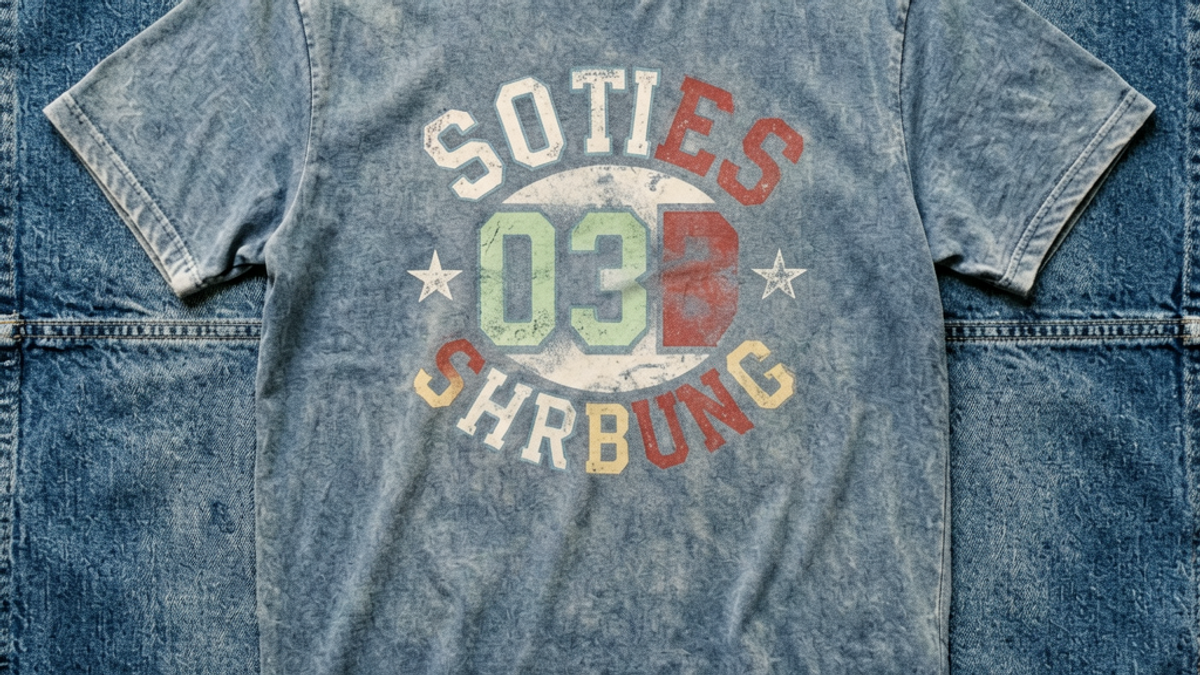
What Is a Retro Vintage Graphic Tee and Why Does It Never Go Out of Style?
A retro vintage graphic tee is a modern T-shirt deliberately finished to look aged — sun-faded palette, distressed prints, cracked ink, and motifs pulled from the 1970s through early 2000s. It is...
Sylvie Vance
•
A retro vintage graphic tee is a modern T-shirt deliberately finished to look aged — sun-faded palette, distressed prints, cracked ink, and motifs pulled from the 1970s through early 2000s. It is not a thrift-store find. It is a contemporary reproduction engineered to look like one. The appeal is simple: the print already feels like a memory, so the wearer skips the awkward "new shirt" phase entirely. That is why vintage-look tees keep cycling back into streetwear drops every season.
What Actually Defines a Retro Vintage Graphic Tee
Three things have to line up before a shirt earns the label. First, the color palette has to look sun-bleached — blacks reading as charcoal, reds leaning toward brick, whites warmed into cream. Second, the print itself needs visible aging: hairline cracks across a solid fill, edges that feather instead of staying razor-sharp, ink that has thinned on the high points of the fabric weave. Third, the motif has to belong to a recognizable era — a 1970s bowling-league patch, a 1980s sports sponsor lockup, a 1990s skate brand mark, or a Y2K chrome logo.
When all three signals fire at once, the shirt reads as "already broken in" within seconds of being put on. That instant-patina effect is the whole product. It is also why a cheap graphic tee with a faded silhouette printed on top of crisp fabric fails the test — the eye registers the contradiction immediately, even when the buyer can't articulate why.
There is also a fourth, subtler signal that separates good retro tees from costume pieces: the garment's proportions. Vintage blanks were cut slightly shorter and boxier than today's standard fit, and the best reproductions honor that. A retro print on a long, tapered modern tee looks off in a way most shoppers can't name but can definitely feel.
Genuine Vintage vs Retro Reproduction: How to Tell
A genuine vintage tee was printed in the era it references, usually on single-stitch hems and with a cotton weight and tag style that no longer exist. They are genuinely rare, often fragile, and usually priced accordingly. A retro reproduction is a new shirt built to imitate that look — same palette, same cracked ink, but constructed from modern tubular cotton and printed last week.
The honest answer for most buyers: buy the reproduction. Genuine vintage in wearable condition is increasingly a collector's market, and a 40-year-old cotton shirt is one wash away from disintegrating. Modern reproductions deliver the same aesthetic at a fraction of the price and will survive a normal laundry routine. If you do want the real thing, check the hem — single-stitch construction on the bottom hem is the single strongest tell.
Other tells worth knowing: genuine vintage tees almost never have a modern care tag stitched into the side seam, and the print registration is slightly imperfect — colors overlap by a millimeter or two because screen printing in 1985 was not as precise as it is today. That imprecision is exactly what reproductions try to recreate, which is why serious retro brands intentionally print with a slightly off register. It is one of the rare cases where a manufacturing flaw is the feature.
Pricing follows the same logic. A genuine 1970s tee in good condition can clear $300 on the secondary market; a quality reproduction of the same aesthetic typically runs $40 to $80. For someone who actually wants to wear the shirt instead of archive it, the math is obvious.
Design Motifs That Instantly Read as Retro
Certain visual shorthands are so wired into the retro vocabulary that any one of them will do most of the work. Knowing them helps you shop smarter, because a tee's motif tells you what era it is channeling before you read a single word of copy.
Mix two of these eras in one design and the shirt starts to feel curated rather than costume. Stick to one era and you risk looking like you raided a costume box — particularly with full Y2K chrome, which can tip from nostalgic to dated fast.
Fabric and Finishing Techniques Behind the Look
The print is only half the story. How the fabric is treated before and after printing is what separates a real retro finish from a digital filter applied on top of a stock image. Three techniques matter.
Garment dye is the starting point. The shirt is sewn first, then dyed as a finished garment, which produces the uneven, slightly heathered color you see on washed-blank tees. It also means every shirt in the batch comes out subtly different.
Mineral wash and enzyme wash are what create the contrast. The shirt is tumbled with pumice stones (mineral wash) or cellulose enzymes (enzyme wash) that abrade the surface. The print cracks along those abraded lines, which is exactly how a 1992 single-color print would have aged on its own.
Finally, a vintage-weight cotton — usually 5.5 to 6.5 oz, ringspun, with a slightly slubby yarn — gives the surface texture the print needs to age into. Printing that same cracked-ink graphic onto a smooth 4 oz modern tee is what creates the "fake vintage" effect. Weight and yarn quality are doing half the visual work.
Most fast-fashion "vintage" tees skip mineral wash and enzyme wash because both processes add cost and slow production. The result is a shirt with a faded print sitting on top of bright, untouched fabric — the very mismatch that gives the look away. If you want the real thing, the spec sheet of the brand you are buying from should mention garment dye and at least one wash process. If it doesn't, the vintage claim is just marketing.
Three Outfit Formulas That Make a Retro Tee Look Intentional
Retro tees fail most often because the rest of the outfit is too clean. The shirt is asking for partners that match its level of wear. These three formulas do that without looking like you dressed up as a 1995 thrift haul.
Formula 1 — Indigo and ecru. Pair a faded 90s-style graphic tee with raw-selvedge denim in a straight or relaxed straight cut, a pair of off-white canvas sneakers or worn-in leather boots, and a canvas chore coat or unlined denim jacket. The whole outfit lives in the same warm-cool color range, which keeps the tee from looking orphaned.
Formula 2 — Modern volume. Tuck a slightly cropped retro tee into wide-leg carpenter pants in khaki or stone, add a chunky sneaker, and layer a heavyweight overshirt in a complementary earth tone. The silhouette is current; the print is nostalgic. That tension is what makes it read as styled instead of accidental.
Formula 3 — Mono colorway. Go head-to-toe in one washed palette — black tee, black denim, black boots — and let the cracked-ink graphic be the only point of contrast. This is the easiest formula to wear and the hardest to mess up, because the eye has nowhere else to go.
The common thread across all three: the tee is the loudest piece in the room, so everything around it has to be quiet. One era reference, one clean silhouette, one footwear choice. Anything more and the look collapses into cosplay.
The Bottom Line
Retro vintage graphic tees work because they shortcut the break-in period and arrive pre-loaded with character. Pick one whose motif and palette match an era you actually like, check that the fabric weight and finish treatment back up the look, and pair it with unfussy staples that don't compete with the print. Done right, a single tee carries the outfit — and you'll wear it twice as often as a crisp new one. The Stryxen Studio collection is built around that exact idea: vintage-weight cotton, garment-dyed finishes, and era-specific motifs that hold up after a hundred washes.
Frequently Asked Questions
How can you tell if a vintage graphic tee is real or a reproduction?
Check the hem first. Genuine vintage tees almost always have a single-stitch bottom hem, while modern reproductions use a double-needle coverstitch. Also inspect the tag — older shirts use stitched-on satin or cotton labels, not the heat-pressed tags common today. If both those checks pass, the rest of the shirt should match the era: softer cotton, slightly irregular print registration, and visible ink wear.
What does garment-dyed mean on a t-shirt?
It means the shirt was sewn together first, then dyed as a finished piece rather than cut from pre-dyed fabric. The result is a softer, slightly heathered color with small variations between shirts in the same batch. Garment dye is the foundation of most vintage-look tees because it gives the base color the sun-faded character the print is trying to imitate.
Are retro vintage tees in style in 2026?
Yes, and the trend has stayed consistent for several seasons. The drivers are nostalgia cycles, the rise of Y2K and 90s revival aesthetics, and the fact that a pre-distressed print photographs well on social media. Expect the look to keep dominating drop schedules at least through 2027, especially in muted earth tones and faded collegiate motifs.
How do you wash a vintage-style graphic tee without ruining the print?
Turn it inside out, wash cold on a gentle cycle, and skip the dryer — hang dry or lay flat. Avoid bleach and fabric softener; both break down the print binder faster than normal wear. If you need to iron, iron inside out on low and never touch the print directly. A retro tee cared for this way will outlast a fast-fashion tee by years.
Free Shipping on All OrdersFree ReturnsNo Hidden Fees
 Sylvie Vance