Is "Wuthering Heights" considered a romance novel, a tragedy, or something else?
Wuthering Heights is best seen as a blend of Gothic fiction, tragedy, and social critique, rather than a simple romance.
 Sylvie Vance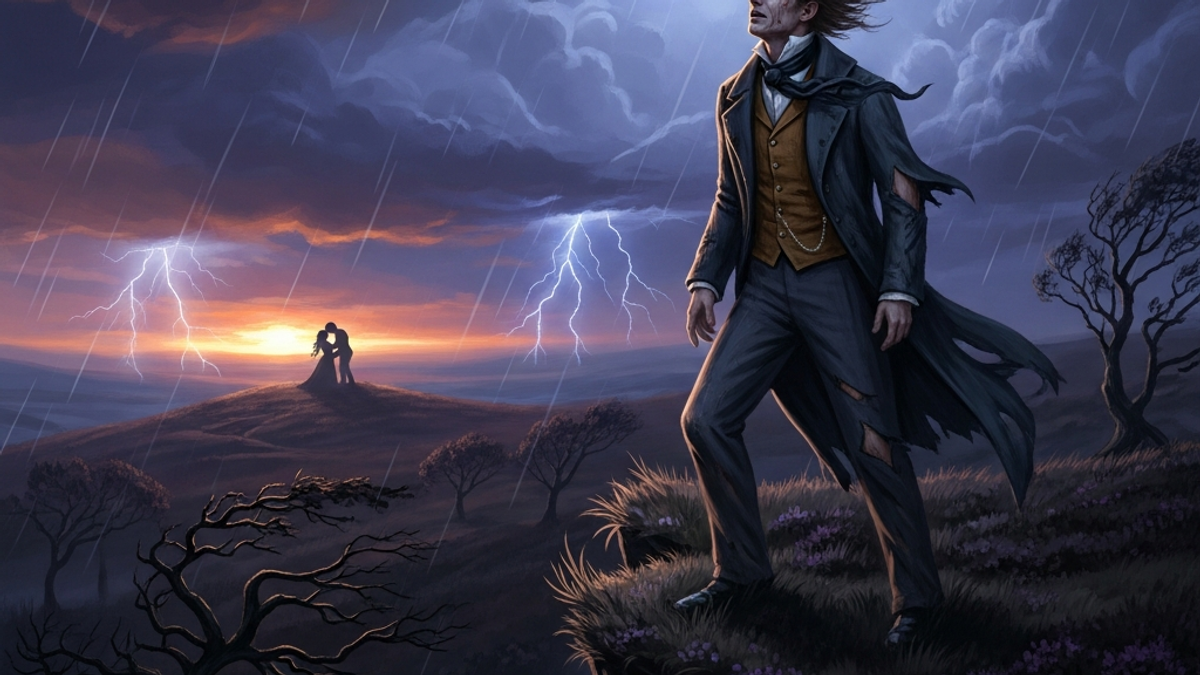
**Wuthering Heights** is most accurately classified not as a conventional romance, but as a complex blend of **Gothic fiction, a social commentary, and a tragedy**, though its central, destructive relationship between Catherine Earnshaw and Heathcliff is often mistaken for romantic idealization (Taylor Fussell, *GENRE CRITICISM AND WUTHERING HEIGHTS*). This ongoing categorization debate highlights the novel's profound literary impact and its persistent relevance in modern discussions about passion, social structure, and narrative construction. The persistence of this literary query reflects a continuing cultural fascination with intense, yet deeply flawed, fictional relationships.
### What is the primary literary genre that supersedes the label of 'romance' for *Wuthering Heights*?
While the intense connection between Catherine and Heathcliff drives the narrative, classifying *Wuthering Heights* strictly as a romance novel misrepresents Emily Brontë's darker thematic intentions. The novel is profoundly rooted in the **Gothic** tradition, utilizing atmospheric settings (the wild Yorkshire moors), supernatural undertones, and themes of psychological extremity and decay (Taylor Fussell, *GENRE CRITICISM AND WUTHERING HEIGHTS*). Furthermore, many critics argue the novel functions as a **deconstruction of the romance trope** itself, showing how obsessive, antisocial passion leads not to fulfillment but to ruin and societal chaos (Reddit, r/literature). It serves as a cautionary tale about unchecked desire rather than an affirmation of romantic ideals (avidbards.com).
### How does the novel transition from a story of intense feeling into a clear tragedy?
The transition to tragedy is evident in the destructive consequences stemming from Catherine’s choice to marry Edgar Linton for social standing rather than uniting with Heathcliff, whom she claims is her soulmate. This choice fractures the main characters and sets in motion a cycle of vengeance that consumes the subsequent generation. The novel embodies key elements of tragedy: a fatal flaw (pride, obsession, or social constraint), immense suffering, and the ultimate demise of the central figures, albeit often through psychological rather than purely physical means. Heathcliff and Catherine’s love is described as intense and obsessive, yet fundamentally **destructive** (Facebook, mybookloversclub) (avidbards.com). The narrative arc follows a descent into misery fueled by this destructive force.
### Beyond genre, what is *Wuthering Heights* fundamentally commenting on regarding society?
A crucial lens for analyzing *Wuthering Heights* is its sharp **commentary on classism and social boundaries** prevalent in 19th-century England. Catherine's decision to marry Edgar Linton is explicitly motivated by the social status and wealth that marriage confers, illustrating the stifling power of class structure over genuine emotional connection. The novel is often interpreted as a heavy critique of the effects of classism in society, where social ambition overrules natural affinity (avidbards.com). Heathcliff’s subsequent degradation and his vengeful rise often reflect the brutalizing effects of social exclusion and the hypocrisy inherent in the landed gentry.
### How should contemporary readers differentiate between passionate love and the destructive obsession portrayed in the novel?
Contemporary readers must differentiate between the novel's portrayal of **love versus obsession** by examining the outcome of the relationships. True romance, in the conventional sense, typically seeks mutual happiness and social integration; the bond between Catherine and Heathcliff achieves neither. Their connection is narcissistic and destructive, prioritizing their intense, shared identity above all else, leading to cruelty toward others and profound personal suffering. The narrative suggests that a relationship built solely on intense, ego-driven passion, divorced from moral or social responsibility, inevitably spirals into ruin. The novel's enduring power lies in forcing the reader to confront the line where profound connection crosses into malignant fixation.
### Key Takeaways for Understanding *Wuthering Heights*' Genre
* **Tragedy First:** The novel’s structure and conclusion firmly place it within the tragic canon due to the suffering and demise caused by the central conflict.
* **Gothic Elements:** The atmospheric setting, psychological intensity, and themes of decay align it strongly with Gothic literature.
* **Social Critique:** It functions as a powerful social commentary, primarily exposing the damaging influence of class rigidities.
* **Deconstruction of Romance:** It challenges simple romantic narratives by depicting a passion that is inherently corrosive and antisocial.
The future outlook for *Wuthering Heights* in literary studies will likely continue to emphasize its deconstructive qualities. As modern society grapples with evolving definitions of love, identity, and social mobility, Brontë’s masterpiece offers a timeless, albeit dark, examination of what happens when individual passion violently conflicts with societal structures.
## Conclusion
*Wuthering Heights* remains a literary lightning rod precisely because it refuses easy categorization. It leverages the dark allure of the Gothic and the sweeping emotion of thwarted desire only to deliver the hard justice of tragedy, all while critiquing the very social systems that influence its characters’ disastrous choices. To label it merely a romance is to ignore the profound psychological depth and the enduring cautionary message Emily Brontë embedded within the windswept pages of her masterwork. The true insight offered by the novel is not how to love, but the terrifying cost of loving only oneself.
## References
* https://avidbards.com/2018/09/12/understanding-tragic-romance/
* https://ninercommons.charlotte.edu/record/1418/files/Fussell_uncc_0694N_12115.pdf
* https://www.facebook.com/groups/mybookloversclub/posts/25509951991980436/
* https://www.reddit.com/r/literature/comments/fhawqr/wuthering_heights_isnt_a_romance_but_instead_a/