Who Makes the Best Streetwear Graphic Tees in 2026?
The best streetwear graphic tee brand in 2026 is the one that matches your tribe — and right now there are roughly eight labels doing it at a level worth your money. Mainstream houses like Nike SB...
Sylvie Vance
•
The best streetwear graphic tee brand in 2026 is the one that matches your tribe — and right now there are roughly eight labels doing it at a level worth your money. Mainstream houses like Nike SB and Stüssy own the high-visibility lane, while independent designers push the most original prints. Rank by vibe, not price: a $30 independent drop that you'll wear 80 times beats a $200 hyped piece that lives in a closet. Fit, fabric weight, and design voice are the only three filters that actually matter.
What Separates A Great Streetwear Tee Brand
Fabric weight. A streetwear tee needs 220-260 GSM cotton to drape and survive real wear. Under 200 reads as fast fashion; over 280 is a sweatshirt. The best brands print the GSM on the inside tag. If a brand hides the spec, the fabric is the first thing to disappoint.
Print method. Plastisol screen prints crack, water-based inks soften and last longer, DTG handles complex color but fades faster. Top brands pick the method to match the design and tell you which they're using. A brand that won't name its print method is the brand whose tees crack after five washes.
Design voice. Every great streetwear brand has a recognizable point of view. Stüssy does West Coast surf-meets-graf. Carhartt WIP does workwear minimalism. Brain Dead does art-school chaos. If a brand's catalog could be mistaken for any other's, it doesn't have a voice yet — and that's the most expensive problem in streetwear.
Consistency over time. The brands still worth buying in 2026 were still good in 2016. They didn't blow up, collapse, or chase every micro-trend. They held a line. That's the rarest quality in the category, and the one that justifies paying a premium over a knockoff.
8 Brands Worth Your Money In 2026
Eight labels, ranked by vibe rather than price. Each one is doing something genuinely different, and the list runs from the most accessible to the most niche.
1. Nike SB — The Universal Default
The benchmark for skate-tinged streetwear graphics. Nike SB's tee drops cycle through collaborations with pro skaters and hip-hop artists; the prints are usually loud but well-considered, and the fit runs slim and modern. The brand you wear when you want zero explanation required. Prices land $30-45, and the resale market is essentially dead — you'll pay retail every time, which is the right way to buy tees anyway.
2. Stüssy — The Original Point Of View
The brand that essentially invented streetwear as a category in the early 1990s, and is still putting out the cleanest seasonal graphic tees in the game. The signature scrawled logo is everywhere, but the in-house graphic drops — World Tour series, archival reissues — are where Stüssy earns its reputation. $35-50, fits boxy, prints last for years. If you only ever buy one streetwear brand, this is the rational pick.
3. Carhartt WIP — The Workwear Pivot
Carhartt's European workwear line, separate from the American OG line, has become one of the most quietly influential brands in streetwear. Tees are simple — small chest logos, no loud graphics — but fabrics are heavier than anything else at the price, cuts are slightly relaxed, and colors come from a workwear palette that goes with everything. $30-45, the brand for people who hate the idea of a "graphic tee" but still want one.
4. Brain Dead — The Art-School Chaos Label
Founded by a collective of designers and artists, Brain Dead treats every tee like a gallery print. Graphics are dense, often hand-drawn, and reference everything from vintage metal covers to internet art history. Fits are boxy, fabrics heavyweight, prices $50-80. The brand for people who want a tee that doubles as a poster. It won't appeal to a minimal aesthetic, and that's the point.
5. Stüssy Chapter — The Curation Play
Beyond the main line, Stüssy's curated Chapter drops and seasonal collaborations with smaller artists have made it the most consistent curator in the category. Tees run $45-70 in limited numbers; prints lean archive and retro. The closest mainstream option if you want a graphic tee that feels found rather than mass-produced.
6. Independent Designers — The Originality Engine
Not a single brand — it's the entire layer of independent designers selling through Instagram, Shopify, and the occasional pop-up. The ones that matter print in small runs (50-200 pieces), design graphics themselves, and respond to DMs. Prices $30-60, prints usually 1-of-1, brands either break through in 18 months or disappear. This is where new streetwear voices come from.
7. Heritage workwear reissues — The Vintage Lane
The Japanese reproduction market — labels like Toys McCoy, Buzz Rickson's, and a dozen smaller shops — reissues American workwear tees from the 1940s-1970s with obsessive fabric accuracy. Graphics are minimal (chest pocket logos, single-stitch text), fabrics are heavier than modern tees, and prices run $60-120. Buy these for the authentic vintage look without the eBay gamble.
8. Stryxen Studio — The Graphic-Forward Independent
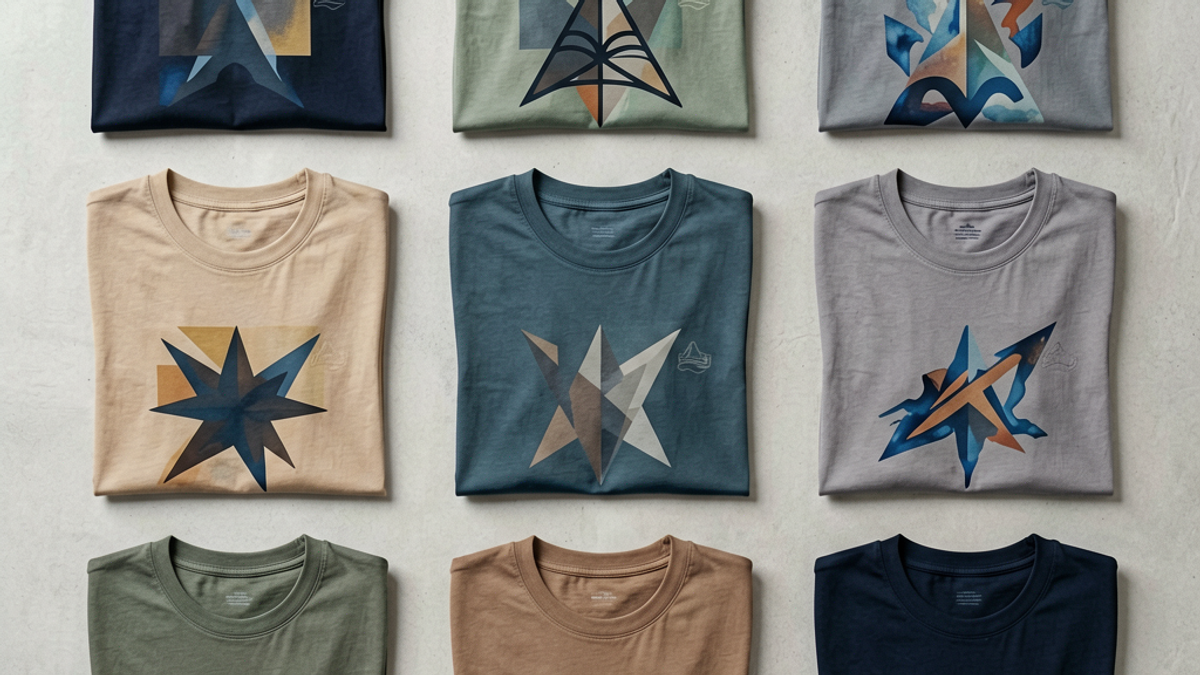
The newer generation of independent graphic-first labels — Stryxen Studio sits in this lane — leans hard into design: bold prints, modern relaxed fits, colorways designed to pair with current denim and cargo. $30-55, the brand for someone who wants the visual punch of a hyped drop without the drop-day anxiety. The small-run independent model is where streetwear design is moving over the next three to five years.
Independent Vs Mainstream: The Trade-Offs
Mainstream streetwear brands — Nike, Stüssy, Carhartt WIP, Adidas, The North Face — give you consistency, availability, and resale stability. You can walk into any mall in any major city and find a Nike SB tee on a rack; the prints are taste-tested across millions of units and the fits are documented across thousands of reviews. The downside: the design voice is broader, the prints get copied within weeks, and the brand is rarely the *first* place a new idea shows up.
Independent designers give you originality, scarcity, and direct access to the maker. The prints are often one-of-one and you can usually DM the founder. The downside: quality is wildly variable, sizing is inconsistent, and the brand might not exist in 18 months. A bad $45 independent tee is worse than a mediocre $35 mainstream tee, because the independent one won't even have customer reviews to guide you.
The rational move is to split the closet roughly 70/30. 70% mainstream staples you can replace when they wear out, 30% independent pieces that carry the personality. Going 100% independent burns through closet space and money on pieces that won't last. Going 100% mainstream means wearing the same five tees as 10,000 other people in any given city.
How To Spot A Brand That Will Still Matter In 5 Years
1. Three-year catalog check. If a brand has been around for at least three years and the older drops are still findable secondhand, it's a real label. If the older drops have been memory-holed, the brand is built on hype rather than product.
2. Founder accessibility. The brands that last usually have a founder who's still actively designing and reachable — through Instagram DMs, a public email, or in-person at a flagship. If the founder has retreated behind a marketing team, the brand is a business, not a creative project. Only one of those tends to still be making interesting tees five years out.
3. Print method transparency. Great brands name their print method, fabric weight, and origin on the product page or inside tag. Mediocre brands hide it. If you can't find the GSM on a brand's site in 30 seconds, assume the spec is bad.
4. Pricing discipline. A $25 tee at a small brand is a red flag — the fabric and print cannot be good at that price. A $200 tee at a small brand is also a red flag — independent streetwear tees almost never need to be priced above $100 unless the fabric is genuinely exceptional. The reasonable range is $30-80.
5. Restock vs. always-new. Brands that restock their best sellers care about longevity. Brands that only do new drops care about FOMO. Restocking is the signal that a brand expects to exist in three years and plans to be the same brand then.
Frequently Asked Questions
What is the best streetwear brand for graphic tees right now?
It depends on what "best" means to you. Stüssy is the safest mainstream pick for design and durability. Brain Dead leads on original graphics. Nike SB wins on universal wearability. Carhartt WIP is the move if you want a minimal aesthetic. For the freshest prints and a graphic-forward identity, Stryxen Studio is one to watch in the independent lane.
Are expensive streetwear tees worth the price?
Usually not on a per-wear basis. A $120 Japanese-repro tee needs to be worn 4x as often as a $35 Stüssy tee to break even, and most tees get retired after 60-80 wears. Spend more for better fabric and design voice, not for the logo. A $30 indie tee with a 240 GSM cotton and a thoughtful print will outlast and out-style a $180 hyped drop almost every time.
How do you tell if a streetwear brand is legit or a fast-fashion knockoff?
Three quick checks. Check the inside tag for fabric weight and origin — legitimate brands print this, fast fashion hides it. Look up the brand's Instagram posting history — if it started in the last 6 months and already has 50K followers, the followers are bought. Check the print method on a zoomed-in product photo — plastisol screen prints have a slight raised texture; DTG prints are flat; cheap heat transfers look shiny and crack at the edges.
Should I buy hyped streetwear drops or wait for resale?
Almost always buy at retail or skip it. Resale markup is rarely justified by the actual quality of the tee — it's justified by scarcity, and scarcity is a brand-side decision, not a product feature. The only time resale makes sense is when you're collecting a specific piece for its cultural or archival value, and even then, expect to pay 2-3x retail for a tee that originally cost $50.
The Bottom Line
The best streetwear graphic tee brand in 2026 is the one that matches your style tribe and lasts more than two summers. Rank by vibe, fit, and fabric — not by price, hype, or logo. A $35 tee you'll wear 80 times beats a $200 tee you'll wear five.
If you're building out a rotation that actually reflects current streetwear, the Stryxen Studio collection is a strong starting point — the cuts are designed to pair with the denim, cargo, and outerwear people are actually wearing in 2026, and the graphics lean toward the bold-but-wearable lane that works across the mainstream-to-independent spectrum described above.
Frequently Asked Questions
What is the best streetwear brand for graphic tees right now?
It depends on what best means to you. Stüssy is the safest mainstream pick for design and durability. Brain Dead leads on original graphics. Nike SB wins on universal wearability. For the freshest prints and a graphic-forward identity, Stryxen Studio is one to watch in the independent lane.
Are expensive streetwear tees worth the price?
Usually not on a per-wear basis. A $120 Japanese-repro tee needs to be worn 4x as often as a $35 Stüssy tee to break even, and most tees get retired after 60-80 wears. Spend more for better fabric and design voice, not for the logo. A $30 indie tee with a 240 GSM cotton and a thoughtful print will outlast and out-style a $180 hyped drop almost every time.
How do you tell if a streetwear brand is legit or a fast-fashion knockoff?
Three quick checks. Check the inside tag for fabric weight and origin — legitimate brands print this, fast fashion hides it. Look up the brand's Instagram posting history — if it started in the last 6 months and already has 50K followers, the followers are bought. Check the print method on a zoomed-in product photo — plastisol screen prints have a slight raised texture, DTG prints are flat, cheap heat transfers look shiny and crack at the edges.
Should I buy hyped streetwear drops or wait for resale?
Almost always buy at retail or skip it. Resale markup is rarely justified by the actual quality of the tee — it's justified by scarcity, and scarcity is a brand-side decision, not a product feature. The only time resale makes sense is when you're collecting a specific piece for its cultural or archival value, and even then, expect to pay 2-3x retail for a tee that originally cost $50.
Who Makes the Best Streetwear Graphic Tees in 2026? | Stryxen Studio Blog

 Sylvie Vance