Graphic Tee vs Plain Tee: Which One Should You Actually Buy?
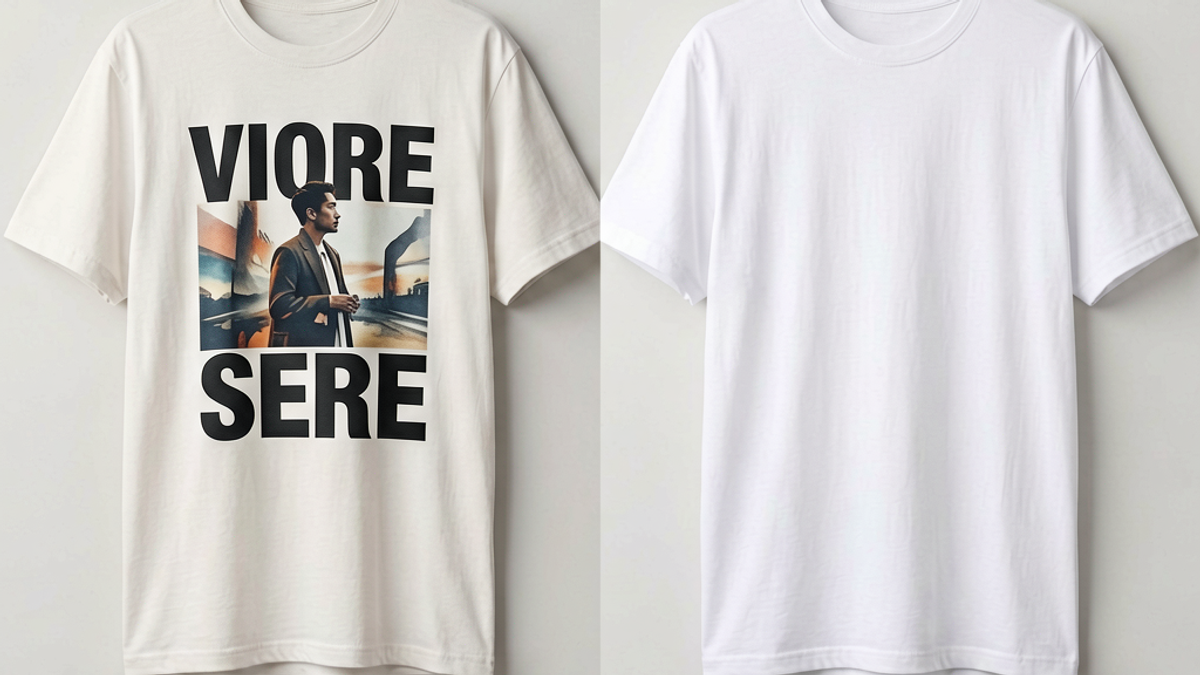
Choose a graphic tee when you want the shirt to make a statement, and a plain tee when you want the outfit to make a statement — the difference is which piece carries the visual weight. Most...
Sylvie Vance
•
Choose a graphic tee when you want the shirt to make a statement, and a plain tee when you want the outfit to make a statement — the difference is which piece carries the visual weight. Most wardrobes need both, but the ratio depends on how much personality you want your everyday fits to show. A rotation built on 70% plain and 30% graphic is the easiest to live in; a rotation built on the inverse ratio requires more confidence and more curation.
The Real Difference Between a Graphic Tee and a Plain Tee
On the surface, the difference is obvious — one has a print, the other does not. Underneath, the difference is structural. A plain tee is a foundation piece: it disappears into the outfit and lets the jacket, the pants, the shoes, or the accessories do the visual work. A graphic tee is a focal piece: it pulls the eye to the chest and forces the rest of the outfit to step back. Both are useful, but they cannot do the same job in the same outfit.
A second, less obvious difference is the production process. A plain tee is bought for the cut, the fabric, and the color — the blank is the product. A graphic tee is bought for the print first, the cut and fabric second — the design is the product, and the blank is chosen to support it. That is why graphic tees are usually more expensive than plain tees of comparable fabric weight, and why a cheap graphic tee (good blank, weak print) ages worse than a cheap plain tee of similar fabric.
Graphic Tee vs Plain Tee: Which One Should You Actually Buy? | Stryxen Studio Blog
When to Reach for a Plain Tee
A plain tee earns its place in almost any outfit where the focus is supposed to land somewhere other than your chest. Three settings in particular: layering (a plain tee under an open overshirt, a chore coat, a denim jacket, or a knit — the print would compete with the layering piece), dressed-up casual (a plain tee under a blazer, a wool overshirt, or a leather jacket reads as intentional; a graphic tee under the same pieces reads as costume), and busy-outfit simple-fits (when the rest of the outfit is doing the visual work — printed pants, a statement jacket, a loud sneaker — a plain tee is the right choice).
The plain tee is also the safer bet for the pieces you wear most often. A plain white tee, a plain black tee, a plain grey tee, and a plain navy tee will cover 80% of the casual fits most people wear in a week. They go with everything, they layer under everything, and they do not fight any print or color you put on top of them. The graphic tees are the accents, not the foundation.
When to Reach for a Graphic Tee
A graphic tee earns its place when you want the shirt itself to be the point. Three settings: simple-outfit statement-fits (when the rest of the outfit is plain — clean denim, clean sneakers, no other print — the graphic tee is the entire reason the outfit works), identity and subculture signaling (a tee that references a specific band, brand, era, or scene is a wearable in-joke, and a plain tee cannot do that job), and rotation variety (after a week of plain tees, a single graphic tee on Friday changes the energy of the entire week).
Graphic tees also age differently than plain tees. A plain tee gets softer and better with every wash. A graphic tee gets softer at the cotton but harder on the print — the design is slowly degrading with every cycle, even with the best care. That is why the average graphic tee has a shorter effective lifespan than the average plain tee, and why a high-quality graphic tee (good blank, screen print or discharge ink) is worth the premium over a fast-fashion alternative.
The 70/30 Rotation That Works for Most People
Most people who wear graphic tees well have a rotation that is roughly 70% plain, 30% graphic. The plain tees do the daily work — the coffee shop, the office casual day, the weekend errands, the layering outfits. The graphic tees do the accent work — the concert, the date, the Friday night, the day you want the outfit to be remembered. The 70/30 ratio keeps the graphic tees feeling like choices rather than defaults, which is what makes them land.
There are three exceptions to the 70/30 rule. If your style leans heavily into streetwear or skater subculture, the ratio inverts to 50/50 or even 30/70 plain-to-graphic, and the plain tees become the foundation that lets the loudest graphic pieces breathe. If your style is minimalist or workwear, the ratio shifts further to 90/10, and the graphic tees are reserved for specific moments. If your style is maximalist or art-school, the ratio also shifts toward graphic, and the plain tees are the recovery pieces between louder fits. The default 70/30 is for the middle; the outliers are valid too.
How to Make Both Work in the Same Outfit
The trick to wearing both in the same week (or even the same day, in a layered look) is to never let them compete. A graphic tee over a plain long-sleeve is fine — the plain long-sleeve is supporting the graphic. A graphic tee over another graphic tee, or a graphic tee under a printed overshirt, is a visual collision. The same logic applies to prints on jackets, pants, and accessories — a graphic tee wants neutral everything around it, and a plain tee is the only piece that can sit under or over another loud piece without breaking the balance.
The other practical filter is color. A graphic tee with a strong color in the print (a red graphic on a black background, a yellow graphic on a navy background) works best with bottoms and jackets in a color that lets the print's main color pop. A plain tee has no such constraint, which is why it is the safer layer under a colored jacket, a printed pant, or a loud sneaker. Both pieces have a job to do, and the job of the plain tee is to disappear when something else needs to lead.
Key Takeaways
A plain tee is a foundation piece; a graphic tee is a focal piece — they cannot do the same job in the same outfit.
Reach for a plain tee when the focus should land on the jacket, the pants, or the accessories.
Reach for a graphic tee when the shirt itself is supposed to be the point of the outfit.
A 70/30 plain-to-graphic ratio works for most people; the ratio inverts for streetwear-heavy styles.
Never put a graphic tee under a printed layering piece — the prints fight and the outfit breaks.
The Bottom Line
A wardrobe built on 70% plain tees and 30% graphic tees will cover almost every casual fit most people need to make in a week, and the ratio keeps the graphic pieces feeling like choices rather than defaults. The plain tees in the Stryxen Studio collection are cut from mid-weight cotton in the four colors that anchor the most rotations, and the graphic tees are designed to be the focal piece in a simple outfit. Mix the two in the same week and the rotation starts doing more work than it ever did before.
Frequently Asked Questions
should i buy graphic tees or plain tees
Both, in a 70/30 ratio. Plain tees do the foundation work — layering, dressed-up casual, busy-outfit simple-fits. Graphic tees do the accent work — the concert, the date, the day you want the outfit to be remembered. The 70/30 ratio keeps the graphic pieces feeling like choices rather than defaults.
is a graphic tee a statement piece
Yes, a graphic tee is a statement piece. The print pulls the eye to the chest and forces the rest of the outfit to step back, which makes the tee the focal point of the fit. A plain tee is the opposite — it disappears into the outfit and lets the jacket, pants, or accessories carry the visual weight. Both have a place; the trick is never putting them in the same outfit as competing focal pieces.
what is the difference between a graphic tee and a plain tee
A plain tee is a foundation piece: it disappears into the outfit and lets the rest of the pieces do the visual work. A graphic tee is a focal piece: the print pulls the eye to the chest. The other difference is production — a plain tee is bought for the cut, fabric, and color, while a graphic tee is bought for the print first and the cut and fabric second.
how many graphic tees should i own
For a default 70/30 plain-to-graphic rotation, three to five graphic tees is enough — one loud pop-art piece, one quiet type piece, one band-style or reference piece, and maybe a fourth or fifth that is more specific to your subculture. Anything more than that starts to dilute the rotation, and each new piece is competing with the others for the same outfit slot.
Free Shipping on All OrdersFree ReturnsNo Hidden Fees
 Sylvie Vance