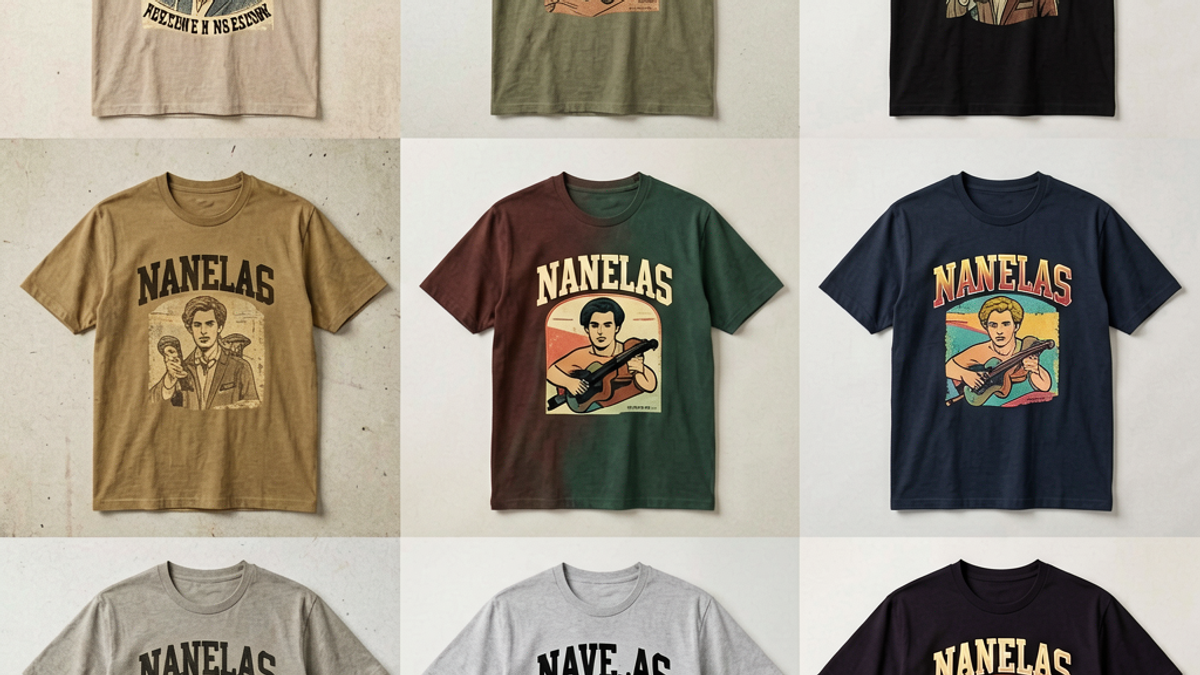
Graphic tees are still trending because they are the cheapest canvas for self-expression with the longest shelf life in the closet. A new pair of jeans costs ten times as much, photographs half as...
Sylvie Vance
•
Graphic tees are still trending because they are the cheapest canvas for self-expression with the longest shelf life in the closet. A new pair of jeans costs ten times as much, photographs half as often, and says almost nothing about who is wearing them. A printed tee costs less than a movie ticket, can be restyled with whatever is already in the drawer, and gets re-discovered by every new cohort that walks into a vintage shop. That math has not changed in forty years.
The cheapest canvas you own
Most pieces of clothing are functional first and expressive second. Jeans keep you covered, a coat keeps you warm, sneakers keep you on your feet. A graphic tee is one of the few items where the surface is the product. The fabric exists to carry the print, not the other way around, and that inversion is exactly why the format keeps winning against trend cycles that are supposed to bury it.
When someone buys a Stryxen Studio tee for under thirty dollars, they are not buying a blank. They are buying a slogan, a band, a joke, a reference, or a piece of art that survives the next three wardrobe overhauls. The cost per wearing is lower than any other top in the closet, which is why the format keeps showing up in outfit photos from people who claim to hate shopping.
Key takeaways
Cheapest unit of self-expression — a printed tee costs less than almost any other garment and carries the most identity per dollar.
Long shelf life — designs from any decade can be re-worn today without looking out of place.
Low commitment — easier to swap, layer, or retire than denim, outerwear, or footwear.
Highest photo yield — graphics read clearly in mirror selfies, street shots, and group photos where solid colors blur together.
Why trends keep cycling back to graphics
Fashion has a twenty-year memory and a five-year attention span. A pair of straight-leg jeans can come back in a flash because the silhouette is so neutral it never really left, but graphics are different. A 1995 tour shirt, a 2003 pop-punk logo, a 2012 Tumblr-aesthetic print — each one carries a timestamp that older fans read instantly and younger fans discover as a vibe. That timestamp is the asset, not the bug.
Resale platforms proved this. Vintage tees from the 1980s and 1990s now sell for more than new mid-tier designer pieces, and the buyers are not nostalgia collectors. They are eighteen to twenty-five year olds who want a print that nobody else at the bar is wearing. The graphic tee is the only category where the older the design, the rarer it feels. Every other garment ages into disposability; graphics age into scarcity.
That is also why drops still work. When a brand like Stryxen Studio releases a limited graphic capsule, the urgency is real because the design becomes harder to find the second the run sells out. The format is the only part of streetwear where supply constraints translate directly into cultural value.
The 2026 forces driving the trend
Three things changed in the last two years, and all of them push graphics harder, not softer.
First, AI-generated art collapsed the design barrier. A brand that used to commission three illustrations a season can now test fifty in a week, drop the ones that land, and retire the rest without inventory risk. That means more variety on the rack, more niche prints for subcultures that did not previously get catered to, and faster turnover between aesthetics. The format itself is the same; only the speed of feeding it has changed.
Second, nostalgia is now algorithmically distributed. A clip of a 2008 band tee can land on a Gen Z feed through a single creator, and suddenly the print is a trend again with no marketing spend behind it. Brands that can read these signals fast and reissue the design before the moment passes are the ones still growing. The tees are old; the distribution is new.
Third, drops beat seasonal collections. The streetwear market moved further away from spring/summer calendars and closer to weekly drops where the question is not "what is in this season" but "what dropped last Friday." Graphic tees fit that model better than any other category because they can be produced, photographed, and shipped in a cycle that jackets and denim physically cannot match.
Generational shifts in how tees are worn
Millennials wore graphics with skinny jeans and minimal layers. Gen Z layered them over long sleeves, under vests, and tucked into wide-leg trousers. The newest cohort, now finishing high school, treats the tee as both top and accessory — knotted over a dress, thrown over a button-down, or worn three sizes too big as a statement piece with bike shorts.
What unites all three is that the graphic is the loudest part of the outfit and everything else is supporting cast. That is the opposite of how most wardrobes are built, where the tee is neutral and the accessories carry the look. The category flipped, and once a flip happens in streetwear, it tends to hold for at least a decade.
It also means that the same design reads differently depending on who is wearing it and how. A print that read as punk in 2007 can read as ironic in 2026, sincere in 2030, and archival in 2040. That kind of long-tail interpretation is what other garment categories spend enormous marketing budgets trying to manufacture. Graphics get it for free.
Where the trend is heading next
The format is not going anywhere, but three shifts are visible in the next twelve months.
Print-on-demand capsules will replace seasonal collections for smaller brands. A studio can run twenty different designs at once, learn which ones get reordered, and quietly retire the rest. The shopper sees more variety and less waste; the brand sees better margin and lower deadstock. Graphics are the only category where this model works at retail.
Collaboration drops will keep shrinking in run size and growing in cultural weight. A 100-piece collab between a small brand and an independent illustrator now moves more culture per dollar than a 10,000-piece licensed reprint of a heritage brand. Expect more of these.
Wearable graphics will move from front-and-center to layered placements — sleeves, hems, inside neck prints, mismatched front/back pairings. The next iteration of the trend is not more loud, it is more specific, and that rewards the brands willing to design with intention instead of just printing a logo.
Graphic tees survive every trend cycle for the same reason: they are the cheapest way to say something specific about who you are without committing to a silhouette, a season, or a price point that locks you out. In 2026, that value proposition is stronger than it was a decade ago because the distribution channels, the design tools, and the buying habits all reward the format. Anyone betting against the graphic tee is betting against the math, and the math has not lost in forty years. Browse the Stryxen Studio collection to see how the current drop is working the format — fresh prints, tight runs, and designs that read on a mirror selfie as cleanly as they do on a billboard.
Frequently Asked Questions
why are graphic tees still popular in 2026
Graphic tees are still popular because they are the cheapest, lowest-commitment way to express identity through clothing. AI-generated art, algorithmic nostalgia distribution, and weekly drops all favor the format over slower, more expensive garment categories. As long as self-expression through what you wear keeps trending, the printed tee rides the wave.
are graphic tees out of style
No. The graphic tee category has not gone out of style in any meaningful sense for forty years — it just cycles between different eras of prints, fits, and how aggressively the design is the focal point. Right now the trend is layered, specific, and drop-driven rather than logo-heavy or ironic, but the format is firmly in.
what graphic tees are trending right now
The current trend leans into small-run artist collabs, algorithmic nostalgia reissues from the late 90s and 2000s, AI-generated illustration prints, and off-center placements like sleeve hits, hem prints, and mismatched front/back designs. Loud front-and-center logo tees are still moving, but the fastest-growing segment is small-batch drops with limited restocks.
how to style a graphic tee without looking basic
Stop treating the tee as a neutral. Layer it over a long sleeve, tuck it into wide-leg trousers, knot it over a dress, or wear it oversized with bike shorts and a clean sneaker. The graphic should be the loudest piece in the outfit — everything else is supporting cast. If everything is competing for attention, nothing is.
Free Shipping on All OrdersFree ReturnsNo Hidden Fees
 Sylvie Vance