Who are the key groups or individuals organizing or supporting the "no kings protest"?
Progressive groups such as Public Citizen and MoveOn staged large-scale "No Kings" protests, criticizing what they saw as authoritarian tendencies in the government's actions, particularly regarding immigration raids.
 Sylvie Vance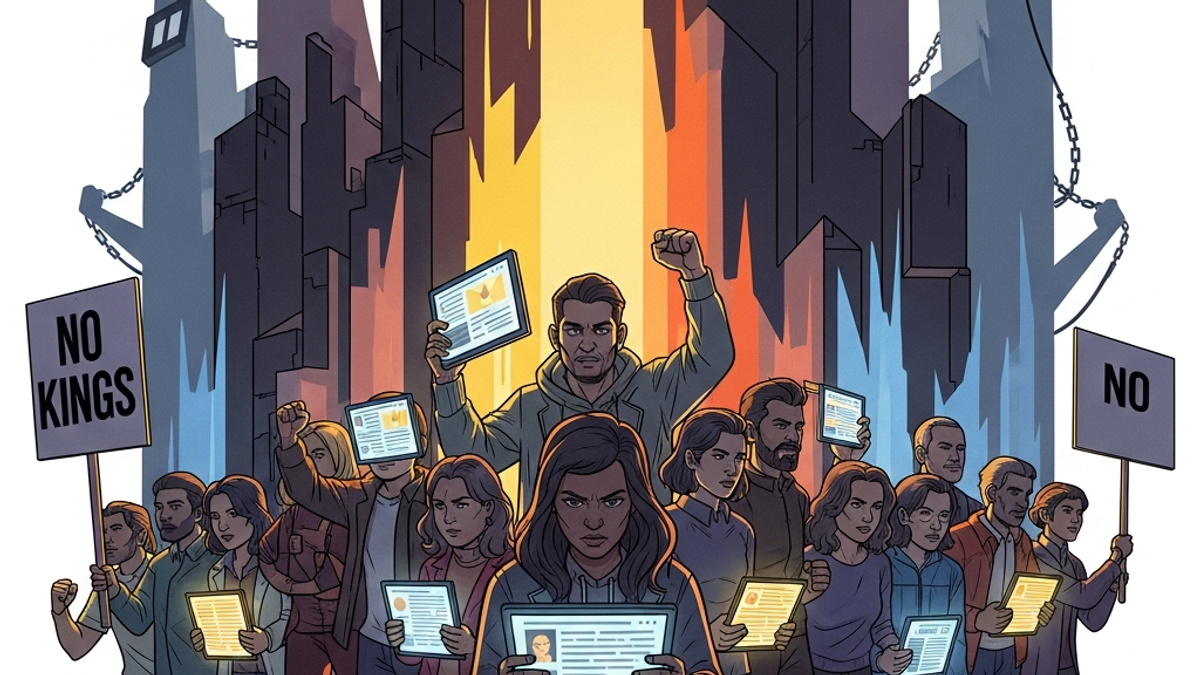
The primary organizers and key supporters of the "No Kings" protests are a broad network of progressive advocacy groups and grassroots organizations united against perceived threats to American democracy, with major organizing roles attributed to groups like **Public Citizen** and **MoveOn** (as cited by PBS NewsHour and other sources covering the events). These demonstrations, which have drawn millions, specifically challenge the perceived authoritarian actions of the U.S. administration, viewing the movement as a necessary defense of democratic principles against leadership that suggests monarchical authority.
### What is the core ideological meaning behind the "No Kings" moniker?
The designation "No Kings" is a direct, symbolic rejection of governance perceived as antidemocratic or autocratic. The name arose in response to actions taken by the administration that were characterized by protesters as overreaching, particularly in the context of federal power displays and statements made by the President suggesting king-like authority (Britannica). Ideologically, the movement stands against any leader who seeks to replace established democratic norms with an "authoritarian regime," as articulated by organizers from groups like Public Citizen (PBS NewsHour). For the participants, the phrase is a fundamental declaration that power in the U.S. resides with the people, not an appointed or elected figure acting outside constitutional bounds.
### What specific administration policies spurred the largest 'No Kings' demonstrations?
The largest waves of "No Kings" protests were galvanized by several high-tension policy issues related to the administration’s actions. A major catalyst for significant turnout was the administration's stance and actions regarding **immigration raids** and the deployment of federal resources, such as the National Guard, to cities like Los Angeles to protect immigration enforcement officers (Britannica). Beyond immigration, general outrage over what organizers labeled as the administration’s "authoritarianism" and "reckless" policies fueled the demonstrations, encouraging citizens "from all walks of life, from rural communities to big cities" to participate (Scripps News).
### How significant was the nationwide turnout for these coordinated events?
The turnout for the "No Kings" rallies was exceptionally significant, positioning them among the largest demonstrations in recent U.S. history. Organizers anticipated and claimed massive participation, with estimates for certain coordinated days suggesting that **over 5 million people attended the first round of rallies in June, followed by over 7 million in October**, and subsequent events expected to draw even larger crowds (Scripps News). This scale underscores the broad, sustained nature of the opposition to the policies being protested, mobilizing hundreds of thousands in major cities across the country and even sparking global events (PBS NewsHour, Scripps News).
### What is the role of progressive networks like MoveOn in organizing decentralized protests?
Progressive networks serve as crucial infrastructure for coordinating decentralized, large-scale protests like "No Kings Day." **MoveOn**, for instance, is explicitly named as a major organizer that helps bring together a vast coalition of like-minded groups (Scripps News). These networks provide the logistical backbone—communication channels, media outreach, and shared messaging—that allow local, independent actions to coalesce into a nationally unified movement. Furthermore, the coalition supporting these efforts appears to draw from a spectrum of left-leaning and activist organizations, which some commentators suggest can include groups like the Democratic Socialists of America and others, though the core public-facing organizations remain key drivers (Facebook Source).
### What is the future outlook for this type of coalition-based activism?
The persistence and scale of the "No Kings" movement suggest that broad, issue-based coalitions will remain a dominant feature of modern political mobilization, particularly in reaction to executive actions perceived as antidemocratic. This type of activism, driven by established non-profits and amplified by digital organizing, demonstrates an ability to rapidly mobilize large numbers across diverse geographic areas. The future impact will depend on whether these temporary coalitions can translate protest energy into sustained electoral or legislative pressure.
## Key Takeaways
* **Key Organizers:** Major progressive groups like Public Citizen and MoveOn were central to coordinating the national "No Kings" demonstrations.
* **Core Message:** The protest slogan directly targets perceived authoritarianism and challenges any leadership style resembling monarchical rule.
* **Policy Triggers:** Significant turnout was driven by opposition to immigration enforcement policies and broader concerns over democratic integrity.
* **Scale:** The events were estimated to mobilize millions of people nationally, marking them as historically large protests.
* **Organizational Model:** Success relies on sophisticated networks linking established advocacy groups with grassroots enthusiasm.
The "No Kings" protests represent more than a single policy objection; they are a significant manifestation of ongoing tension over the nature of executive power in the modern American political landscape. Understanding which groups drive these narratives is essential for accurately assessing the direction and strength of organized dissent. As political polarization continues, the ability of broad coalitions to rapidly mobilize around perceived existential threats to governance norms will remain a defining feature of civic engagement.
## References
* https://www.pbs.org/newshour/show/we-intend-to-defend-our-democracy-says-no-kings-protest-organizer
* https://www.scrippsnews.com/politics/no-kings-rally-organizers-expect-record-breaking-turnout-nationwide
* https://www.britannica.com/event/No-Kings-protests
* https://www.facebook.com/NPR/posts/organizers-behind-no-kings-a-network-of-progressive-groups-says-protesters-will-/1307553144575015/
* https://www.facebook.com/groups/341885123832583/posts/1306073207413765/