Where was the giant phantom jellyfish recently sighted or filmed?
The giant phantom jellyfish was recently filmed 250m deep off Argentina using an ROV, highlighting deep-sea biodiversity and exploration needs.
 Sylvie Vance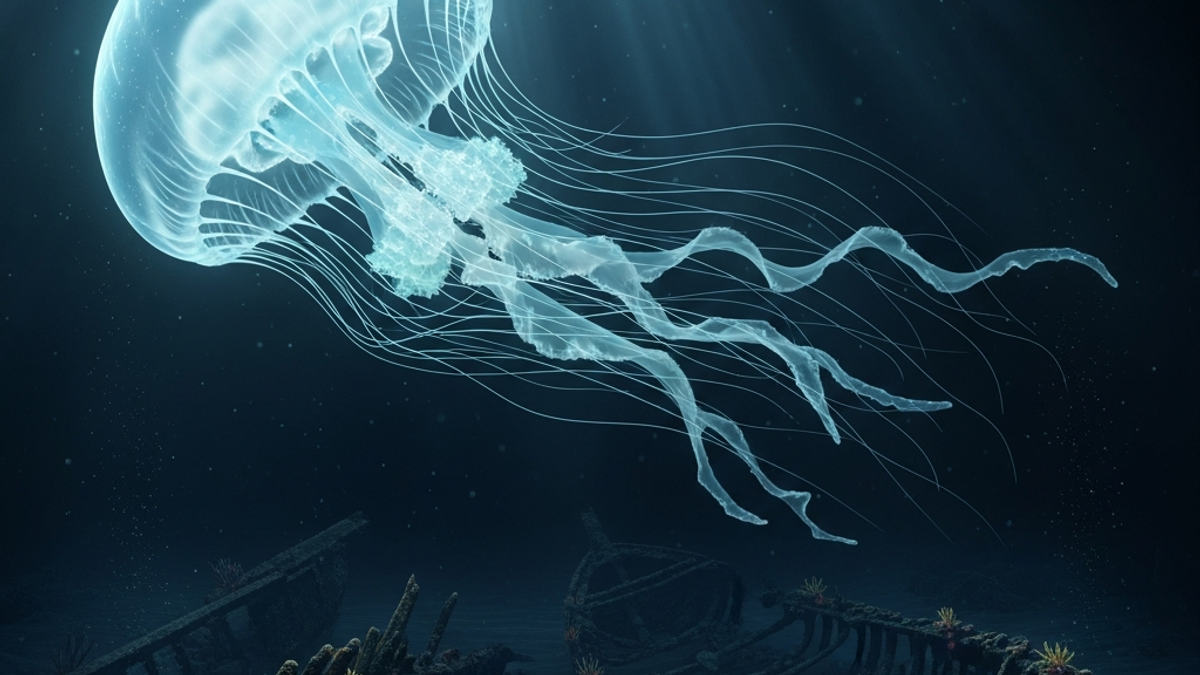
The giant phantom jellyfish, formally known as *Stygiomedusa gigantea*, was recently filmed in the deep sea off the coast of **Argentina**, specifically captured by a remotely operated vehicle (ROV) at a depth of 250 meters below the surface in the South Atlantic Ocean (https://www.bbc.com/news/videos/cm24jl73pydo). This rare sighting brings the mysterious, bus-sized creature back into the spotlight, reminding the public and the scientific community just how much of Earth's largest habitat remains unexplored.
### What makes the *Stygiomedusa gigantea* so rare and what are its defining physical characteristics?
The rarity of the giant phantom jellyfish stems from its extreme habitat: the bathypelagic zone, or the deep ocean, which is incredibly difficult for humans to access and study (https://www.bbc.com/news/videos/cm24jl73pydo). The species has only been documented about 130 times in over a century of observation, primarily through deep-sea submersibles (https://www.fox5atlanta.com/news/rare-giant-phantom-jellyfish-caught-deep-sea-video-off-argentina-coast). Its defining characteristic is its immense size; it is one of the largest known jellyfish species, capable of growing to lengths of up to 10 meters (33 feet) or more (https://www.tcpalm.com/story/life/animalkind/2026/02/04/giant-phantom-jellyfish-sighting-video-argentina/88509145007/). Unlike many shallow-water jellyfish, the *Stygiomedusa gigantea* features four incredibly long, thick oral arms, which it uses to capture prey, rather than stinging tentacles, giving it a distinctive, ghostly appearance in the darkness (https://www.youtube.com/shorts/8CBKSBOAQis).
### What advanced technology was used to capture this elusive creature on film, and what does this reveal about deep-sea research capabilities?
The recent documentation of the giant phantom jellyfish was made possible by advanced deep-sea exploration technology, most notably the use of Remotely Operated Vehicles (ROVs) deployed by research institutes (https://www.youtube.com/shorts/8CBKSBOAQis). ROVs are tethered, unmanned submersibles equipped with high-definition cameras, sensitive lighting systems, and precise maneuvering capabilities, allowing scientists to observe and record deep-sea fauna in its natural habitat without disturbing it excessively. The ability to capture such clear footage at 250 meters demonstrates a significant leap in marine robotics and imaging science (https://www.youtube.com/shorts/8CBKSBOAQis). This capability is crucial because it allows researchers to gather behavioral data and high-quality visual evidence, moving beyond the limited scope of previous submersible encounters to build a more comprehensive understanding of these cryptic species.
### What do sightings of giant deep-sea organisms like this imply about unexplored ocean ecosystems and biodiversity?
Sightings of massive, elusive creatures like the *Stygiomedusa gigantea* strongly imply that vast areas of the deep ocean remain functionally unexplored and likely harbor significant, undiscovered biodiversity (https://www.tcpalm.com/story/life/animalkind/2026/02/04/giant-phantom-jellyfish-sighting-video-argentina/88509145007/). Because the jellyfish was filmed off the Argentine coast, it specifically highlights the biological richness of the South Atlantic abyss, an area less frequently surveyed than the Pacific or North Atlantic. These large, slow-moving predators occupy apex or near-apex niches in their dark environments, suggesting a stable, complex food web exists hundreds of meters below the surface (https://www.fox5atlanta.com/news/rare-giant-phantom-jellyfish-caught-deep-sea-video-off-argentina-coast). Every confirmed sighting acts as a powerful testament to the need for continued deep-sea conservation and exploration, as we cannot protect what we have not yet mapped or cataloged.
## Key Takeaways: Decoding the Deep Sea Phenomenon
Understanding the recent giant phantom jellyfish sighting offers several critical insights into marine science and exploration:
* **Location Confirmed:** The latest confirmed sighting occurred in the South Atlantic Ocean, approximately 250 meters deep, off the coast of Argentina (https://www.bbc.com/news/videos/cm24jl73pydo).
* **Technological Validation:** High-definition ROVs are the key to modern deep-sea ecology, enabling non-invasive observation of rare megafauna.
* **Biological Significance:** The *Stygiomedusa gigantea*'s sheer size and scarcity highlight the vast unknown biodiversity residing in the bathypelagic zone.
* **Habitat Focus:** The sighting emphasizes the unexplored ecological importance of the deep waters off South America.
The future of deep-sea research will likely involve more autonomous underwater vehicles (AUVs) and advanced sensor arrays, allowing for longer, untethered surveys. This sustained observation will be vital to understanding how these deep-sea ecosystems respond to global stressors like climate change and potential deep-sea mining activities before we fully grasp their inherent value.
The elusive giant phantom jellyfish, captured briefly in the cold, dark waters off Argentina, serves as a living metaphor for the ocean itself: a place of monumental, barely glimpsed wonders that demand our continued scientific curiosity and protection. As technology allows us to peer deeper, the question remains not only *what* else is down there, but *how* long we can keep these mysteries intact.
## References
* https://www.bbc.com/news/videos/cm24jl73pydo
* https://www.fox5atlanta.com/news/rare-giant-phantom-jellyfish-caught-deep-sea-video-off-argentina-coast
* https://www.tcpalm.com/story/life/animalkind/2026/02/04/giant-phantom-jellyfish-sighting-video-argentina/88509145007/
* https://www.youtube.com/shorts/8CBKSBOAQis