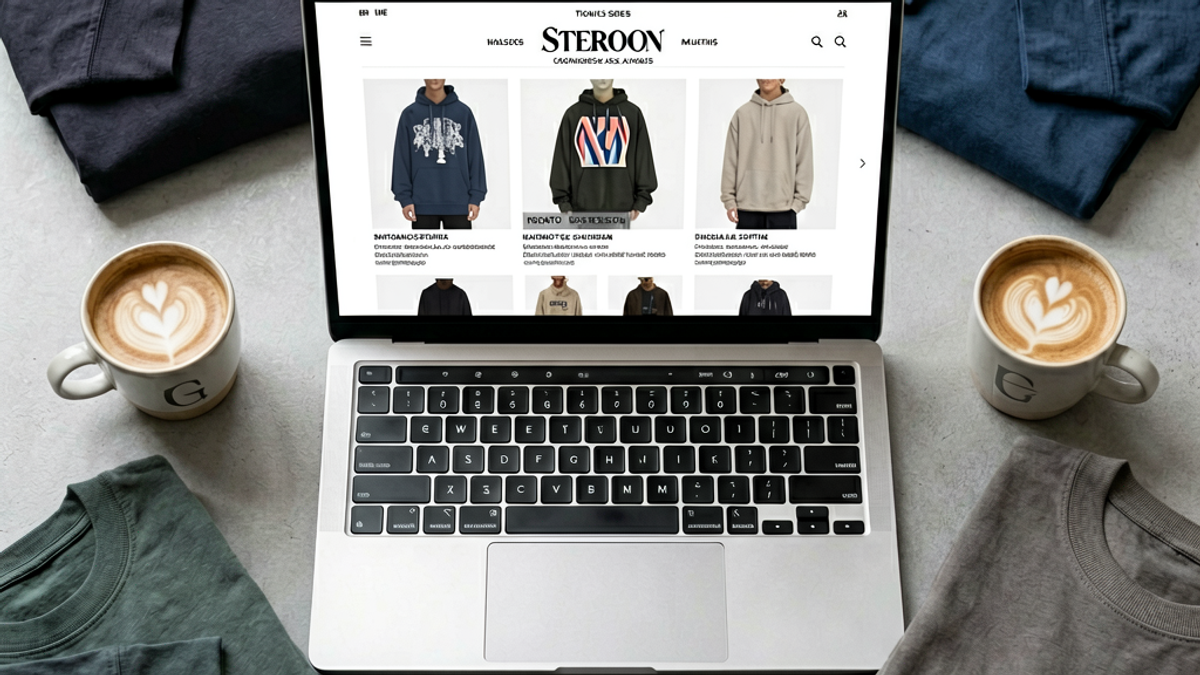
Where Can You Actually Buy Cool Graphic Tees Online in 2026?
The five most reliable places to buy graphic tees online are brand-direct Shopify stores, curated streetwear marketplaces, drops and limited-edition platforms, vintage and secondhand shops, and...
Sylvie Vance
•
The five most reliable places to buy graphic tees online are brand-direct Shopify stores, curated streetwear marketplaces, drops and limited-edition platforms, vintage and secondhand shops, and boutique multi-brand sites — each one serves a different style tribe, and the right pick depends on whether you want a fresh seasonal drop, a niche independent label, or a thrashed 90s survivor. Skip generic Amazon listings and fast-fashion aggregators; the best graphic tees in 2026 still live on the brand's own site or on a small number of trusted specialty platforms.
Where to Buy Graphic Tees Online: The 5 Channels That Actually Deliver
Most "where to buy graphic tees" search results drown you in generic listings, but the channel mix that produces real finds hasn't changed much in the last few years. Think of online graphic tee shopping as five distinct lanes, each one with its own price band, drop cadence, and aesthetic. Once you know which lane matches what you're after, the rest of the buying decision is easy.
The split roughly tracks shopping intent. Brand-direct sites win on freshness and authenticity. Curated marketplaces win on variety and discovery. Drops platforms win on rarity and resale value. Vintage shops win on character and one-of-one pieces. Boutique multi-brand stockists win on taste curation when you don't want to do the filtering yourself. Below is what each lane is actually good for — and where it falls short.
Brand-Direct Shopify Stores: Freshness and Authenticity
The single best place to buy a graphic tee is almost always the label's own website. Independent streetwear brands in 2026 run on Shopify almost universally — a custom storefront, a mailing list, and occasional capsule drops. Buying direct means you're getting the garment as the designer made it: correct fabric, correct print, current season. You're also first in line for restocks.
The trade-offs are real. Brand sites rarely offer free shipping below $100, and their size runs can be inconsistent — a medium at one label is a large at another. Customer service is usually email-only, and returns are slower than Amazon. But the design quality and the fit specificity make up for the friction.
Best for: fresh seasonal drops, indie labels, getting on the mailing list for limited releases.
Price range: $35–$80 for most mid-tier streetwear; $100+ for elevated fabrics like heavyweight Pima cotton.
Watch for: shipping thresholds, restock notifications (most brands email 12–24 hours before public launch).
Curated Streetwear Marketplaces: Variety Without the Digging
Multi-brand marketplaces pull inventory from hundreds of indie labels into one searchable catalog. The strongest entries in this category hand-curate what they list, which is the difference between a discovery platform and a generic aggregator. You can browse by aesthetic (skate, punk, retro Japanese, Y2K, darkwear), filter by size, and usually trust that anything on the homepage meets a quality bar.
The downside is markup. Curated marketplaces take 30–50% of the retail price, so a tee that's $45 direct will run $60–$70 there. You're paying for curation, photography, and a unified returns policy. For shoppers who don't want to track 30 different brand newsletters, that tax is usually worth it.
Best for: discovery, finding labels you haven't heard of, consolidating shipping into one cart.
Price range: $50–$90 typical, $120+ for premium capsules.
Watch for: marketplace-exclusive colorways (often slightly different from the brand's direct site); sale sections tend to have the deepest cuts of the season.
Drops and Limited-Edition Platforms: Rarity Has a Price
If you're after the new-release-week hype tee — the one that sells out in 20 minutes and ends up on resale a week later — the platforms that host brand drops are where you go. These are raffle-based or queue-based release sites built to handle the traffic spike of a single launch. They verify identity, cap purchases per customer, and usually ship within 7–14 days.
The model is fundamentally different from a regular storefront: you're buying into a release event, not browsing a catalog. Drop platforms typically list the upcoming release 3–7 days in advance, open registration, then run a randomized draw or first-come queue on launch day. Miss the drop, and you'll pay 2–3x on the resale market — if it's still available.
Best for: hype releases, collab capsules, brand anniversaries.
Price range: MSRP at launch ($60–$150); resale 1.5–3x if you miss the drop.
Watch for: bots (most platforms use queue + captcha, but popular drops still see automated competition); one-per-customer limits are strict.
Vintage and Secondhand: One-of-One Pieces That New Money Can't Buy
Vintage isn't a substitute for a fresh drop — it's a parallel category. A genuine 1990s band tee, a screen-printed 2000s skate shirt, or a faded 80s souvenir graphic is something a new release can never replicate. The secondhand market for vintage graphic tees has matured into a serious shopping lane, with specialist platforms curating by era, condition, and authenticity.
Pricing on vintage is volatile. Common 90s prints might run $30–$60 in good condition; rare concert tees or genuine deadstock tour merch can clear $300. The grading convention matters: "mint" vintage usually means crisp print and no repairs; "distressed" means the wear is intentional and baked into the garment's character.
Best for: character pieces, conversation-starting graphics, collectors who want eras new production can't touch.
Price range: $25–$80 for common era-correct pieces; $150–$400+ for rare prints or documented deadstock.
Watch for: condition grading (always read the listing details); counterfeits for high-value band and tour tees.
How to Read a Listing So You Don't Get Burned
Once you've picked a channel, the next skill is reading the listing itself. Five cues separate a legit graphic tee from a waste of money, and they're the same on every platform.
Print method: look for screen print or discharge ink on the spec sheet. DTG (direct-to-garment) and HTV (heat-transfer vinyl) are cheaper but crack faster.
Fabric weight: anything under 5.5 oz is thin and will lose shape. 6 oz+ is the streetwear baseline; 7 oz+ is heavyweight and built to last.
Sizing chart: don't trust "runs true to size" — measure a tee you own and compare to the listed dimensions in inches.
Return policy: if the policy is opaque or only store credit, treat that as a sizing risk premium. Strong brands offer returns or exchanges within 14–30 days.
Brand story: a one-paragraph "about" page is the cheapest authenticity check. If the brand can't tell you who designed the print, where it's made, or why it exists, walk away.
Key Takeaways
Buy direct from the brand whenever possible — best price, best authenticity, first access to drops.
Use curated marketplaces for discovery, not for staple purchases — the 30–50% markup is a discovery tax, not a quality premium.
Drop platforms are a different shopping mode, not a better storefront — budget time, not just money.
Vintage is its own category with its own pricing logic; treat it as collectible, not as a deal.
Read the spec sheet — print method, fabric weight, sizing chart — before you read the price.
Where to Go From Here
The cleanest way to start is to pick one channel and learn it well. Most regular graphic tee buyers end up with a mix: a favorite brand-direct store for staples, one curated marketplace for discovery, and a vintage seller or two for character pieces. Once the mix is dialed in, the buying decision collapses from a 30-minute scroll to a five-minute check-in.
If you're building a wardrobe around graphic tees and want pieces designed to hold up season after season — heavyweight cotton, properly cured prints, fits cut for layering — the Stryxen Studio collection is a good starting point. It's the same lane as brand-direct: fresh drops, transparent spec sheets, and pricing built around the garment, not the markup.
Frequently Asked Questions
Are graphic tees cheaper online or in stores?
Online is usually 10–20% cheaper than physical retail for the same graphic tee because you're cutting out the storefront overhead. The exception is brand flagship stores in major cities — they sometimes run sample-sale events that undercut every online channel. Curated marketplaces tend to price identically online and in-store.
How do I know if an online graphic tee is good quality?
Check three things: the print method (screen print or discharge, not HTV), the fabric weight (6 oz cotton or heavier), and the stitching (double-needle hems, shoulder-to-shoulder taping). If the listing hides all three, it's almost always a fast-fashion print dressed up with photography.
What's the best site to buy unique graphic tees?
For unique pieces, brand-direct Shopify stores from independent labels are the strongest source — they print small runs and rarely restock the same design. Vintage platforms are the second-best lane for truly one-of-one graphics, especially for 90s and 2000s era prints.
Is it safe to buy graphic tees from drops platforms?
Yes, as long as you're on the platform's own site — never through a third-party link in DMs or a "restock bot" service. Drop platforms verify identity, cap purchases per customer, and run queue-based releases to keep bots out. Pay through the platform's checkout and you'll get the same consumer protection as any other online order.
Free Shipping on All OrdersFree ReturnsNo Hidden Fees
 Sylvie Vance