What kind of events or activities typically happen on World Down Syndrome Day in the United States?
WDSD in the U.S. features local events and major advocacy, symbolizing Down syndrome via the 3/21 date to promote inclusion.
 Sylvie Vance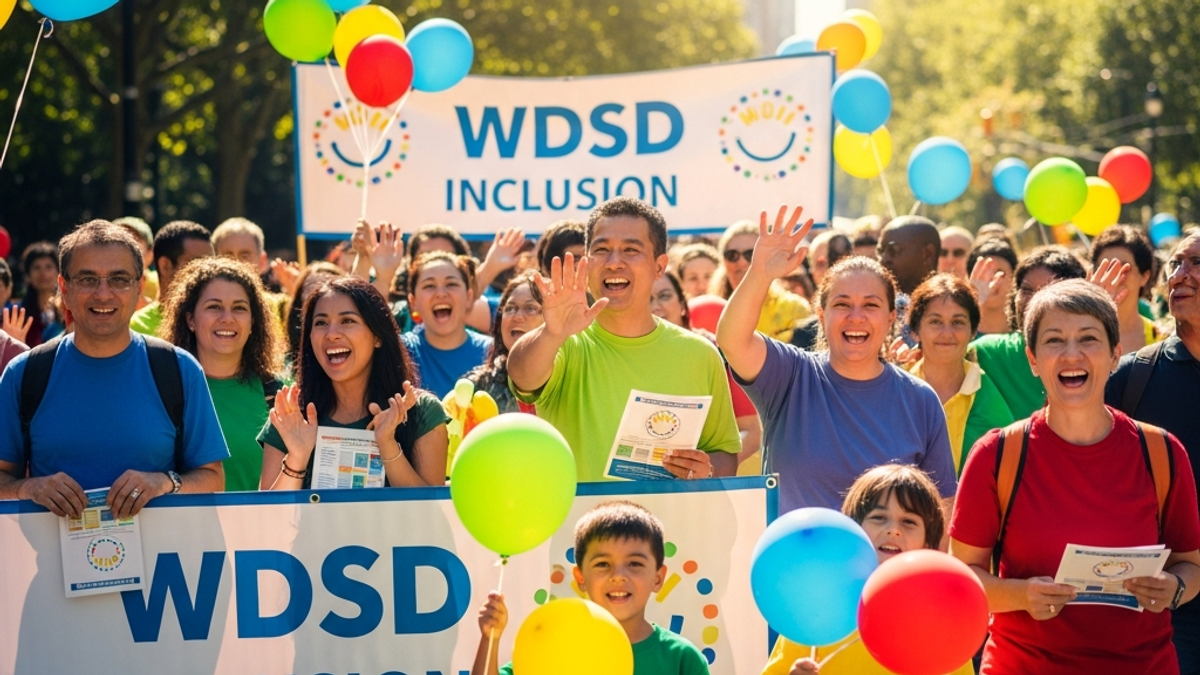
Events and activities across the United States on World Down Syndrome Day (WDSD), observed annually on March 21st, typically center on awareness, celebration, and advocacy, ranging from local community gatherings and social functions to symbolic lighting of landmarks and participation in nationwide awareness campaigns (https://www.worlddownsyndromeday.org/). These local and national efforts aim to educate the public on what Down syndrome is, champion the value of individuals with Down syndrome in society, and foster deeper inclusion (https://mdsc.org/events/world-down-syndrome-day/).
### Why is March 21st specifically chosen as the date for World Down Syndrome Day?
The date, March 21st (3/21), was intentionally selected to symbolize the genetic basis of Down syndrome, which is the presence of a full or partial extra copy of the 21st chromosome, known as trisomy 21 (https://mdsc.org/events/world-down-syndrome-day/). This numerical significance provides an immediate, recognizable, and educational marker for the global observance. The day serves as a powerful educational tool to explain the condition while simultaneously shifting the focus toward celebrating the unique contributions and inherent worth of people with Down syndrome (https://www.worlddownsyndromeday.org/).
### Beyond local gatherings, what major national or international advocacy events are associated with WDSD?
While grassroots community events are the backbone of WDSD participation across the U.S., significant national and international advocacy events provide a platform for systemic change and global connection. Nationally, organizations often coordinate advocacy efforts that align with the global theme—for instance, the 2026 theme is suggested to address the problem of loneliness within the community (https://www.worlddownsyndromeday.org/). Internationally, major focal points include the **World Down Syndrome Day Conference** held annually at the **United Nations Headquarters in New York**, and coordinated events at the **United Nations in Geneva** (https://www.worlddownsyndromeday.org/, https://www.worlddownsyndromeday.org/events-and-activities/). These UN-level events are crucial, often providing self-advocates with a global stage to share their expertise and influence policy (https://www.worlddownsyndromeday.org/events-and-activities/).
### What are the most common awareness campaigns, like "Rock Your Socks," that individuals can participate in across the U.S.?
One of the most widely recognized and accessible campaigns across the United States is the **"Rock Your Socks"** initiative, which encourages participants to wear mismatched, brightly colored socks (https://mdsc.org/events/world-down-syndrome-day/). The act of wearing mismatched socks visually represents the 21st chromosome differences (trisomy 21) in a fun, non-intrusive way, serving as a great conversation starter for awareness (https://mdsc.org/events/world-down-syndrome-day/). Furthermore, many state or regional organizations facilitate large-scale visual demonstrations, such as arranging for significant local landmarks—like the Leonard Zakim Bunker Hill Memorial Bridge in Massachusetts—to be lit up in the official blue and yellow colors of Down syndrome awareness (https://mdsc.org/events/world-down-syndrome-day/). Other common activities include community celebrations, dances, fundraising events, awareness walks, and informational sessions designed to promote inclusion and friendship (https://dsaco.org/fundraisers/wdsd/).
### Key Takeaways: Preparing for World Down Syndrome Day 2026
Understanding the landscape of WDSD activities allows individuals, families, and organizations to maximize their impact and participation in the years ahead.
* **Symbolism is Key:** The date 3/21 is inherently educational, reinforcing the genetic basis of Down syndrome.
* **Dual Focus:** Events balance local community celebration (parties, walks, local lightings) with high-level advocacy (UN conferences).
* **Participatory Campaigns:** Campaigns like "Rock Your Socks" offer simple, visible ways for anyone to join the awareness movement, regardless of location.
* **Thematic Relevance:** Global themes, such as the anticipated focus on loneliness for 2026, guide specific advocacy messaging for the year.
For the upcoming WDSD 2026, as themes continue to evolve—potentially focusing on overcoming isolation—the trend suggests an increased emphasis on genuine connection and community integration, moving beyond simple awareness into actionable inclusion.
## Conclusion
World Down Syndrome Day in the United States is a vibrant mosaic of localized celebration and unified national advocacy, all anchored by the profound meaning of the date 3/21. From neighborhood sock-matching parties to formal addresses at the United Nations, the collective effort is designed to foster a world where individuals with Down syndrome are fully seen, valued, and included. As we look toward 2026, understanding these established activities provides the framework for deeper engagement, urging every community to seek out ways to promote belonging and combat isolation, solidifying WDSD as a day of meaningful, tangible change.
## References
* https://www.worlddownsyndromeday.org/
* https://www.worlddownsyndromeday.org/events-and-activities/
* https://mdsc.org/events/world-down-syndrome-day/
* https://dsaco.org/fundraisers/wdsd/