What is March Madness and how does the tournament work?
March Madness refers to the NCAA Division I men's and women's basketball tournaments, known for their single-elimination format, which often leads to surprising upsets and intense fan engagement through bracket challenges.
 Sylvie Vance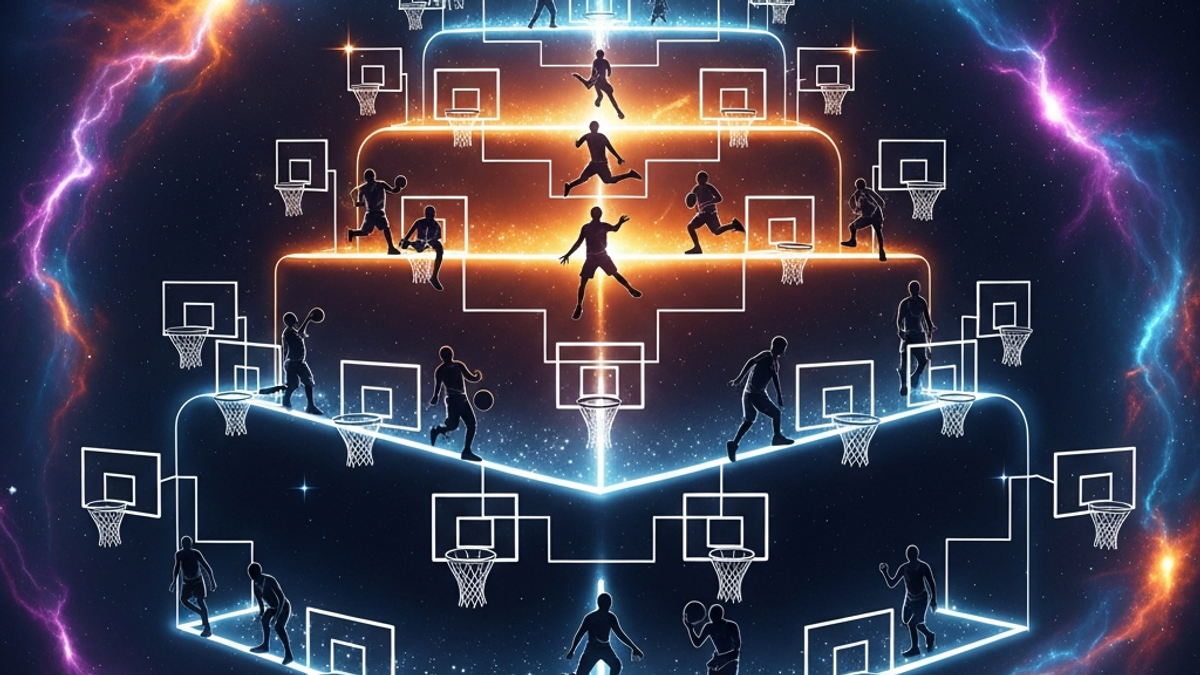
March Madness refers to the NCAA Division I Men's Basketball Tournament, an annual, single-elimination competition held each spring since 1939, featuring sixty-eight college basketball teams vying for the national championship (https://www.ebsco.com/research-starters/sports-and-leisure/march-madness). This phenomenon is not just a sporting event but a cultural touchstone, characterized by massive office pools, unpredictable upsets, and intense focus on bracketology. Understanding the structure and selection process is key to grasping the excitement that captivates millions nationwide.
### How are the 68 teams selected for the NCAA Tournament?
The selection of the 68 teams is managed by the NCAA Men's Division I Basketball Committee, which meticulously reviews the performance of teams across the regular season and their respective conference tournaments (https://www.ncaa.com/news/basketball-men/bracketiq/2026-02-09/what-march-madness-ncaa-tournament-explained). The field consists of two main types of selections: **automatic bids** and **at-large bids**. Automatic bids are granted to the winner of each of the 32 NCAA Division I conferences, guaranteeing them a spot (https://www.basketball.com.au/news/what-is-march-madness-and-how-does-it-work). At-large bids are extended to the remaining high-quality teams that did not win their conference tournament but are deemed worthy by the Selection Committee based on metrics like overall record, strength of schedule, and performance against quality opponents.
### What does the seeding and bracketing process entail?
Once the 68 teams are selected, the Selection Committee assigns a seed number to every team, ranking them from 1 to 68, with the highest-ranked team designated as the overall No. 1 seed (https://www.ncaa.com/news/basketball-men/bracketiq/2026-02-09/what-march-madness-ncaa-tournament-explained). These seeds are organized into four geographical regions (East, Midwest, South, and West) to facilitate the bracket structure. The top four seeds in each region are typically the strongest contenders. The bracketing process is designed to ensure that the strongest teams do not meet until the later stages of the tournament, although the potential for upsets between highly-seeded teams is central to the event's allure.
### What is the structure of the single-elimination tournament format?
The defining characteristic of March Madness is its **single-elimination format**: lose once, and your season is immediately over (https://www.redandblack.com/sports/march-madness-explained-how-the-ncaa-tournament-works/article_0fef11b6-9d04-44c2-b2a0-cc102ec16174.html). The 68-team field is reduced through successive rounds of play:
1. **First Four:** To accommodate 68 teams, four preliminary games are played to reduce the field from 68 to 64. These matchups typically involve the lowest-seeded automatic qualifiers and the last at-large teams (https://www.ncaa.com/news/basketball-men/bracketiq/2026-02-09/what-march-madness-ncaa-tournament-explained).
2. **Round of 64:** After the First Four, the main bracket begins.
3. **Rounds of 32, Sweet Sixteen, and Elite Eight:** The tournament proceeds through these rounds, narrowing the field down to four teams.
4. **Final Four and National Championship:** The last four teams compete in the Final Four weekend, culminating in the National Championship game.
### Why is this event so popular, involving office pools and bracket challenges?
The immense popularity of March Madness stems directly from the single-elimination bracket structure combined with the inherent unpredictability of college basketball (https://www.ebsco.com/research-starters/sports-and-leisure/march-madness). The potential for a lower-seeded team (an "underdog") to defeat a heavily favored team—known as an "upset"—is a major driver of engagement. This uncertainty fuels the tradition of bracket contests, where participants attempt to predict the outcome of all 63 games (or 67, depending on the pool structure), often involving simple methods like picking games based on school colors or mascots, in addition to statistical analysis (https://www.espn.com/mens-college-basketball/story/_/id/48214906/march-madness-ncaa-men-women-tournament-seeding-brackets). The collective experience of watching these unpredictable games creates shared cultural water-cooler moments across the country.
### Key Takeaways and Future Outlook
Understanding March Madness requires grasping the tension between structured selection and chaotic competition.
* **Selection Basis:** Teams are chosen based on a comprehensive review of regular-season and conference tournament performance, leading to automatic and at-large bids.
* **Format Certainty:** The tournament is definitively single-elimination; every game is a high-stakes, season-ending event.
* **Seeding Matters, But Doesn't Guarantee Success:** While the committee seeds teams 1 through 68, the structure allows for upsets, which is the primary driver of the event's cultural relevance.
* **Cultural Impact:** The bracket pool tradition unites participants across various professional and social settings, leveraging the inherent uncertainty of the games.
Looking ahead, the influence of March Madness is likely to grow, especially as media coverage and betting markets surrounding college sports expand. However, the core mechanism—the 68-team, single-elimination bracket—is unlikely to change, as its inherent volatility remains its greatest asset.
The NCAA Men's Basketball Tournament remains a uniquely American sporting spectacle. By mastering the rules of selection, seeding, and the unforgiving nature of the single-elimination bracket, enthusiasts can better appreciate why, for three weeks every spring, millions defer to the unpredictable brilliance of college basketball.
## References
* https://www.ebsco.com/research-starters/sports-and-leisure/march-madness
* https://www.ncaa.com/news/basketball-men/bracketiq/2026-02-09/what-march-madness-ncaa-tournament-explained
* https://www.redandblack.com/sports/march-madness-explained-how-the-ncaa-tournament-works/article_0fef11b6-9d04-44c2-b2a0-cc102ec16174.html
* https://www.basketball.com.au/news/what-is-march-madness-and-how-does-it-work
* https://www.espn.com/mens-college-basketball/story/_/id/48214906/march-madness-ncaa-men-women-tournament-seeding-brackets