What are the specific demands or goals of the protestors involved in the "no kings" movement?
The 'No Kings' movement is a decentralized, national resistance focused on rejecting perceived authoritarianism and defending democratic principles. It is characterized by its broad opposition to actions perceived as overstepping authority, particularly during the Trump administration, and its emphasis on widespread, grassroots mobilization to uphold democratic ideals.
 Sylvie Vance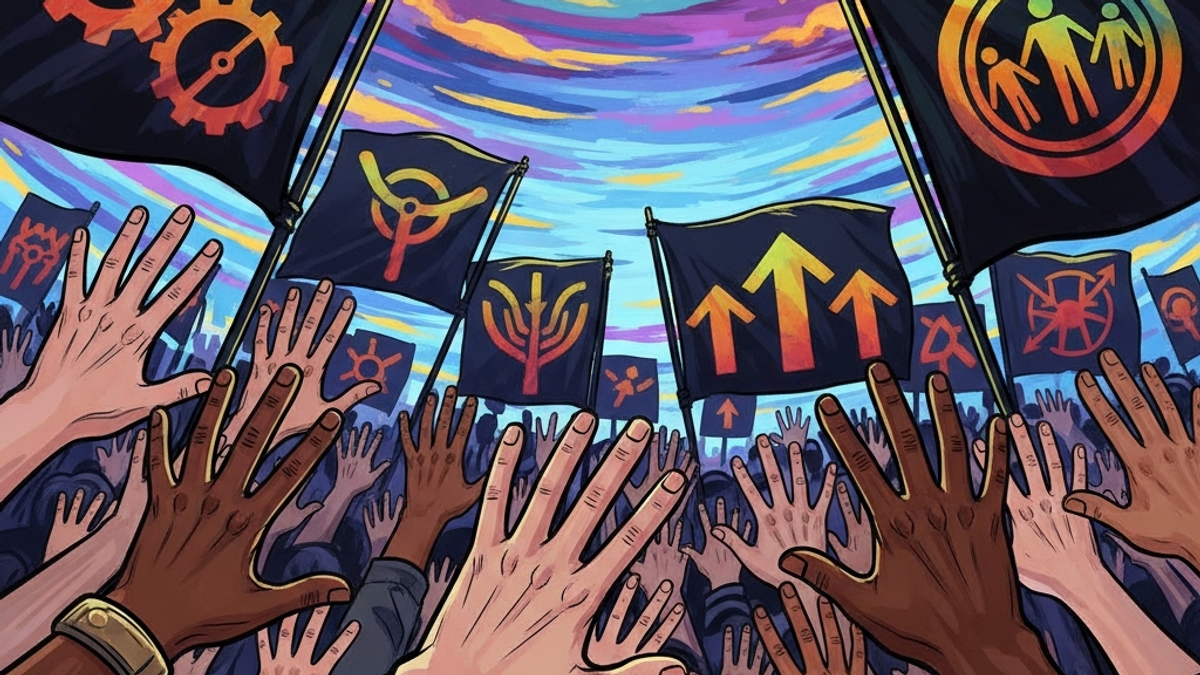
The specific, unified demands of the "No Kings" movement are centered on resisting what organizers perceive as authoritarian overreach and democratic backsliding by a political figure, culminating in the broad goal of declaring that "America has No Kings" (https://www.nokings.org/about-nk). Rather than issuing a discrete list of policy demands, the movement functions as a sustained national resistance against perceived tyranny, often mobilizing in response to specific political events, such as protesting the policies and actions of the Donald Trump administration, including his statements comparing himself to a king (https://www.britannica.com/event/No-Kings-protests). This movement seeks to emphasize democratic principles over monarchical or autocratic tendencies in governance, mobilizing millions across the country to defend democracy (https://www.nokings.org/about-nk).
***
### How did the "No Kings" rallying cry originate?
The "No Kings" rallying cry originated as a direct, sharp rebuke to perceived authoritarian language used by a political leader, specifically Donald Trump (https://www.audacy.com/1010wins/news/local/nyc-plans-for-dozens-of-no-kings-marches-in-sharp-rebuke-of-trump). The term gained significant traction after Trump allegedly declared himself a "regent" while criticizing New York City’s congestion pricing program (https://www.pbs.org/newshour/politics/what-to-know-about-no-kings-protests-against-trumps-policies). By using the term "No Kings," organizers frame the opposition not just as a policy disagreement, but as a defense of democratic foundations against actions or rhetoric they interpret as monarchical or antidemocratic (https://www.britannica.com/event/No-Kings-protests).
### What specific political actions triggered the major "No Kings" mobilizations?
The "No Kings" protests were mobilized in response to several high-profile political actions, often timed to coincide with significant dates or perceived displays of executive power. One major mobilization was organized to counter what organizers called a “hostile government takeover” and to protest the administration's plans for an expensive, lavish military parade, coinciding with a leader's birthday (https://www.pbs.org/newshour/politics/what-to-know-about-no-kings-protests-against-trumps-policies). Furthermore, the movement has seen significant activity following nationwide protests against federal immigration raids, where the deployment of the National Guard further agitated opponents who called for the leader to be "dethroned" (https://www.britannica.com/event/No-Kings-protests). The initial protests were planned for June, with follow-up national events occurring in October, demonstrating a sustained effort (https://www.nokings.org/about-nk).
### What is the scale and geographic reach of the "No Kings" movement?The "No Kings" movement has demonstrated significant scale and geographic reach, positioning itself as a major mobilization effort. Organizers claim that one event on October 18 involved over seven million Americans participating in more than 2,700 events across all 50 states (https://www.nokings.org/about-nk). This scale has been publicly characterized as being substantially larger than the turnouts for presidential inaugurations (https://www.nokings.org/about-nk). In cities like New York, the demonstrations have been highly localized, with organizers advertising dozens of locations for participants to join, ranging from the East Bronx to Park Slope in Brooklyn (https://www.audacy.com/1010wins/news/local/nyc-plans-for-dozens-of-no-kings-marches-in-sharp-rebuke-of-trump).### How is the movement structured to maintain sustained national resistance?The movement has evolved from a single-day event into a sustained national resistance by employing a decentralized structure focused on local action and resource sharing. Organizers established platforms for participants to register new neighborhood demonstrations and access resources like "Know Your Rights" information and training sessions (https://www.nokings.org/about-nk). This strategy allows the movement to maintain visibility by organizing continuous local demonstrations, spreading from small towns to major city centers, unified under the theme of defending democracy (https://www.nokings.org/about-nk).### Key Takeaways: Understanding the "No Kings" ResistanceThe "No Kings" movement serves as a crucial case study in modern, decentralized political mobilization. Understanding its core tenets provides insight into current sociopolitical fault lines:* **Core Tenet:** The primary goal is the philosophical rejection of perceived monarchical or autocratic behavior in democratic governance, encapsulated by the phrase "America has No Kings."* **Action Over Policy:** The movement's strength lies in its resistance framework rather than a rigid, formalized platform of specific legislative demands.* **Decentralized Execution:** Success is driven by a highly localized execution model, utilizing thousands of independent events coordinated through national organizational scaffolding.* **Catalyst Events:** Mobilizations are often catalyzed by specific political rhetoric or executive actions deemed to infringe upon democratic norms, such as perceived power grabs or military displays.The future impact of this movement hinges on its ability to translate broad philosophical resistance into sustained civic engagement beyond high-profile protest days. If the infrastructure built for organizing local resistance remains active, it could serve as a permanent check on perceived governmental overreach.***The "No Kings" movement illustrates a contemporary form of political dissent where the assertion of foundational democratic principles becomes the central, unifying message. While lacking a traditional political platform, its ability to mobilize millions through a potent, easily digestible symbol—the rejection of kings—highlights a powerful avenue for expressing deep-seated political anxieties in the current environment. The enduring question for analysts is whether this energy can be channeled into lasting institutional influence or if it will remain a powerful, yet transient, feature of the national political conversation.## References* https://www.nokings.org/about-nk* https://www.britannica.com/event/No-Kings-protests* https://www.audacy.com/1010wins/news/local/nyc-plans-for-dozens-of-no-kings-marches-in-sharp-rebuke-of-trump* https://www.pbs.org/newshour/politics/what-to-know-about-no-kings-protests-against-trumps-policies