What are the historical roots of "no kings" sentiment, particularly in the United States?
The US "No Kings" sentiment is a recurring theme rooted in the rejection of monarchy, with historical precedents like the English Civil War and its influence on the American Revolution. This sentiment is often invoked to counter perceived executive overreach and to uphold principles of popular sovereignty.
 Sylvie Vance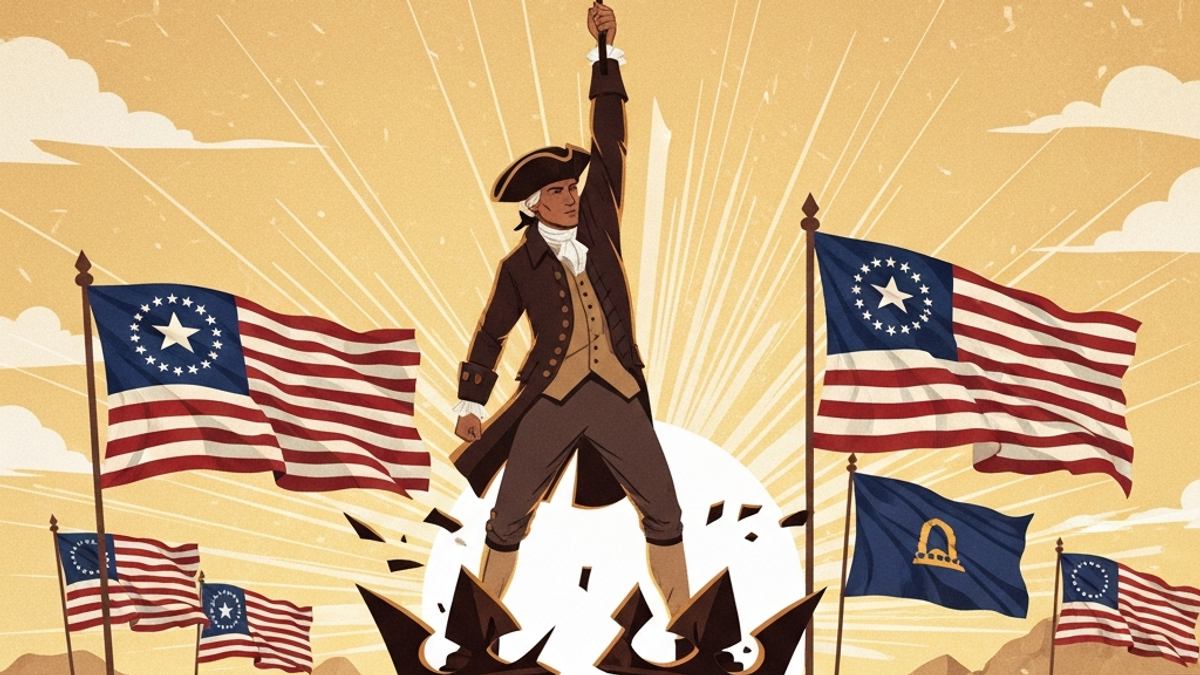
The historical roots of the "no kings" sentiment in the United States are deeply embedded in the nation's founding rejection of monarchy and tyranny, dating back to the colonial desire for self-governance and finding a powerful earlier precedent in the 17th-century English Civil War where Parliamentarians declared that divine authority, not royal prerogative, should rule the conscience (https://theconversation.com/no-kings-americas-oldest-political-slogan-is-drawing-millions-out-onto-the-streets-268174). This enduring American ethos, often expressed through the slogan "No Kings," serves as a perpetual reminder that what unites the populace is the rejection of unaccountable executive power and the adherence to ordered liberty.
### How did the rejection of monarchy translate into early American political theory?
The foundation of American anti-monarchical sentiment was codified during the American Revolution, transforming abstract political philosophy into concrete revolutionary action. The core belief was the inherent equality of citizens and the rejection of hereditary rule. This ideology directly informed the structure of the new government, explicitly establishing a republic where power derived from the consent of the governed, not from divine right or birthright. The destruction of King George III’s equestrian statue in New York, where the metal was melted down for bullets, was a potent symbolic act demonstrating the physical and ideological rejection of royal authority (https://hyperallergic.com/a-visual-history-of-no-kings/). This act was a practical application of the "No Kings" principle, ensuring that the new nation would institutionalize a system where no single individual could claim supreme, inherited authority over the populace.
### What is the significance of the 17th-century English Civil War in shaping American "No Kings" ideology?
The 17th-century English Civil Wars provided a crucial intellectual and practical blueprint for American anti-tyrannical thought. During this period, radical thinkers like George Buchanan developed political theories justifying regicide against a tyrant, arguing that any individual could lawfully exact penalties from such a ruler (https://hyperallergic.com/a-visual-history-of-no-kings/). The ultimate execution of King Charles I in 1649 offered European history an unprecedented example of commoners holding a monarch accountable and removing him by force. American colonists, steeped in this tradition of resistance, viewed the struggle against King George III not just as a tax dispute, but as a continuation of this struggle against royal overreach, ensuring that concepts like limited government and popular sovereignty were prioritized in the new republic's structure.
### In which specific US historical events has the "No Kings" sentiment manifested before the current era?
The "No Kings" sentiment has resurfaced throughout American history whenever executive power has been perceived as exceeding constitutional bounds or encroaching upon individual liberties. For example, the spirit of this slogan underpinned anti-Federalist critiques during the ratification debates, which feared an overly powerful central government mimicking a monarchy. More recently, the phrase has been leveraged in various protests across the 21st century, often aimed at presidents perceived to be accumulating too much power or acting above the rule of law (https://theconversation.com/no-kings-americas-oldest-political-slogan-is-drawing-millions-out-onto-the-streets-268174). These periodic uses demonstrate that the concept is a constant, latent theme in American political discourse, ready to be activated during moments of perceived crisis regarding the balance of power.
### What does the modern application of the "No Kings" slogan reveal about contemporary concerns regarding executive power?
The contemporary use of "No Kings" functions as a shorthand rallying cry, signaling deep-seated distrust in centralized authority across the political spectrum. When deployed in modern protests, the slogan gestures toward core American virtues such as humility, order, and self-restraint in leadership—qualities critics argue are currently lacking in high office (https://theconversation.com/no-kings-americas-oldest-political-slogan-is-drawing-millions-out-onto-the-streets-268174). It is a mechanism for expressing the fundamental American belief that leaders are servants of the people, not their rulers. As a piece of political communication, it is highly effective because it taps directly into the nation's foundational rejection of tyranny, making it a persistent and potent tool for those seeking to check perceived overreach by any figure in power.
## Key Takeaways: Understanding the Enduring Anti-Authoritarian Strain
* **Foundational Principle:** The "No Kings" sentiment is not a partisan concept but a direct inheritance from the American Revolution, which was itself informed by earlier European struggles against absolute monarchy.
* **Historical Precedent:** The English Civil War and the execution of Charles I provided a critical, precedent-setting example of holding a sovereign accountable that resonated deeply with colonial thinkers.
* **Cyclical Relevance:** The slogan reappears cyclically in American history whenever public trust erodes due to concerns over the expansion or abuse of executive authority.
* **Symbolic Power:** The phrase instantly symbolizes the rejection of unaccountable power and the demand for leaders to adhere to constitutional limits and service.
The future impact of this recurring sentiment suggests that vigilance against perceived monarchical tendencies in political leadership will remain a permanent feature of the American civic landscape. As long as the nation values its republican structure, moments of intense political contention will inevitably invoke this powerful, historically resonant demand for democratic humility.
## References
* https://theconversation.com/no-kings-americas-oldest-political-slogan-is-drawing-millions-out-onto-the-streets-268174
* https://hyperallergic.com/a-visual-history-of-no-kings/