How Do You Choose a Graphic Tee Design That Actually Matches Your Style?
Choosing a graphic tee is about five filters applied in order: art style, motif, color palette, print scale, and brand voice. Buyers who skip any one of the five end up with shirts that look great...
Sylvie Vance
•
Choosing a graphic tee is about five filters applied in order: art style, motif, color palette, print scale, and brand voice. Buyers who skip any one of the five end up with shirts that look great in the product photo and never make it out of the closet. Walk through all five before you check the price.
The right graphic tee for you is one that matches the wardrobe you already wear, fits the body you actually have, and signals the version of yourself you want to project. That sounds abstract; here is the practical filter.
Step 1: define your visual identity
Before browsing, name three things:
Your dominant color. What colors do you wear most often? Black, white, olive, denim blue? Pick a tee whose base color matches.
Your recurring motif. Skulls, type, abstract shapes, sports iconography, plants? Pick one motif family and stay in it for at least 3-4 tees before branching.
Loud and aggressive, or quiet and clean? Your tees should all sit on the same side of that line.
Your mood.
Buyers who skip this step end up with a closet full of tees that don't talk to each other. Three tees that share a visual language make more outfits than six tees that don't.
Step 2: match tee to your existing wardrobe colors
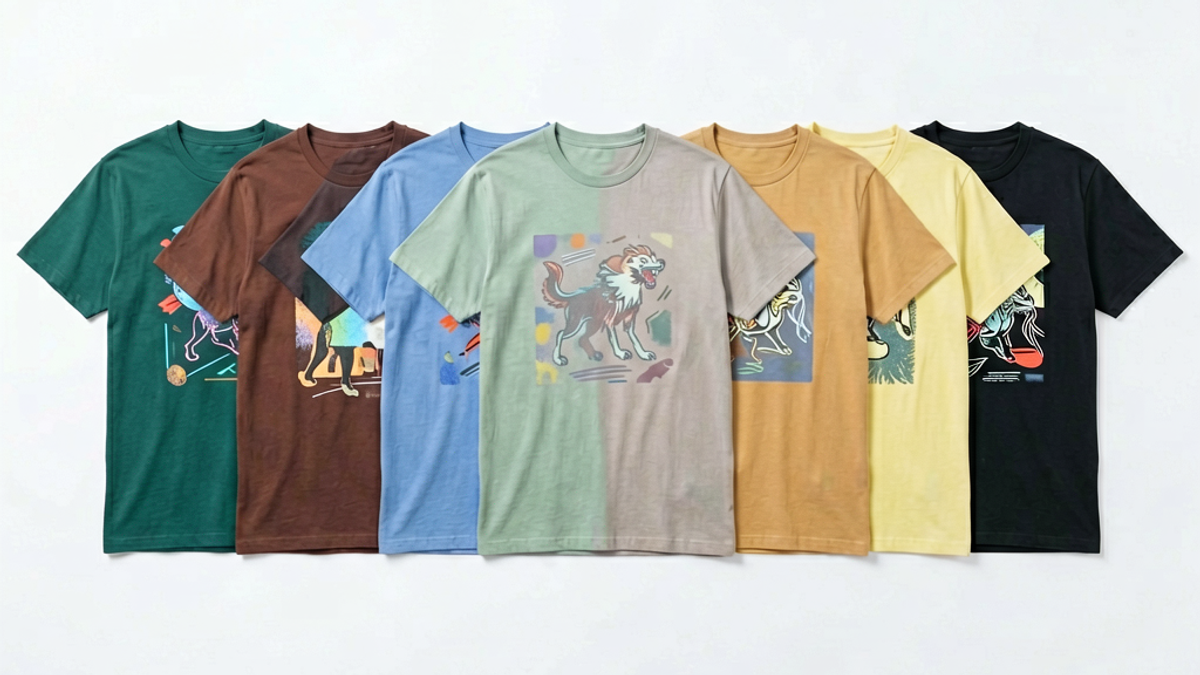
The fastest way to ruin a graphic tee purchase is to ignore what is already in your closet. A bright orange print might look great on the product page; if you own zero orange-adjacent pieces, it will sit unworn. Hold the tee against two or three pieces from your wardrobe before buying.
The opposite mistake — buying only black tees because everything you own is black — also flattens your wardrobe. One or two color-adjacent tees (forest green, navy, off-white) can transform how the rest of your closet looks without breaking your color discipline.
Step 3: pick a print scale that flatters your frame
Small prints (chest-pocket scale or smaller) work on every body type and layer cleanly under overshirts. Medium prints (centered front, occupying the chest area) are the most versatile — readable from a distance, not overwhelming up close. Large prints (full-front, wraparound, oversized back) make a statement but require confidence and cleaner supporting pieces.
If you are between sizes or carrying more through the midsection, lean toward medium prints. Large prints on a frame you are self-conscious about will draw attention to exactly the area you do not want emphasized.
Step 4: check fabric weight and printing technique
Two things to verify before buying:
Fabric weight (GSM). 180-220 GSM is the sweet spot for everyday wear. Below 160 GSM is paper-thin and prints tend to crack; above 240 GSM is heavy and reads as outerwear.
Print technique. Screen print is durable and tactile but limited in color count. DTG (direct-to-garment) prints photograph-realistic detail but wears faster. Plastisol ink sits thick on top of the fabric; water-based ink soaks in and softens with age. Each is a legitimate choice; what matters is matching the technique to how often you will wear the shirt.
Step 5: vet the brand's story and design intent
A graphic tee from a brand with no story is just a printed shirt. A graphic tee from a brand with a recognizable point of view — even a small, independent one — is a piece of culture. Look for brands that post their design process, name their collaborators, and explain why a particular graphic exists. That intent is what makes the shirt worth wearing two years from now.
A practical test: visit the brand's Instagram or homepage. If you can describe their visual language in one sentence after five minutes of scrolling, they have a real point of view. If you cannot, the tees will look generic the moment you stop paying attention to them.
Common buying traps to avoid
Buying the print, not the shirt. The print catches your eye; the shirt has to live in your closet. Always check fabric weight and fit before falling for the graphic.
Buying a tee you saw on someone else. Their fit, their body, their style — yours is different. Use inspiration as a starting point, not as a copy target.
Buying too many at once. Build a small rotation of three or four tees you actually wear, then expand. A closet full of unworn tees is a closet full of regret.
Ignoring the returns policy. Even with all five filters applied, fit varies. Buy from brands with easy returns so you can swap if the shirt doesn't work in person.
Frequently Asked Questions
How do I pick a graphic tee that matches my style?
Apply five filters in order: art style (loud or quiet), motif (skulls, type, abstract), color palette (matches your wardrobe), print scale (small, medium, large), and brand voice (does the brand have a story?). A tee that passes all five will get worn regularly.
What size print looks best on most people?
Medium prints — centered on the chest, occupying the chest area without wrapping the sides — are the most universally flattering. They read from a distance and layer cleanly under overshirts.
How important is fabric weight on a graphic tee?
Very. 180-220 GSM is the sweet spot for everyday wear. Below 160 GSM is thin and prints crack; above 240 GSM reads as outerwear. The weight affects how the shirt drapes and how long the print lasts.
Should I care about the brand behind the tee?
Yes. A brand with a recognizable point of view and a real design process makes tees that hold their identity across years. A brand with no story is just a printed shirt — it might look good today but will not age well in your wardrobe.
Free Shipping on All OrdersFree ReturnsNo Hidden Fees
 Sylvie Vance