Is the giant phantom jellyfish dangerous to humans?
The giant phantom jellyfish, Stygiomedusa gigantea, is a rarely observed deep-sea creature. Despite possessing potent venom, it poses virtually no documented threat to humans.
 Sylvie Vance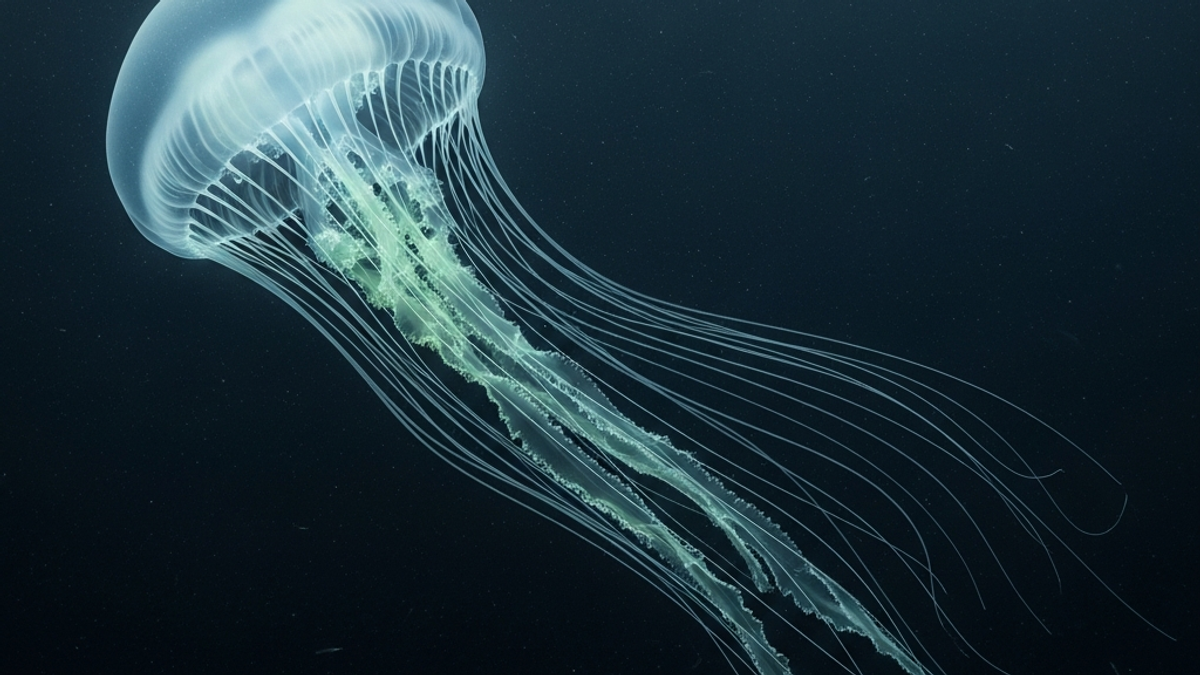
While the giant phantom jellyfish (*Stygiomedusa gigantea*) is one of the largest invertebrates in the deep sea, **there is currently no credible evidence or documented case suggesting it poses a direct, significant danger to humans** (https://www.livescience.com/animals/jellyfish/giant-phantom-jelly-the-33-foot-long-ocean-giant-that-has-babies-out-of-its-mouth). This species inhabits extreme depths, typically remaining far below recreational or even standard diving limits, which drastically reduces the probability of human interaction. However, reports suggest its venom contains toxins that attack the heart, nervous system, and skin cells, though this information pertains to its natural predatory function rather than documented human harm (https://www.quora.com/Do-we-know-how-deadly-the-giant-phantom-jellyfish-is). Understanding its habitat and behavior is key to assessing its true ecological threat level, which appears minimal to surface-dwelling populations.
### What are the confirmed physical characteristics and habitat of the giant phantom jellyfish?
The giant phantom jelly is an imposing creature, earning its name through its massive size and its deep-sea domain. The bell of this jellyfish can reportedly reach sizes close to one meter in diameter, and its oral arms can extend over 10 meters (around 33 feet) (https://www.livescience.com/animals/jellyfish/giant-phantom-jelly-the-33-foot-long-ocean-giant-that-has-babies-out-of-its-mouth). Unlike many jellyfish, *Stygiomedusa gigantea* is the only known species in its genus, *Stygiomedusa* (https://en.wikipedia.org/wiki/Stygiomedusa). Its habitat is predominantly the mesopelagic and lower epipelagic zones—the "twilight zone" of the ocean—with observations occurring at depths ranging from 80 to 280 meters (https://en.wikipedia.org/wiki/Stygiomedusa). Researchers have documented its presence across various deep-sea environments, including the Gulf of Mexico and, surprisingly, the Antarctic Ocean (https://en.wikipedia.org/wiki/Stygiomedusa).
### Why is the giant phantom jellyfish so rarely observed by humans?
The scarcity of observations is directly tied to its deep-sea habitat and overall rarity in terms of direct encounters. Since its initial discovery in 1899, the giant phantom jelly has only been recorded approximately 120 times (https://www.livescience.com/animals/jellyfish/giant-phantom-jelly-the-33-foot-long-ocean-giant-that-has-babies-out-of-its-mouth). Deep-sea observation requires highly specialized equipment, namely deep-diving submersibles, which limit research scope. Furthermore, its life cycle might involve movements that keep it largely out of the focus range of remotely operated vehicles (ROVs). This infrequency means that much of its biology, including its full distribution range and reproductive strategies—such as being viviparous, meaning it gives birth to live young—remains largely inferred rather than directly witnessed (https://www.livescience.com/animals/jellyfish/giant-phantom-jelly-the-33-foot-long-ocean-giant-that-has-babies-out-of-its-mouth).
### What does its known feeding behavior imply about its threat level to people?
The threat level to humans is minimized by its diet, which consists primarily of small organisms within its own environment. The giant phantom jellyfish is categorized as one of the ocean's largest invertebrate predators, but its prey mainly includes plankton and small fish (https://en.wikipedia.org/wiki/Stygiomedusa). It is not documented hunting large marine mammals or seeking out surface debris or swimmers. The very existence of documented toxins within its venom suggests it is highly efficient at incapacitating its natural prey (https://www.quora.com/Do-we-know-how-deadly-the-giant-phantom-jellyfish-is). Therefore, while its sting mechanism is potent for its food source, the likelihood of a sting occurring involves a human actively putting their body part into the deep-sea environment where the jellyfish hunts.
### How do scientists safely study such a massive, deep-sea creature?
Studying the giant phantom jellyfish requires advanced marine technology that allows for observation without direct physical interaction, which is critical for both the creature's safety and the researcher’s. Modern sightings are almost exclusively documented through high-definition video and imaging captured by manned submersibles or highly specialized Remotely Operated Vehicles (ROVs) (https://www.livescience.com/animals/jellyfish/giant-phantom-jelly-the-33-foot-long-ocean-giant-that-has-babies-out-of-its-mouth). These methods allow scientists to record its morphology, locomotion, and behavior from a safe distance, ensuring the integrity of the data and avoiding potential contact with the organism's stinging structures. This non-invasive approach maintains scientific objectivity while respecting the challenging and remote nature of the subject.
## Key Takeaways & Future Outlook
The primary focus when discussing the giant phantom jellyfish should shift from potential threat to scientific wonder.
* **Safety First:** The jellyfish is rarely seen and lives in the deep ocean, making accidental contact with humans extremely improbable.
* **Toxin Potential:** While known to possess potent toxins for predation, there are no documented instances of it harming people.
* **Rarity:** It remains one of the ocean's most elusive megafauna, observed only about 120 times since 1899.
* **Unique Biology:** It exhibits unique traits, such as being viviparous (giving live birth), which distinguishes it from many related species.
The future of studying *Stygiomedusa gigantea* is intrinsically linked to advancements in deep-sea technology. As ROV and autonomous underwater vehicle (AUV) capabilities improve, scientists anticipate more frequent—though still rare—observations, potentially revealing more about its life cycle, full geographical range, and the specific composition of its venom.
***
The giant phantom jellyfish serves as a potent reminder of the vast, unexplored biodiversity dwelling in the ocean's twilight zone. While our initial reaction to any large, venomous-appearing creature might be caution regarding danger, the current evidence suggests this magnificent giant poses virtually no risk to human activity near the surface. Its continued mystery, guarded by the immense pressure and darkness of the deep sea, compels further exploration, reinforcing the necessity of protecting these remote ecosystems before we fully understand their inhabitants.
## References
* https://www.livescience.com/animals/jellyfish/giant-phantom-jelly-the-33-foot-long-ocean-giant-that-has-babies-out-of-its-mouth
* https://www.quora.com/Do-we-know-how-deadly-the-giant-phantom-jellyfish-is
* https://en.wikipedia.org/wiki/Stygiomedusa