Genshin Impact x Crunchyroll Drops Aug 12 — Which Character Should a Graphic Tee Actually Carry?
The Genshin Impact and Crunchyroll collaboration launches August 12, 2026, alongside Version 7.0 and the Snezhnaya region, with exclusive rewards for Crunchyroll members. The decision that decides...
Sylvie Vance
•
The Genshin Impact and Crunchyroll collaboration launches August 12, 2026, alongside Version 7.0 and the Snezhnaya region, with exclusive rewards for Crunchyroll members. The decision that decides whether an anime graphic tee from a multi-character IP sells out in an afternoon or sits on a sale rack is not the art, the brand or the print technique — it is which character, or which small sub-roster, you put on the chest. When a roster has eleven named antagonists and a deep bench of leads, the tee that picks one face beats the tee that tries to celebrate them all.
What the Genshin Impact x Crunchyroll collab actually is
Crunchyroll and HoYoVerse announced a special collaboration on August 10, 2026, with the activation going live on August 12, the same day Genshin Impact Version 7.0 ships. The headline detail is that Crunchyroll members can unlock exclusive in-game rewards by linking accounts during the window. The storyline hook is the Snezhnaya region opening: the eleventh and final major nation promised in the game's launch roadmap, an ice-themed, Russian-inspired territory ruled from the Fatui.
Why this matters for streetwear is the timing, not the rewards. Every licensed apparel program in the anime pipeline has four to eight weeks between announcement and first tee drop. Uniqlo UT, the recurring Genshin partner, has run capsule collections since 2022. Independent streetwear brands usually follow a few weeks behind the official line with their own unofficial homages. The Aug 12 launch starts that merchandising window, and the character question gets decided in the first week.
It also matters because the IP has changed since its earlier apparel cycles. Snezhnaya's reveal pushes the Fatui Harbingers — the eleven named antagonist leaders — into the foreground for the first time. Until now, most Genshin graphic tees have defaulted to the Traveller, Paimon, or one of the early Archons. That default is about to expire.
Why character selection beats art quality on a graphic tee
A graphic tee is a wearable poster, and posters are remembered for the subject, not the production. A mediocre print of the right character sells; a beautiful print of a wrong or generic character does not. This is true across anime, music and sports merch — the character is the unit of value, not the ink, the cotton or the weight.
Anime properties exaggerate this because their characters are the brand. A Genshin character has a visual silhouette, a colour palette, a faction and a fan reading of their personality, all separately wearable. A tee that captures two of those four will land. A tee that captures only the colour will read as a colour-block shirt with a logo nobody recognises.
The mistake most first-time anime merch designers make is defaulting to the protagonist. The protagonist is who the IP tells you to care about; the protagonist is not who the audience cares about deepest. Antagonists, supporting cast and tragic figures outperform protagonists on apparel year after year, because the people who buy graphic tees are the ones with a favourite, and favourites rarely track the lead.
The Snezhnaya test case: eleven named antagonists, one chest
The Fatui Harbingers are an unusually clean roster for understanding how character selection works. There are eleven named Harbingers in the in-fiction lore, each with a distinct silhouette, a faction palette and a fan reading. They are also antagonists, which means they are visually more aggressive than the playable cast — bigger coats, more elaborate masks, more distinctive weaponry.
For a graphic tee program that wants to sell more than one design, the Harbingers are practically a built-in capsule collection. Each one is a complete graphic on its own: a single-character full-front print, a faction crest on the chest, a back-print silhouette. Eleven designs, all sharing the same colour language, all readable as a set. That is a stronger shelf proposition than a single Traveller tee, and it is also the structure most streetwear collabs already know how to produce.
For a graphic tee program that only wants to release one design, the Harbinger problem is sharper. Pick one Harbinger and you have made a very specific declaration about which faction and fandom you are talking to. Pick the most popular Harbinger and you sell fast but alienate everyone else; pick a less popular one and you sell slowly to a more committed audience. There is no safe single pick in a roster of eleven, and recognising that is the first move.
Three rules for picking the character on a roster graphic tee
When a multi-character anime IP drops, three rules reliably decide which tee design carries the program.
Pick the antagonist, not the protagonist, when the fandom is established. Paimon, the Traveller and the early Archons already exist on dozens of tees. A well-executed Harbinger is new enough to be a discovery and old enough to be a favourite. Not absolute — Demon Slayer and Jujutsu Kaisen apparel still tilts toward Tanjiro and Yuji — but the default direction for IPs where the antagonist roster is visually distinctive.
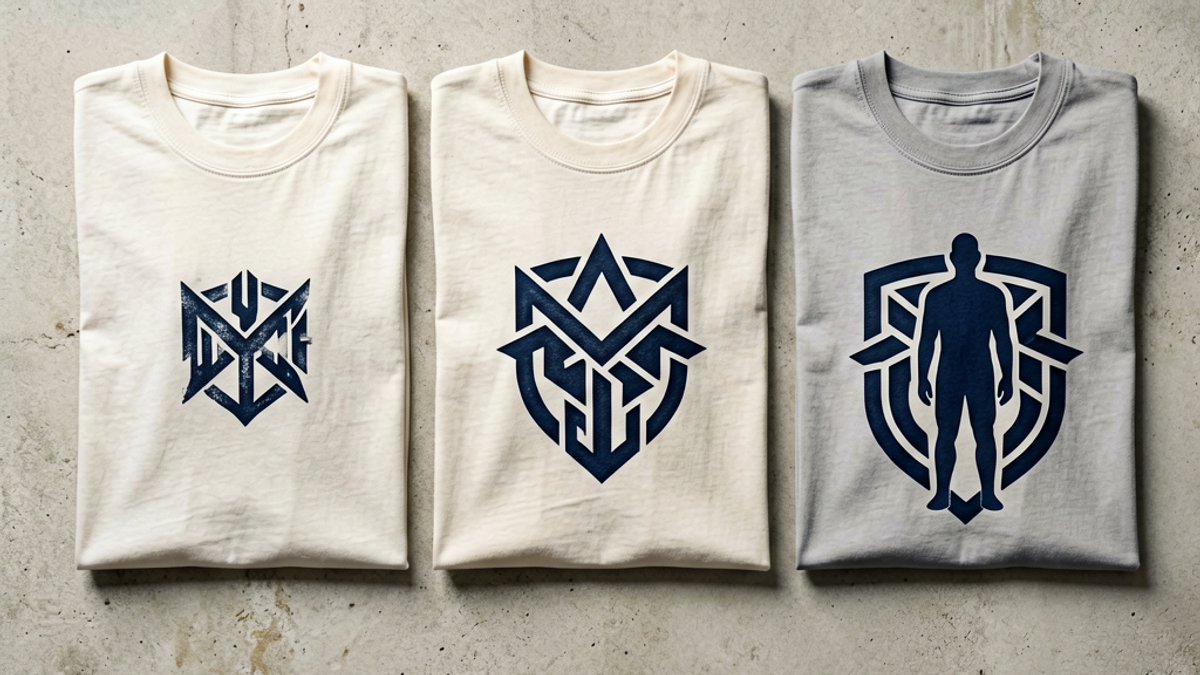
Pick a faction mark over a face when the program has to last multiple seasons. Faces date: a face tee is locked to a specific storyline beat and stops making sense once the story moves on. A faction crest, a coat of arms, a sigil or a unit insignia reads as fandom across seasons and works long after the relevant arc is over. The Fatui crest is an unusually strong graphic for exactly this reason.
Pick a sub-roster, not a single character, when the program is a capsule. A capsule of four to six related characters (the top four Harbingers, for example) gives the buyer a sense of completion without forcing them to pick a side. The single-character tee is a declaration; the sub-roster tee is a collection. Collections outperform declarations in streetwear because they are easier to gift, easier to pair and easier to sell in multiple colourways.
How the Crunchyroll x Genshin tie-in will change what gets printed
Crunchyroll as a brand has a longer history with this problem than most anime licensees. Their retail drops since 2021 have leaned into faction marks and sub-roster graphics rather than lead protagonists, partly because the IP mix across Crunchyroll is too broad to rely on any single lead. The Crunchyroll logo itself, worn as a generic mark on a black tee, has been one of their strongest sellers because it works as faction-mark apparel — a uniform, not a portrait.
For the Genshin side of this collaboration, that translates into a reasonable prediction. Expect the official licensed apparel to favour Fatui insignia and Harbinger silhouettes over the Traveller, expect the back-print panel to do heavy lifting because Crunchyroll already understands back-print merch, and expect the launch window to be tight — two to three weeks of clean stock before the aftermarket reprices.
Independent streetwear labels following the official line should plan around that pattern. The character space left open by the official program is the playable cast of Snezhnaya, the Archon reveal and the older Harbingers who have not yet had a dedicated print cycle. Those are the tee designs that will still feel new in late September, when the official capsule has moved on.
Where anime graphic tees go wrong on roster drops
The first failure is the all-character roster print — six faces on one shirt, each three inches tall, none of them legible at distance. It reads as a wallpaper sample. Most anime IPs have shipped at least one and almost none have repeated the mistake. The lesson: density is not value on a graphic tee; recognisability is.
The second is treating announcement art as production art. Announcement key visuals are designed for screens, where viewers can zoom and detail carries. A face that reads perfectly at four hundred pixels wide on Twitter becomes a muddy patch at four inches on a chest. The translation from screen art to print art is the part of the production that decides whether the tee ages well.
The third is launching a character tee on the announcement day rather than the release day. Announcements drive awareness, but they do not drive purchases; the actual drop day does. Programs that ship tee designs into pre-order the same week as the announcement, before the IP's narrative beat has landed, usually see weaker sell-through than programs that wait until Version 7.0 itself is in players' hands.
The Bottom Line
The Genshin Impact and Crunchyroll collaboration opens August 12 with the Snezhnaya region and the Fatui Harbingers finally in focus, giving every streetwear label four to eight weeks of merchandising runway. The single decision that matters is which character (or which small sub-roster) goes on the chest. Pick an antagonist over a protagonist, a faction mark over a face when the program has to last, and a sub-roster capsule over a single-character tee when the program is meant to be a set. Let Crunchyroll's own faction-mark playbook guide the official line and aim the independent follow-up at the cast space the official capsule leaves open — the playable Snezhnayans, the Archon reveal, and the older Harbingers who have not yet had their own cycle.
Frequently Asked Questions
When does the Genshin Impact x Crunchyroll collaboration start?
The collaboration was announced on August 10, 2026, and goes live on August 12, 2026 — the same day as Genshin Impact Version 7.0 and the Snezhnaya region opening. Crunchyroll members who link their accounts during the activation window can unlock exclusive in-game rewards.
Who are the Fatui Harbingers and why do they matter for a graphic tee?
The Fatui Harbingers are the eleven named antagonist leaders of the Fatui, the faction tied to Snezhnaya in Genshin Impact. Each has a distinct silhouette, colour palette and visual language, which makes the roster unusually well-suited to graphic-tee apparel: eleven possible single-character prints, all sharing the same faction design system, plus a clean faction crest for crest-only designs.
Should an anime graphic tee use a protagonist or an antagonist?
When a fandom is established, antagonists usually outperform protagonists on graphic tees. The protagonists of most long-running anime franchises already appear on dozens of tees, while well-executed antagonists are still new enough to be a discovery. The Traveller and the early Archons in Genshin already have a deep apparel history; the Harbingers, by contrast, are only now becoming available.
How long does an anime graphic tee design stay relevant after a roster drop?
Faction marks and insignia stay relevant across seasons because they read as fandom without referencing a specific storyline beat. Single-character face tees usually date to the arc they were designed for and lose meaning once the story moves on. For a program meant to ship over several months, faction graphics and sub-roster capsules age better than single faces.
Free Shipping on All OrdersFree ReturnsNo Hidden Fees
 Sylvie Vance