Who is Spider-Noir, and what's his origin story?
Spider-Man Noir is a Great Depression-era Peter Parker from Earth-90214, defined by his pulp fiction style and focus on fighting systemic crime.
 Sylvie Vance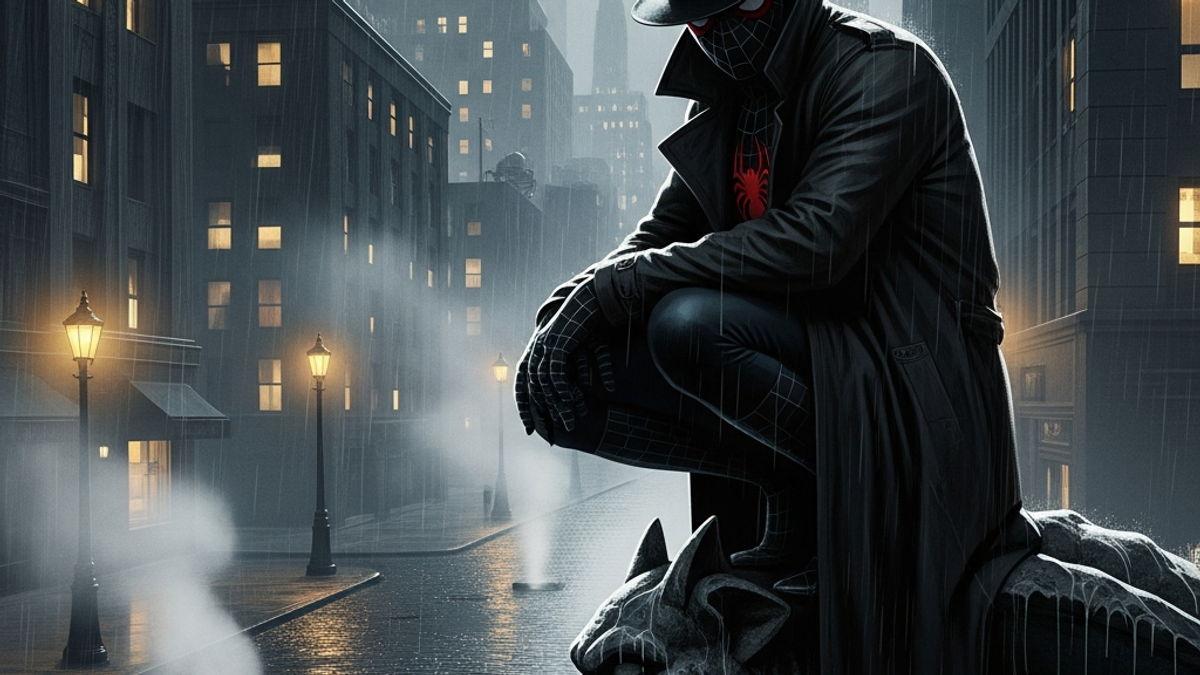
**Spider-Man Noir (Peter Parker)** is an alternate-universe version of the web-slinger whose entire reality is steeped in the grim, gritty aesthetic of 1930s pulp fiction and the Great Depression, first debuting in the *Spider-Man: Noir* miniseries in February 2009 (https://en.wikipedia.org/wiki/Spider-Man_Noir). This version of Peter Parker operates without the bright, science-heavy backdrop of his main counterpart, instead utilizing a dark, trench-coat-wearing persona focused on fighting corruption in a crime-ridden New York. His recent prominence in the *Spider-Verse* film franchise has brought this unique, hardboiled hero into the mainstream spotlight, driving high search intent regarding his unique background.
### What distinguishes Spider-Noir from the mainstream Peter Parker (Earth-616)?
The core distinction between Spider-Man Noir and the mainstream Earth-616 Peter Parker lies in their environment, tone, and technology. While both are bitten by spiders and gain similar abilities, the context shapes everything about them. Earth-616 Spider-Man is a bright, optimistic hero whose powers are rooted in advanced, often radioactive, science. In contrast, Spider-Noir exists in the **Marvel Noir universe (Earth-90214)**, a reality set during the Great Depression, emphasizing pulp fiction tropes over classic comic book science (https://en.wikipedia.org/wiki/Spider-Man_Noir).
This difference in setting dictates their style: Spider-Noir famously wears a fedora and trench coat, eschewing the colorful spandex for a look that blends detective noir with vigilante justice. His early comic book origins also leaned into a darker, more morally ambiguous approach, reflecting the era he inhabits (https://tvtropes.org/pmwiki/pmwiki.php/ComicBook/SpiderManNoir). While the mainstream Peter Parker often deals with super-scientists and galactic threats, Noir focuses on combating gangsters and corrupt political machines, a reflection of the grounded, street-level crime fighting prevalent in 1930s media.
### How does the Great Depression setting of Marvel Noir (Earth-90214) fundamentally alter his origin story?
Spider-Man Noir’s origin is fundamentally altered by the economic and social turmoil of the Great Depression, which replaces the high-tech lab accidents often associated with Spider-Man lore. While some iterations of his origin attempt to integrate a classic spider-bite scenario, the narrative context is drastically different and often emphasizes the "hardboiled" nature of his world (https://www.fandom.com/articles/origin-story-spider-man-noir).
In the core comic narrative, the inspiration for his powers often remains the spider bite, but the *consequences* of his transformation are rooted in the poverty and lawlessness of 1930s New York. This setting fuels his motivation: he fights against a system where crime lords like the Goblin control the city's resources and exploit the working class. Unlike Peter Parker, who is driven by the death of a loved one due to personal negligence, Noir’s drive is often framed around systemic injustice and corruption, making his existence a direct response to the failures of the established order during an economic collapse (https://en.wikipedia.org/wiki/Spider-Man_Noir). His initial adventures are less about finding a scientific cure and more about surviving and dismantling entrenched organized crime networks.
### Why has Spider-Noir resonated so strongly with audiences in recent animated adaptations?
Spider-Man Noir's popularity surge, especially following his appearance in *Spider-Man: Into the Spider-Verse* (2018), can be attributed to his potent aesthetic and the narrative simplicity of his character archetype, which excels in minimalist storytelling (https://www.cbr.com/spider-man-noir-explained/).
1. **Visual Distinction:** In the highly stylized world of the *Spider-Verse* films, Noir's black-and-white, heavily shadowed look provides immediate visual contrast to the vibrant colors of other Spider-People, making him instantly memorable.
2. **Archetypal Appeal:** The character taps directly into the enduring cultural fascination with the 1930s and 1940s hardboiled detective genre. This archetype—the weary, cynical investigator who operates outside the law to seek a twisted form of justice—is inherently compelling and offers a dramatic departure from the usual high-energy heroics (https://tvtropes.org/pmwiki/pmwiki.php/ComicBook/SpiderManNoir).
3. **Humor and Pacing:** In the films, his clipped dialogue and overly serious demeanor are used effectively for comedic relief against the younger, more modern Miles Morales, demonstrating that a character's effectiveness is often about how well they contrast with their peers.
### Key Takeaways
Spider-Man Noir is more than just a costume change; he represents a complete thematic shift for the Spider-Man mythology.
* **Alternate Reality:** He originates from Earth-90214, a timeline set during the Great Depression.
* **Aesthetic Foundation:** His look and methods are directly inspired by pulp fiction, detective stories, and noir cinema, featuring a trench coat and fedora instead of traditional spandex.
* **Core Conflict:** His battles are fundamentally focused on fighting economic exploitation and organized crime, reflecting the harsh realities of his timeline.
* **Modern Relevance:** His visual contrast and unique, deadpan characterization have made him a standout favorite in recent multi-versal media, ensuring his sustained search interest.
The continued popularity of Spider-Man Noir signals a broader audience appetite for retellings that deconstruct and recontextualize established heroes within vastly different historical or genre settings. As the *Spider-Verse* saga continues, expect deeper explorations into how his darker past informs his role in the multiverse, potentially solidifying him as a fan-favorite for years to come.
## Conclusion
Spider-Man Noir serves as a potent reminder that the core concepts of heroism—responsibility, struggle, and sacrifice—can be adapted across nearly any genre or era and still resonate powerfully. From the shadows of Depression-era New York to the multiverse-hopping action of modern animation, Peter Parker's Noir counterpart offers an essential, grittier perspective. His origin story isn't just about a spider bite; it’s about how environment shapes destiny, proving that even in black and white, a hero can still cast a very long shadow.
## References
* https://en.wikipedia.org/wiki/Spider-Man_Noir
* https://www.fandom.com/articles/origin-story-spider-man-noir
* https://tvtropes.org/pmwiki/pmwiki.php/ComicBook/SpiderManNoir
* https://www.cbr.com/spider-man-noir-explained/