Where Can You Actually Buy Cool Graphic Tees Online in 2026?
Five places, each with a different style tribe: brand-direct Shopify stores, curated streetwear marketplaces, drops and limited-edition platforms, vintage and secondhand aggregators, and the...
Sylvie Vance
•
Five places, each with a different style tribe: brand-direct Shopify stores, curated streetwear marketplaces, drops and limited-edition platforms, vintage and secondhand aggregators, and the social-commerce discovery loop. The right one depends on whether you're hunting for a specific brand, looking for surprise, or trying to find a style you can't quite name yet. Most streetwear fans end up using three or four of these in rotation.
Category 1: Brand-Direct Shopify Stores
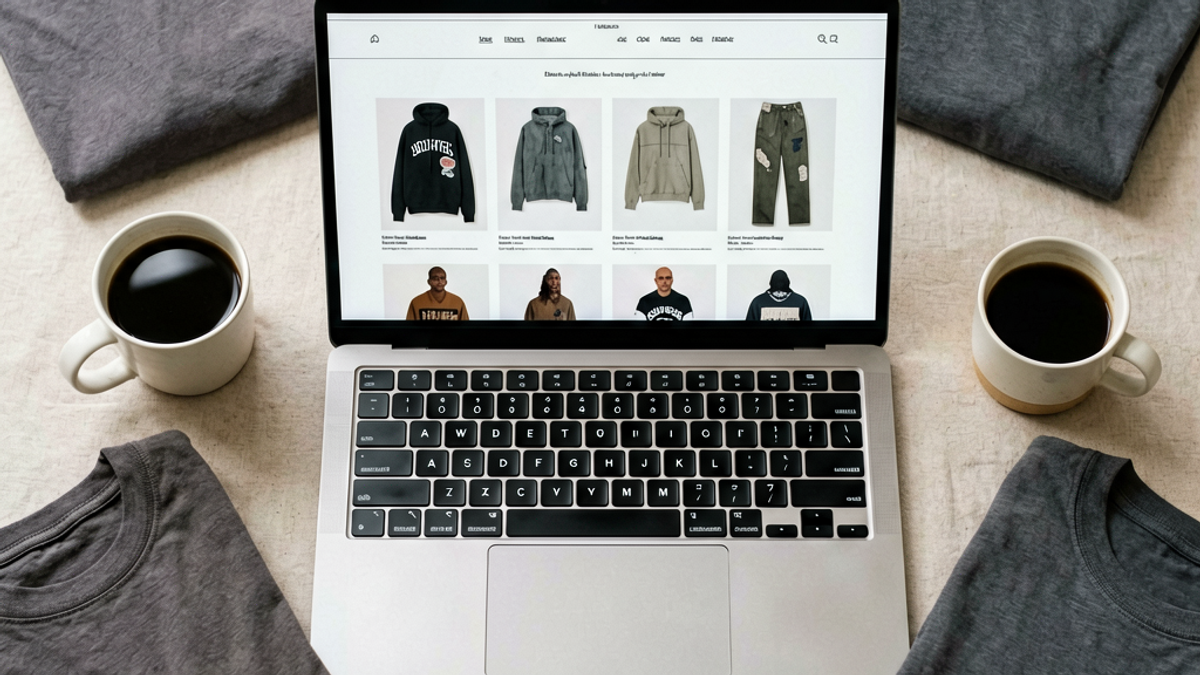
The cleanest path: go straight to the brand's own website. Examples include stryxenstudio.com, Stüssy, Brain Dead, Carhartt WIP, A-COLD-WALL*, and hundreds of small studios. The advantages are the strongest: full size runs, current season drops, accurate product photography, and direct customer service. The disadvantage is you have to know what you want before you arrive.
This is also where you'll find exclusive online-only colorways and collaborations that don't make it to third-party retailers. Most small studios release their best work direct, with marketplaces and boutiques picking up the overflow.
Category 2: Curated Streetwear Marketplaces
SSENSE, END., Bodega, Dover Street Market, Hanon, Concrete — these are the multi-brand stores that carry the best of the category in one place. They edit heavily, so if a brand is here, it's been vetted. The advantage: discovery. You can browse 50 brands in an hour and find designers you didn't know existed. The disadvantage: prices are often 10–20% above retail because the curation has a markup.
Marketplaces are also where you'll find the physical retail experience translated online — strong editorial, good photography, well-written product descriptions, and a sense of a curatorial point of view. If you want a wardrobe that reads as intentional rather than assembled, the marketplace route trains your eye faster than buying direct.
Category 3: Drops and Limited-Edition Platforms
Dover Street Market, SNKRS, END Launch Calendar, Grailed drops, specific brand mailing lists — these are the platforms that handle time-limited releases. The advantage: access to the most sought-after pieces, often at retail rather than resale. The disadvantage: speed matters. The best pieces sell out in 60–90 seconds, and the platforms are deliberately friction-heavy to filter for committed buyers.
Strategy: subscribe to the mailing lists of 5–10 brands you actually want to wear, set a calendar reminder for the drop, and be online at the release time with payment pre-loaded. Treat it as a small sport. The tees you actually want are the ones that reward that effort.
Category 4: Vintage and Secondhand
Grailed, Depop, eBay, Vinted, Etsy for genuinely old graphic tees. The advantage: unique pieces that nobody else has, often at lower prices than retail. The disadvantage: sizing is inconsistent, condition varies, and you need to know your measurements and your era to buy well. Real Real, Vestiaire Collective, StockX are higher-trust secondhand options for specific brand resale.
Vintage is the right call when you want a specific 1980s or 1990s band tee, an archive piece from a brand you collect, or a one-off sports graphic that can't be reproduced. It's the wrong call for everyday basics — the time spent hunting isn't worth saving $20 on a plain black tee.
How to Read Listings to Avoid Scams
Three signals separate legit listings from fakes. First, the photography: real sellers photograph the actual garment, often on a table or hanger, with visible fabric texture and minor flaws. Scams use stock imagery lifted from the brand's website. Second, the price: if a $200 retail tee is listed at $60 from a new seller with no feedback, it's almost certainly a fake or a scam. Third, the seller history: a 5-year-old account with 200+ reviews is safer than a 30-day-old account with three.
Use PayPal Goods & Services or a credit card for any secondhand purchase over $50. Never use Zelle, Venmo, or wire transfer for an item you haven't seen in person. Most marketplace platforms have a dispute process; using it correctly is the difference between getting your money back and losing it. Grailed's authentication on items over $500 is a useful safety net for high-value purchases.
Pro Tips: Reading Listings and Spotting Red Flags
Three moves help you shop confidently across all five channels. Always check the return policy before you buy. Direct-from-brand purchases usually have 30-day returns. Marketplace purchases vary. Secondhand purchases are usually final sale. Knowing the return policy in advance protects you from a stuck purchase. Save the brand's customer service email in case a sizing or product question comes up post-purchase.
For secondhand, use the platform's authentication tools. Grailed authenticates items over $500. StockX authenticates sneakers and streetwear. eBay's authentication program covers specific high-value categories. For purchases over $200, use a platform that authenticates. The 10% premium for authentication is cheaper than losing $200 to a fake.
For drops, get on the brand's SMS or mailing list 6 months before you need the piece. Most small studios fill their lists months in advance. A 2-minute signup now means you'll get the drop notification in time to act. Set a calendar reminder for the drop date. Be online 5 minutes before the drop, with payment and shipping info pre-loaded. The pieces you actually want reward that effort.
Use a payment method with buyer protection on every purchase over $50. PayPal Goods & Services, credit cards with dispute resolution, and Apple Pay all have built-in protection. Avoid Zelle, Venmo, wire transfer, and cryptocurrency for any purchase you can't afford to lose. The five seconds of friction to enter a credit card is worth the safety.
Build a small saved-search workflow on your secondhand platform of choice. Save searches for specific brands, sizes, and price ceilings on Grailed, Depop, or eBay. Most platforms will email you when new listings match. The 5 minutes of setup means you'll be the first to see a great piece when it lists, which is the only edge that matters in a fast-moving secondhand market.
Key Takeaways
Brand-direct stores are the cleanest path for current drops and full size runs.
Curated marketplaces train your eye faster than any other route.
Drop platforms reward speed and commitment — subscribe to mailing lists and be online at release.
Vintage and secondhand are the right call for specific archive pieces, not for basics.
Use PayPal or credit card protection on any secondhand purchase over $50.
Frequently Asked Questions
Where can I buy graphic tees online?
Five places, each with a different style tribe: brand-direct Shopify stores (stryxenstudio.com, Stüssy, Brain Dead), curated streetwear marketplaces (SSENSE, END., Bodega, Dover Street Market), drops and limited-edition platforms (Dover Street Market, SNKRS, END Launch Calendar), vintage and secondhand aggregators (Grailed, Depop, eBay, Vinted), and social-commerce discovery (Instagram, TikTok Shop). Most fans use three or four in rotation.
What is the best site to buy streetwear t-shirts?
For current drops and full size runs, go direct to brand websites. For discovery, use a curated marketplace like SSENSE, END., or Dover Street Market. For limited drops, set up alerts on Dover Street Market, SNKRS, or Grailed. For vintage, Grailed, Depop, and eBay are the most reliable. There is no single best site — the right one depends on what you're hunting for.
Are streetwear marketplaces safe to buy from?
Curated marketplaces like SSENSE, END., and Dover Street Market are as safe as buying direct from a brand. They authorize payment, handle returns, and vet inventory. For secondhand platforms, the safety depends on the seller. Look for seller history, real product photography, and use PayPal Goods & Services or a credit card on any purchase over $50.
How do I avoid scams when buying graphic tees online?
Three signals: real sellers photograph the actual garment, often showing minor flaws; scams use stock imagery lifted from brand websites. If a $200 retail tee is listed at $60 from a new seller, it's almost certainly a fake. Prefer accounts with long histories and many reviews. Use PayPal Goods & Services or credit card protection, never Zelle, Venmo, or wire transfer. For purchases over $500, use platforms with authentication like Grailed.
Free Shipping on All OrdersFree ReturnsNo Hidden Fees
 Sylvie Vance