Is Artemis II a crewed mission, and will it orbit the Moon?
Artemis II is NASA's first crewed test of the Orion spacecraft, using a free-return lunar trajectory to validate critical systems for future moon landings.
 Sylvie Vance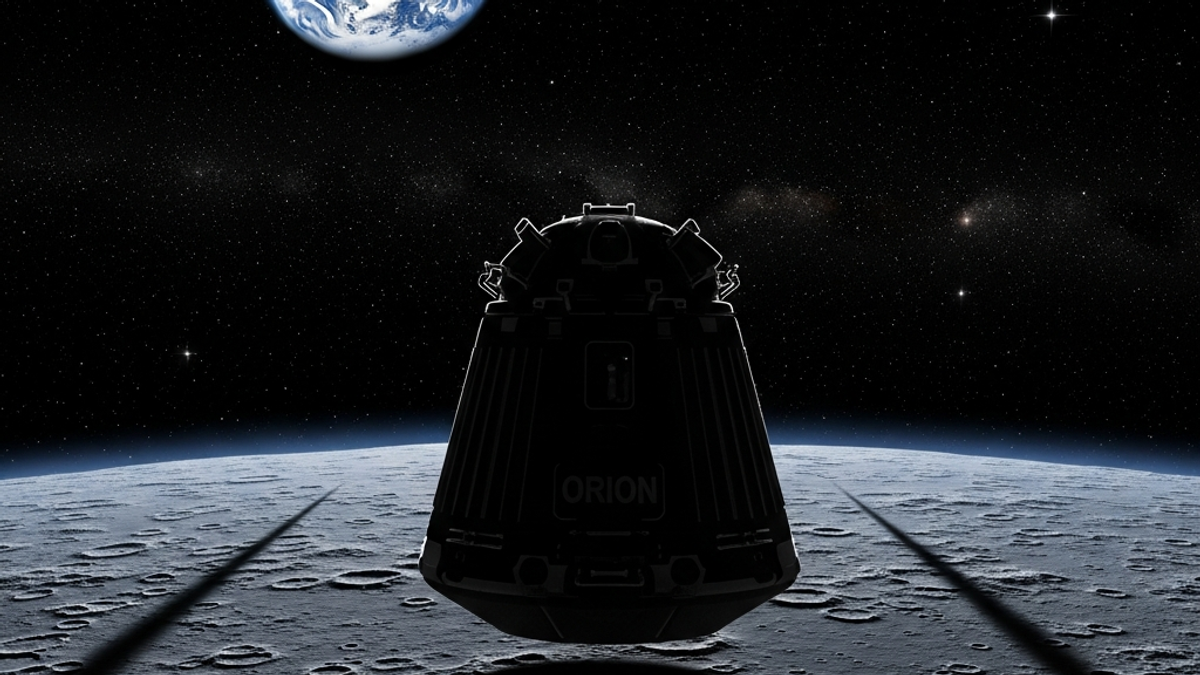
Yes, Artemis II is a crewed mission that will carry four astronauts on a trajectory around the Moon, though it will not enter a permanent lunar orbit. According to [NASA](https://www.nasa.gov/mission/artemis-ii/), this mission serves as the first crewed flight test of the Orion spacecraft and the Space Launch System (SLS) rocket, designed to prove the systems necessary for future deep-space exploration and lunar surface landings. As anticipation builds for the launch, understanding the mission's specific trajectory and objectives is essential to grasping how this historic flight sets the stage for a sustained human presence in space.
### What is the specific flight path of the Artemis II mission?
Artemis II will not orbit the Moon in the traditional sense of remaining in lunar orbit for an extended duration. Instead, the spacecraft will utilize a "free-return trajectory." After performing a translunar injection burn—the maneuver that sends the craft toward the Moon—the Orion spacecraft will loop around the far side of the Moon. This trajectory uses the Moon's gravity to naturally swing the spacecraft back toward Earth, ensuring a safe return without requiring additional complex orbital insertions [https://www.mynbc5.com/article/artemis-2-moon-orbit-launch/70886593](https://www.mynbc5.com/article/artemis-2-moon-orbit-launch/70886593).
### Who are the crew members participating in Artemis II?
The Artemis II crew consists of four astronauts representing both NASA and the Canadian Space Agency (CSA). The crew includes NASA Commander Reid Wiseman, Pilot Victor Glover, Mission Specialist Christina Koch, and CSA Mission Specialist Jeremy Hansen. This diverse team was selected to demonstrate the international cooperation and technical expertise required for long-duration deep-space exploration [https://www.nbcnews.com/science/space/nasa-moon-astronauts-artemis-ii-mission-rcna255621](https://www.nbcnews.com/science/space/nasa-moon-astronauts-artemis-ii-mission-rcna255621).
### How does Artemis II differ from the previous Artemis I mission?
While Artemis I was an uncrewed flight test completed in 2022 to validate the safety and performance of the SLS rocket and the Orion spacecraft in deep space, Artemis II represents the crucial shift to human flight. By putting astronauts on board, NASA will evaluate life-support systems, communications, and navigation capabilities in a real-world environment, which are critical benchmarks before attempting lunar landings in subsequent missions [https://www.nasa.gov/mission/artemis-ii/](https://www.nasa.gov/mission/artemis-ii/).
### What are the primary objectives of this 10-day mission?
The primary goal of the approximately 10-day mission is to test the performance of the Orion spacecraft’s systems with humans on board. This includes evaluating the environmental control and life support systems, which must maintain a habitable atmosphere for the crew throughout the trip. Additionally, the mission serves as an engineering shake-down to verify that the guidance, navigation, and thermal protection systems perform as expected during the high-velocity reentry into Earth's atmosphere at the end of the mission [https://oig.nasa.gov/wp-content/uploads/2024/05/ig-24-011.pdf](https://oig.nasa.gov/wp-content/uploads/2024/05/ig-24-011.pdf).
### Key Takeaways
* **Crewed Mission:** Artemis II is the first crewed mission of the Artemis program, carrying a four-person international crew.
* **Trajectory:** It follows a "free-return trajectory" around the Moon rather than staying in lunar orbit.
* **Primary Goal:** The mission acts as a vital system validation test, ensuring life-support and reentry technologies are safe for human life before future landing missions.
* **Strategic Impact:** Success here is the "green light" for the subsequent Artemis missions, which aim to put the first woman and first person of color on the lunar surface and establish a base camp for further exploration.
The successful execution of Artemis II will provide the confidence and technical data needed to transition from orbital flybys to permanent lunar surface operations. As we move closer to the launch date, the mission stands as a testament to the advancements in aerospace engineering and the renewed global interest in human exploration beyond low-Earth orbit. This flight is not merely a trip around the Moon; it is a fundamental milestone in the roadmap that will eventually lead humanity toward Mars.
## References
* [NASA: Artemis II Mission Overview](https://www.nasa.gov/mission/artemis-ii/)
* [NBC News: Meet the Astronauts on NASA's Artemis II Moon Mission](https://www.nbcnews.com/science/space/nasa-moon-astronauts-artemis-ii-mission-rcna255621)
* [NBC5: A Visual Guide to the Artemis II Launch](https://www.mynbc5.com/article/artemis-2-moon-orbit-launch/70886593)
* [NASA Office of Inspector General: Readiness for the Artemis II Crewed Mission](https://oig.nasa.gov/wp-content/uploads/2024/05/ig-24-011.pdf)