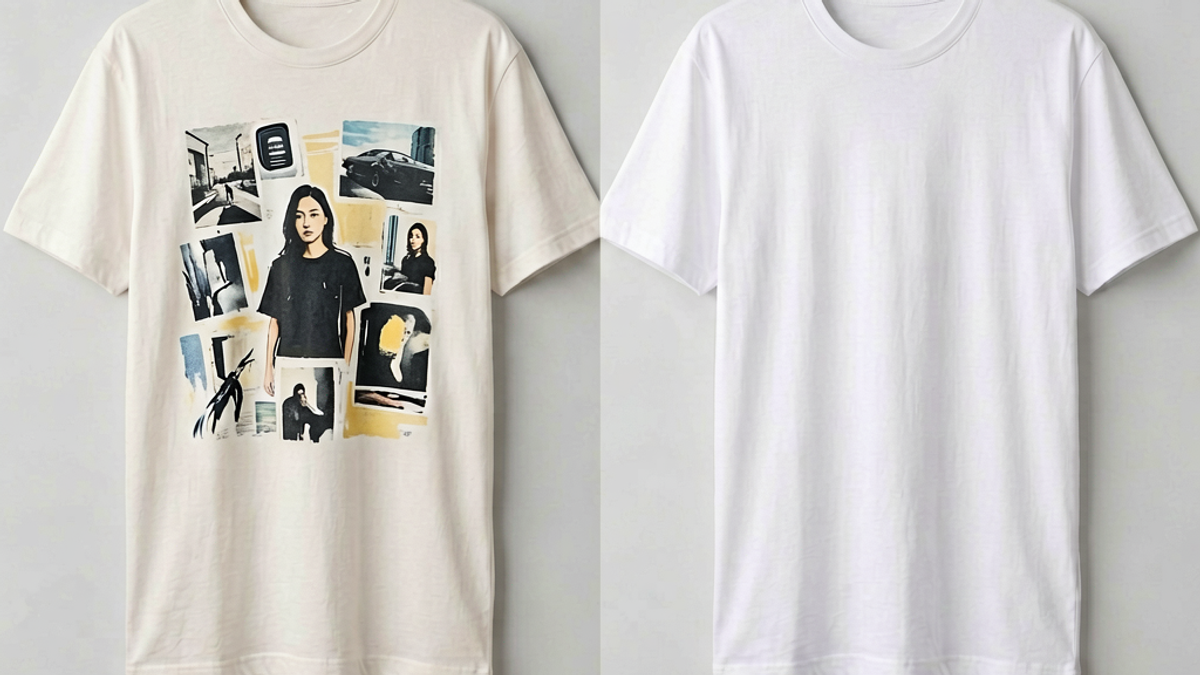
Graphic Tee vs Plain Tee: Which One Should You Actually Buy?
Short answer: own both, but the ratio depends on your lifestyle. Most streetwear fans get the most mileage out of roughly 3 graphic tees for every 5 plain tees — a 3:5 split that keeps your...
Sylvie Vance
•
Short answer: own both, but the ratio depends on your lifestyle. Most streetwear fans get the most mileage out of roughly 3 graphic tees for every 5 plain tees — a 3:5 split that keeps your outfits visually interesting without burning through every graphic tee in two weeks of laundry. Below is the side-by-side breakdown by occasion, versatility, and cost-per-wear so you can tune the ratio to your actual week, plus how to decide which graphic tees are actually worth the higher price.
Key Takeaways
Graphic tees carry identity; plain tees carry outfits. Neither is objectively better — they solve different problems in a working wardrobe.
Cost-per-wear favors plain tees because they pair with everything and survive trend cycles without looking dated.
Graphic tees earn their slot through specific occasions: concerts, skate sessions, statement days, art openings.
A 3:5 graphic-to-plain ratio covers most streetwear wardrobes; shift to 2:6 if you travel light, 4:4 if you collect graphics.
Plain tees are the safest first buy when you're building a wardrobe from scratch — they pair with whatever you already own.
Comparison Table: Graphic Tee vs Plain Tee
Side-by-side across the four dimensions that matter when you're deciding what to actually spend money on this month. None of these are absolute — they shift based on your climate, job, and how often you leave the house — but the framework holds for most people shopping for streetwear tees in 2026.
Occasion coverage: graphic tees win for events, concerts, skate parks, and any "statement" outfit where the shirt does the talking. Plain tees win for office-casual, layering under jackets, gym sessions, travel days, and lazy Sundays where you don't want to think about it.
Versatility: plain tees pair with literally anything in your closet — jeans, cargos, shorts, suits-with-sneakers, oversized overshirts. Graphic tees need a deliberate outfit to land; mismatched graphics compete with statement outerwear and the whole fit loses focus.
Cost-per-wear: plain tees hit roughly $0.10–0.50 per wear over a 2-year lifespan because they get worn 2-3x per week. Graphic tees hit $1–3 per wear because they're rotated less, prints can degrade, and designs age with trends.
Style risk: graphic tees age with the design — a 2017 meme tee looks tired, a band tee from a defunct tour reads as archival. Plain tees look identical in 2020 and 2026 — they're truly trend-proof and rarely wrong.
When a Graphic Tee Is the Right Call
Reach for a graphic tee when the tee is the outfit, not just a layer. Concerts, art openings, skate sessions, weekend hangs where you want to be remembered — these are graphic tee moments. The shirt does the talking so you don't have to. The same logic applies at first dates or any situation where a plain tee reads as underdressed for the scene.
Graphic tees also pull weight in streetwear-heavy fits. Stryxen Studio's collection leans into this lane: bold graphics designed to anchor an outfit rather than blend into it. If you're building looks around statement outerwear or statement footwear, a plain tee underneath lets those pieces do the work; a graphic tee underneath competes for attention and the whole outfit loses focus. The exception is when the graphic *is* the focal point — then it's exactly what you want.
Skip graphic tees for job interviews, formal dinners, office days with conservative dress codes, and any outfit where you're already wearing a loud jacket or bold sneakers. The graphic tee is a high-attention item; pair it with restraint everywhere else.
When a Plain Tee Is the Right Call
Plain tees are the workhorses. Office-casual, travel days, layering under button-downs or overshirts, gym sessions, restaurant dinners where you don't want to think about it — these are plain tee moments. They're also the right move when you want your outerwear, accessories, or shoes to carry the look, or when you're packing a capsule wardrobe and need every piece to mix with every other piece.
Cost-per-wear is where plain tees run away with the win. A $25 plain tee worn twice a week for two years lands at roughly $0.12 per wear. A $45 graphic tee worn weekly over the same span hits $0.43 per wear *if* the print survives — and many DTG prints start cracking at the 12-18 month mark. Plain tees also dodge the "this shirt is so 2024" problem because they were never specific to any year in the first place. Black, white, heather grey, navy — four plain tees will look identical on you in 2026 as they did in 2020.
Pick plain tees in the 180–220 GSM weight range for the sweet spot. Under 160 GSM feels paper-thin and prints fade fast; over 240 GSM starts reading as a sweatshirt. A boxy or relaxed cut is the current 2026 silhouette; a slim cut ages you out of the streetwear lane.
Recommended Wardrobe Ratio for Streetwear Fans
For most streetwear wardrobes, 3 graphic tees to 5 plain tees (3:5) is the sweet spot. The plain tees handle roughly 70% of your week — work, errands, layering, gym, travel, casual dinners. The graphic tees handle the 30% of days where you want a statement piece, you're heading somewhere the shirt can do the work, or the outfit is built around the tee itself.
Adjust from there based on your actual life: if you travel light or live in a warm climate where layering isn't an option, shift to 2:6 (more plain, fewer graphics). If you collect graphics, hit shows regularly, skate, or run a streetwear-focused Instagram, shift to 4:4 — even split, with the plain tees serving as the canvas for your louder pieces. If you're buying one new tee this month and own zero of each, start with a plain tee; it pairs with whatever you already own and you can add the first graphic tee once you've found a design worth anchoring an outfit around.
The one ratio that almost never works long-term is 6:2 graphic-heavy. You'll wear the same two plain tees on rotation until they fall apart, and you'll skip half your graphic tees because the moment doesn't call for them. The 3:5 default beats every other split on cost-per-wear and outfit versatility combined.
How to Vet a Graphic Tee Before You Buy
Once you've decided a graphic tee belongs in your rotation, vet the actual product — not the listing photo. Check the fabric weight (180–220 GSM is the streetwear sweet spot). Check the print method (DTG is soft and cracks; screen prints have texture and last longer; plastisol sits on top). Check the size chart in inches, not "S/M/L" — most streetwear fits are oversized and a medium in one brand is an XL in another.
Buy from sellers who post real product photos on a real model or flat lay — not just AI-stylized mockups. The brand-direct Shopify stores tend to do this best; marketplaces and drop platforms sometimes skip it. If a graphic tee costs $18 and ships from a vague location with no return policy, you're buying a print-on-demand blank that will crack in three washes — not the same thing as a designed-in-house graphic tee.
The Bottom Line
Plain tees and graphic tees aren't competing categories — they're complementary. Plain tees cover the volume of weekly wear; graphic tees cover the moments. Most streetwear wardrobes land at a 3:5 graphic-to-plain ratio and stay there for years. Start with a plain tee if you're building from scratch, add a graphic tee when you find a design worth anchoring an outfit around, and skip the trend-chasing prints that age out in one season. Browse the Stryxen Studio collection for graphic tees designed to anchor an outfit — originals only, no print-on-demand catalog fillers.
Frequently Asked Questions
should I buy graphic tees or plain tees
Both. Plain tees cover the majority of weekly wear and pair with everything; graphic tees anchor statement outfits and specific occasions like concerts and skate sessions. A 3:5 graphic-to-plain ratio works for most streetwear wardrobes.
which is more versatile graphic or plain tees
Plain tees are dramatically more versatile. They pair with jeans, cargos, shorts, suits-with-sneakers, and layer cleanly under jackets and overshirts. Graphic tees need a deliberate outfit and can clash with statement pieces.
are graphic tees worth the higher price
Yes when you actually wear them on rotation — cost-per-wear drops fast if a $45 graphic tee becomes a weekly staple. No if it sits in the drawer after two wears because the design was trendy rather than personal.
how many graphic tees should I own
Three to five is the practical range for most people. More than five and rotation slows down enough that cost-per-wear climbs and prints degrade before you wear them out. Fewer than three and you run out of statement options for the occasions that call for them.
Free Shipping on All OrdersFree ReturnsNo Hidden Fees
 Sylvie Vance