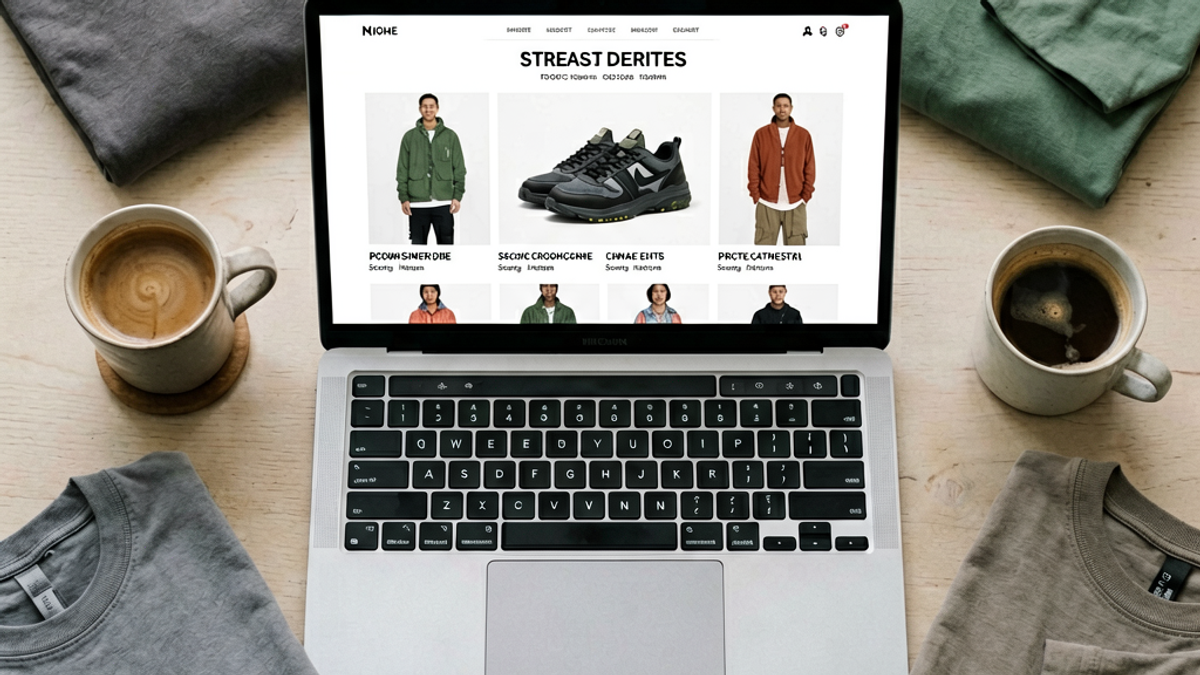
Where Can You Actually Buy Cool Graphic Tees Online in 2026?
The five most reliable places to buy graphic tees online in 2026 are brand-direct Shopify stores, curated streetwear marketplaces, drops and limited-edition platforms, vintage and secondhand...
Sylvie Vance
•
The five most reliable places to buy graphic tees online in 2026 are brand-direct Shopify stores, curated streetwear marketplaces, drops and limited-edition platforms, vintage and secondhand shops, and independent artist storefronts. Each channel serves a different style tribe: brand-direct for consistent quality and size runs, marketplaces for breadth, drops for rarity, vintage for one-of-one pieces, and indie stores for designs you won't see on everyone else. Match the channel to what you actually want to wear.
Where to Buy Graphic Tees Online: The 5 Channels Shoppers Actually Use
Online graphic tee shopping breaks into five distinct channels, and the right one depends on whether you want a fresh drop from a known brand, a limited collab, or a vintage band tee no one else has. Here's the map:
Brand-direct Shopify stores — best for consistent sizing, full size runs, and the freshest designs from labels you already follow.
Curated streetwear marketplaces — best for breadth across dozens of brands in one cart, with buyer protection baked in.
— best for rare collabs and early access, if you can stomach the release-day rush.
Drops and limited-edition platforms
Vintage and secondhand shops — best for one-of-one pieces, deadstock, and 90s/00s graphics you can't buy new anymore.
Independent artist storefronts — best for designs you genuinely won't see on anyone else, with the artist taking the lion's share of the margin.
Brand-Direct Shopify Stores
Going straight to the brand is the single most reliable channel for graphic tees online. You get the full size run, the freshest drops, and the clearest return policy — usually 30 days, free shipping over a small threshold, and a real customer service email instead of a marketplace mediator. Independent streetwear labels overwhelmingly run on Shopify, which means the storefront templates are similar but the design language, fit notes, and product photography vary wildly.
Look for detailed size guides (chest width in inches, body length, shrinkage notes), fabric weight listed in GSM (180-220 is the sweet spot for a graphic tee that drapes without going sheer), and print method disclosed on the product page. Plastisol ink feels thicker and lasts longer; water-based inks soften into the fabric and fade faster but feel better on skin. Both are legitimate — just know which one you're buying.
Stryxen Studio is built around this model: every tee is listed with the fabric weight, the print method, and a size guide based on the actual sample measurements, not a generic template.
Curated Streetwear Marketplaces
Marketplaces like END., SSENSE, HBX, and Grailed aggregate dozens of streetwear brands into one checkout. The trade-off is curation: END. leans high-end and European, SSENSE covers designer-meets-streetwear, HBX sits in the middle, and Grailed is peer-to-peer with a verification system for higher-value items. Marketplace listings usually include better photography than a small brand can afford and the return windows are stricter (often 14 days, sometimes final sale). Pricing includes a marketplace markup of 15-30%, which is the cost of convenience and consolidated shipping.
The hidden strength of marketplaces is the size and fit filtering. Grailed in particular lets you see whether other buyers of the same tee say it runs small or large — a feature brand-direct stores can't match because they only sell their own product. Use that filter on any tee you're uncertain about, especially from a brand you've never worn.
Drops and Limited-Edition Platforms
Drops platforms — SNKRS, Confirmed, Bodega, and the brand's own release calendar — handle limited-edition runs where the only way in is to be online at the right second. Drops aren't really "shopping" in the browsing sense; they're closer to ticket queues for a 200-unit run. If you're hunting a specific collab, the platform is usually dictated by the brand (Nike drops on SNKRS, Adidas on Confirmed, Supreme on their own site) so you don't pick the platform — the brand picks it for you.
For streetwear graphic tees specifically, the drops ecosystem is where you'll find artist collabs, festival merch, and city exclusives. The catch is resale: anything genuinely limited shows up on StockX or Grailed within hours at 2-5x retail. If you can't catch the drop, the secondary market is the only legal path, and you'll pay the markup. Multi-platform release (a collab dropping simultaneously on three sites) is usually a tell that supply isn't actually scarce — the brand wants the marketing reach of the drop format without the scarcity risk.
Vintage and Secondhand Shops
The vintage channel is the only place to find deadstock 90s and 00s graphics, band tees from tours that no longer exist, and one-of-one pieces that no one's reproduced. Depop, eBay, Grailed's vintage filter, and curated vintage shops on Etsy are the main entry points. Pricing is genuinely chaotic: a condition-graded band tee can run $40 or $400 depending on the print, the era, and how badly the seller needs to move inventory that week.
Read listings for three tells that separate a real thrift-store survivor from a new tee distressed to look vintage. Single-needle stitching on the hems (almost no modern brand uses single-needle). Sun-faded rather than chemically faded colors (the fade pattern is uneven, with the back usually lighter than the front). Cracked ink that follows the fabric grain rather than sitting on top of it like a fresh print. If the ink looks too clean and the cotton too uniform, you're looking at a reproduction. For a first-time vintage buyer, pick one trusted seller (usually a curated shop with a return policy) and one trusted era (90s graphic tees are the easiest entry — abundant supply, clear tells, prices that haven't gone fully insane yet).
How to Read Listings to Avoid Scams
Scams cluster around three patterns. Counterfeit drops: a "limited" tee at half retail from a seller with no feedback and stock photos. The fix is to cross-reference the product photos against the brand's official site and check that the seller's other listings make sense (they should be selling other tees, not 200 units of one collab). Vintage mislabeling: a 2024 tee distressed and resold as 1994. The fix is the three tells above (single-needle stitching, sun-faded colors, cracked ink following the grain) plus a careful look at the tag — modern branded tags have barcodes and RN numbers that didn't exist pre-2000. Ghost listings: a marketplace page that exists but ships nothing, usually to harvest card numbers. The fix is to pay through the marketplace's buyer-protection system and never via off-platform direct transfer.
One more sanity check: if a listing's price is 50% below the going rate for the same tee in similar condition, assume something is wrong. Either the print is a reproduction, the condition is worse than described, or the seller will ghost after payment. The vintage market is roughly efficient — outliers below the floor are almost always a trap.
Key Takeaways
Five channels: brand-direct Shopify, curated marketplaces, drops platforms, vintage, and independent artist storefronts.
Brand-direct is the most reliable for size, fabric spec, and return policy; marketplaces trade a markup for breadth and aggregated reviews.
Drops require being online at release time; resale is the only legal fallback and prices run 2-5x retail.
Vintage tees are graded by era tells: single-needle stitching, sun-faded colors, and cracked ink following the fabric grain.
If a price is far below the going rate, the listing is probably a reproduction, a misgrade, or a scam.
Frequently Asked Questions
Where can I buy graphic tees online without getting scammed?
Stick to brand-direct Shopify stores and major curated marketplaces like END., SSENSE, HBX, or Grailed. Pay through the platform's buyer-protection system and never via off-platform direct transfer. For drops, use the official release channel (SNKRS, Confirmed, the brand's own site) — third-party "early access" sites are almost always counterfeit.
Are vintage graphic tees online real or mostly fake?
Both — the vintage market is roughly 60% authentic, 30% reproduction, and 10% mislabeled. Authentic pieces show single-needle stitching, sun-faded (not chemically faded) colors, and cracked ink that follows the fabric grain. Stick to sellers with a return policy and recent feedback, and treat any listing priced 50% below market as suspicious.
What's the difference between a streetwear marketplace and a brand-direct store?
A brand-direct store sells one label's products at retail with the full size run, the brand's own return policy, and direct customer service. A marketplace like END., SSENSE, HBX, or Grailed aggregates dozens of brands, charges a 15-30% markup, and offers buyer protection and aggregated reviews. Marketplace filters — especially Grailed's size feedback from prior buyers — are the main advantage over going direct.
How do I find graphic tees that nobody else has?
Skip the major brands and shop independent artist storefronts on Shopify, plus curated drops platforms (Bodega, Feature). Instagram and TikTok are still where smaller labels announce new drops first — follow artists directly rather than aggregator accounts. Vintage is the other route: a deadstock 90s band tee is, by definition, a one-of-one.
Where Can You Actually Buy Cool Graphic Tees Online in 2026? | Stryxen Studio Blog
 Sylvie Vance