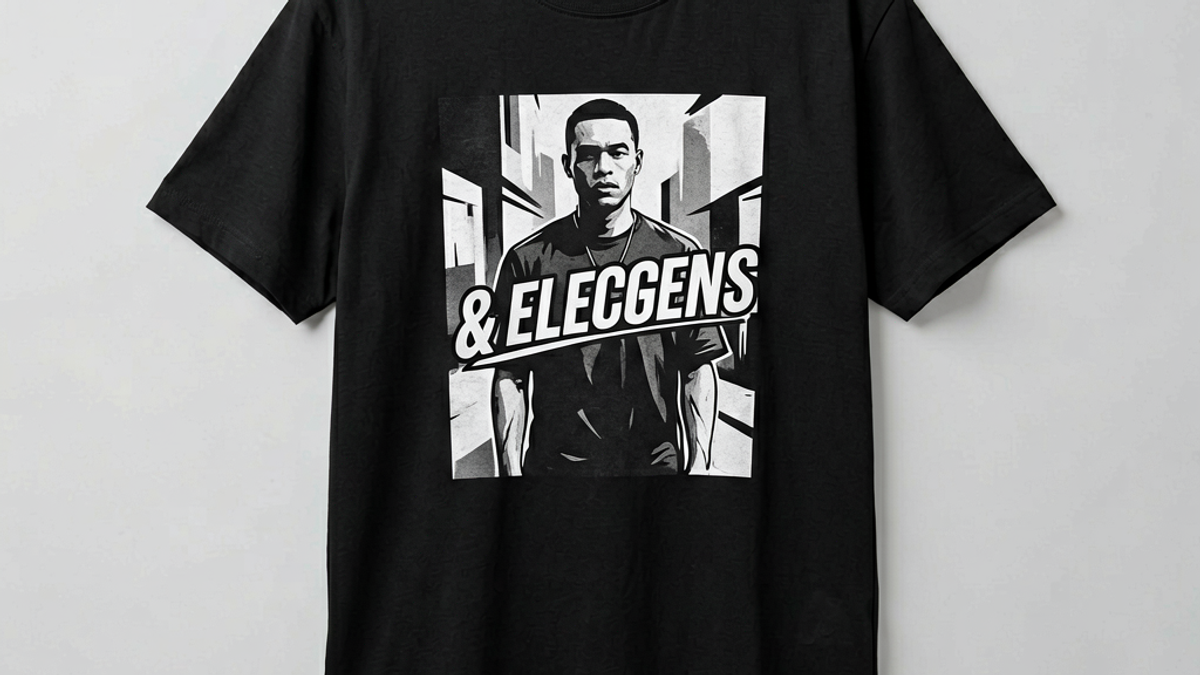
What Is a Streetwear Graphic Tee and Why Is It So Popular?
A streetwear graphic tee is a printed cotton T-shirt born out of skate, hip-hop, and 1990s pop culture — with bold front artwork, a relaxed or oversized fit, and graphics that signal something louder
Sylvie Vance
•
A streetwear graphic tee is a printed cotton T-shirt born out of skate, hip-hop, and 1990s pop culture — with bold front artwork, a relaxed or oversized fit, and graphics that signal something louder than the shirt itself. It's the piece that turned T-shirts into a wearable medium for art, music, and brand identity, and it's still the single most common entry point into streetwear in 2026.
Where the Streetwear Graphic Tee Actually Comes From
The streetwear graphic tee has three parents and none of them are fashion houses. The first is skateboarding culture in 1970s and 80s California — Powell-Peralta and Santa Cruz put cartoon and skeleton graphics on shirts to fund video parts and team riders, and the prints took on a life of their own because teens wore them as tribal markers of who could ollie. The second is hip-hop in the late 80s and 90s — Cross Colours, Karl Kani, and FUBU turned the printed tee into a platform for Black cultural expression in a category the mainstream fashion press had mostly ignored. The third is the 1990s boutique and pop-art crossover — Stässy, Supreme's 1994 launch, and the Warhol-and-Basquiat-printed tees that came out of downtown New York and Tokyo simultaneously.
What those three streams shared wasn't aesthetic; it was posture. The graphic tee was never the point — it was the carrier. The point was the logo, the inside joke, the band, or the artist's name that the wearer wanted to flag. That distinction — tee as canvas, image as signal — is what separated streetwear graphic tees from souvenir tees and band-merch tees that had existed since the 1960s. The garment was a delivery mechanism for subculture, not a fashion statement.
By the early 2000s, the format was mature enough to colonize the mall. Hollister, Abercrombie, and American Eagle ran graphic tees with the same constructional logic but stripped of every signal that had given the original format its meaning. The 2010s brought a backlash cycle — Palace, Noah, and a small wave of heritage-aware labels deliberately retreated to the tee-as-canvas model, pairing small-batch screen prints with garments priced like the originals felt: considered, restrained, deliberately not for everyone.
What Makes a Tee Look and Feel Like Streetwear
Strip away the marketing and a streetwear graphic tee has four working parts. The print is the loudest but not the most important; the fit, the fabric weight, and the drop psychology are what decide whether the shirt reads as streetwear or as a budget graphic tee.
Print placement and scale — most streetwear tees center a single large graphic on the chest, with optional back and sleeve hits. Small left-chest logos are a more recent prep-meets-streetwear move popularized by Palace and Noah.
Fabric weight — measured in GSM, the sweet spot for a real streetwear tee is 200–240 GSM. Lighter tees read as fast fashion; heavier (260+) reads as workwear. The mid-weight hits that drape well without looking stiff.
Fit and silhouette — the 2010s default was slimmer; the 2020s default is relaxed or oversized with a dropped shoulder and a longer body. Boxy crops and bootleg fits are intentional, not sloppy.
Neckline and stitch — a quality tee uses a ribbed collar that holds its shape, double-needle hems, and side-seamed construction (not tubular body). These details are invisible on the rack and obvious after two washes.
Drop logic — limited quantities, restock timing, and occasional collaborations create a scarcity that distinguishes a streetwear tee from a department-store graphic tee you can re-buy any week.
You'll notice none of those bullets mention a brand name or even a specific graphic. That's the point: streetwear tees are constructed in a way that signals — through the shirt's physical properties — what kind of wearer the brand expects. The artwork on top is just the headline.
How It's Different From a Regular Graphic Tee
Every mall brand sells graphic tees. The streetwear version isn't a different category of garment — it's the same T-shirt engineered with different intentions. Three differences show up consistently.
Provenance and signal — a streetwear tee is associated with a specific scene, label, or cultural reference that the wearer expects an audience to recognize. A mall graphic tee is designed not to alienate anyone.
Production discipline — small runs, screen printing or specialty inks, longer design timelines. Mass-market graphic tees are DTG-printed onto 5,000-unit runs and ship in three weeks.
Pricing relative to cost — a $45 streetwear graphic tee carries roughly $8–$15 of garment+print cost; a $20 mall tee carries roughly $3–$6. The premium pays for scarcity, fabric, and the implicit promise that the tee won't be in next season's landfill pile.
None of that is a value judgment. Both categories serve real audiences. But they're not interchangeable, and the wear-and-care expectations around each are different. A mall graphic tee is a seasonal garment; a streetwear graphic tee is built to age into a favorite.
Why the Streetwear Graphic Tee Is Still a Wardrobe Staple in 2026
Twenty years into its commercial life, the streetwear graphic tee should be exhausted by volume fatigue. It isn't, for three reasons.
It's still the cheapest entry into a scene — you can wear a $45 tee and signal you're tapped into skate, hip-hop, art, or design culture in a way that jeans or outerwear can't replicate at the same price point.
Print technology finally caught up — wider availability of high-quality screen printing and DTG allows small labels to produce small runs of complex graphics that wouldn't have been economical in 2006.
Resale and community economies — platforms like Grailed, Depop, and Discord-based drops have made a 2018 graphic tee into a wearable artifact with its own micro-market.
The category also benefits from being format-resistant. Other streetwear staples — cargo pants, technical outerwear, dad sneakers — cycle in and out. The graphic tee is too simple to cycle out. It just updates its graphics and keeps producing the same underlying artifact. As long as skate, music, and art subcultures keep needing a cheap wearable canvas, this category will keep having a year.
Key Takeaways
A streetwear graphic tee is a printed cotton T-shirt with subcultural signaling built into how it's made, not just what's printed on it.
It comes from skate, hip-hop, and 90s NYC/Tokyo boutique culture — not from fashion-week runways.
Fabric weight (200–240 GSM), fit (relaxed/oversized), and print quality are the signals that distinguish streetwear from mall graphic tees.
Limited drops, screen printing, and resale value keep the format commercially and culturally alive in 2026.
Buy a streetwear graphic tee for the shirt, the fit, and the scene — not just the artwork.
Frequently Asked Questions
What is the difference between a graphic tee and a streetwear graphic tee?
A streetwear graphic tee is a printed cotton T-shirt rooted in skate, hip-hop, or 90s boutique culture, with bold graphics and a relaxed or oversized fit. A regular graphic tee is any T-shirt with a print on it — including mass-market souvenir, band-merch, and mall styles. The streetwear version is built for cultural signaling, small-batch production, and aging well.
When did graphic tees become streetwear?
The streetwear graphic tee as a recognizable category took shape in the late 80s and early 90s, driven by skate brands like Powell-Peralta, hip-hop labels like FUBU and Karl Kani, and 90s NYC/Tokyo boutiques like Stässy and Supreme (founded 1994). By the mid-90s the format was mature enough to define an entire wardrobe category.
Are streetwear graphic tees still popular in 2026?
Yes — arguably more than ever. The graphic tee is still the cheapest wearable entry point into skate, music, and art subcultures, and new print technology has made small-run high-quality graphics accessible to independent labels. Resale markets and Discord drops have also created a secondary economy around specific tees.
How should a streetwear graphic tee fit?
The 2026 default is relaxed or oversized, with a slightly dropped shoulder and a longer body than a 2010s standard tee. Fabric weight should sit in the 200–240 GSM range — substantial enough to drape cleanly, not so heavy that it reads like a workwear shirt. The fit should look intentional; sloppy is the wrong instinct.
The Bottom Line
The streetwear graphic tee isn't a fashion trend; it's the format that every other streetwear garment is built around. The pieces in the Stryxen Studio collection follow the same construction rules — mid-weight cotton, screen-printed graphics, limited drops — because the format still works after forty years and there's no reason to reinvent the canvas every season.
Free Shipping on All OrdersFree ReturnsNo Hidden Fees
 Sylvie Vance