What exactly is NASA's Artemis II mission and what is its main goal?
NASA’s Artemis II mission will send four astronauts around the Moon to test critical systems, paving the way for future lunar habitation and Mars travel.
 Sylvie Vance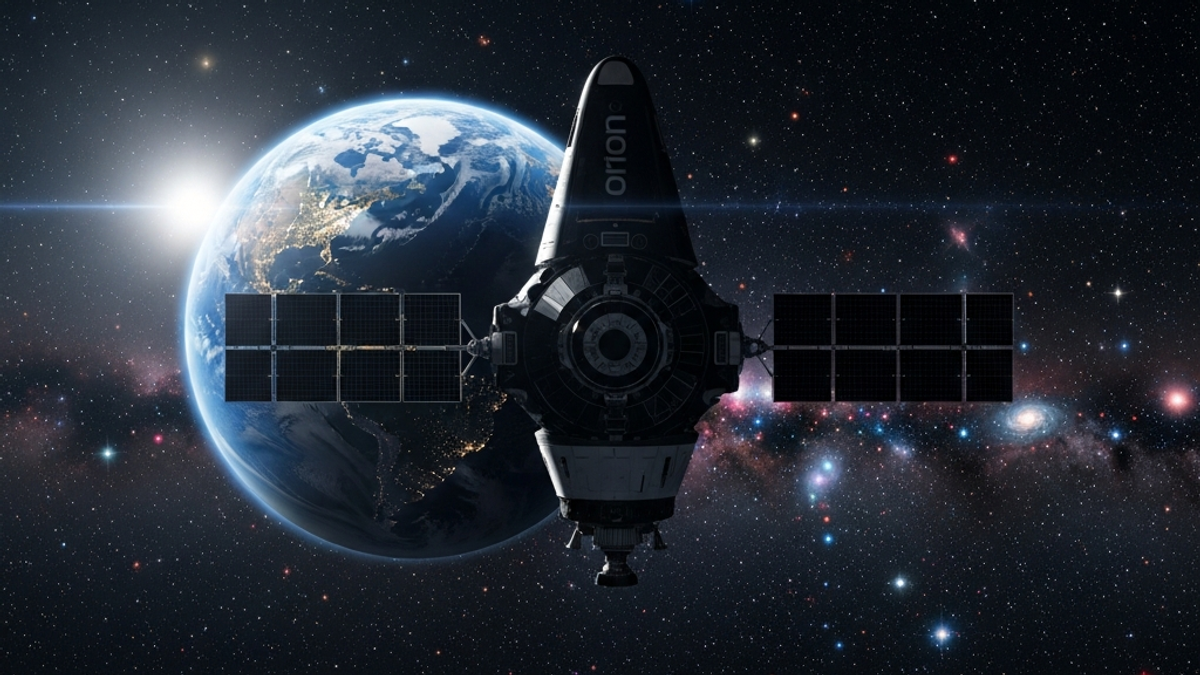
NASA's Artemis II mission is the first crewed flight test of the agency’s Orion spacecraft and Space Launch System (SLS) rocket, designed to carry four astronauts on a ten-day journey around the Moon and back to Earth ([NASA](https://www.space.com/artemis-2-humans-moon-orbit)). Its primary goal is to validate the critical life-support systems, navigation, and deep-space capabilities of the Orion spacecraft with humans on board, effectively serving as the foundational step for future sustainable lunar exploration and eventual missions to Mars ([Canadian Space Agency](https://www.asc-csa.gc.ca/eng/missions/artemis-ii/mission.asp)).
### How does Artemis II differ from the previous Artemis I mission?
While Artemis I was an uncrewed flight test that launched in 2022 to verify the performance of the SLS rocket and the Orion capsule in deep space, Artemis II marks the transition to human-rated operations ([Canadian Space Agency](https://www.asc-csa.gc.ca/eng/missions/artemis-ii/mission.asp)). The key difference lies in the complexity and safety requirements: Artemis II is tasked with testing how the life-support systems, communications, and manual flight controls perform while supporting a crew of four, ensuring the architecture is safe for future lunar surface missions ([Space.com](https://www.space.com/artemis-2-humans-moon-orbit)).
### Who are the astronauts selected for this historic journey?
The Artemis II crew consists of four astronauts representing international cooperation and diversity in space exploration: NASA astronauts Reid Wiseman (commander), Victor Glover (pilot), and Christina Koch (mission specialist), alongside Canadian Space Agency astronaut Jeremy Hansen (mission specialist) ([CBC News](https://www.cbc.ca/news/science/artemisii-what-to-know-9.7144665)). Christina Koch will make history as the first woman to travel into deep space, while Jeremy Hansen will be the first non-American to venture this far from Earth ([UVA Today](https://news.virginia.edu/content/5-reasons-why-artemis-ii-mission-big-deal)).
### Why is returning to the Moon considered a preparation for Mars?
The Artemis program, with Artemis II as a central pillar, aims to establish a long-term, sustainable presence on and around the Moon ([UVA Today](https://news.virginia.edu/content/5-reasons-why-artemis-ii-mission-big-deal)). By utilizing the Moon as a proving ground, NASA and its international partners can test technologies—such as deep-space communications, advanced habitation modules, and radiation shielding—that are too risky to test directly on the multi-year journey to Mars. The Moon serves as a "test bed" to refine these systems, reducing the technological unknowns before embarking on the much more distant and challenging journey to the Red Planet ([UVA Today](https://news.virginia.edu/content/5-reasons-why-artemis-ii-mission-big-deal)).
### Key Takeaways
* **Human-Rated Testing:** Artemis II is the first mission in over 50 years to send humans beyond low Earth orbit, specifically to test the viability of the Orion spacecraft with a crew.
* **System Validation:** The mission is essential for verifying life-support systems and navigation before the Artemis III mission attempts a lunar landing.
* **International Collaboration:** With Canadian participation, the mission underscores the collaborative nature of modern space exploration.
* **Strategic Stepping Stone:** Insights gained from Artemis II are critical for developing the infrastructure necessary for long-term lunar surface operations and future Mars exploration.
The future impact of Artemis II extends beyond the immediate excitement of the launch; it represents a fundamental shift in how humanity approaches deep space. By systematically addressing the risks of radiation, life support, and deep-space navigation, NASA is building a robust framework for permanent lunar activity. As we watch this mission unfold, we are witnessing not just a return to the Moon, but the construction of a technological bridge that will ultimately lead us to the surface of Mars. The success of these four astronauts will determine how quickly we can transition from brief visits to enduring exploration.
## References
* [NASA's Artemis 2 mission: Everything you need to know - Space.com](https://www.space.com/artemis-2-humans-moon-orbit)
* [The Artemis II mission - Canadian Space Agency](https://www.asc-csa.gc.ca/eng/missions/artemis-ii/mission.asp)
* [5 reasons why the Artemis II mission is a big deal - UVA Today](https://news.virginia.edu/content/5-reasons-why-artemis-ii-mission-big-deal)
* [What you need to know about the Artemis II moon mission - CBC News](https://www.cbc.ca/news/science/artemisii-what-to-know-9.7144665)