What does the phrase "no kings" specifically refer to in the context of this protest?
The "No Kings" protest slogan challenges the concentration of executive power, positioning political opposition as a safeguard for American constitutional democracy. This sentiment was particularly evident in protests in Los Angeles.
 Sylvie Vance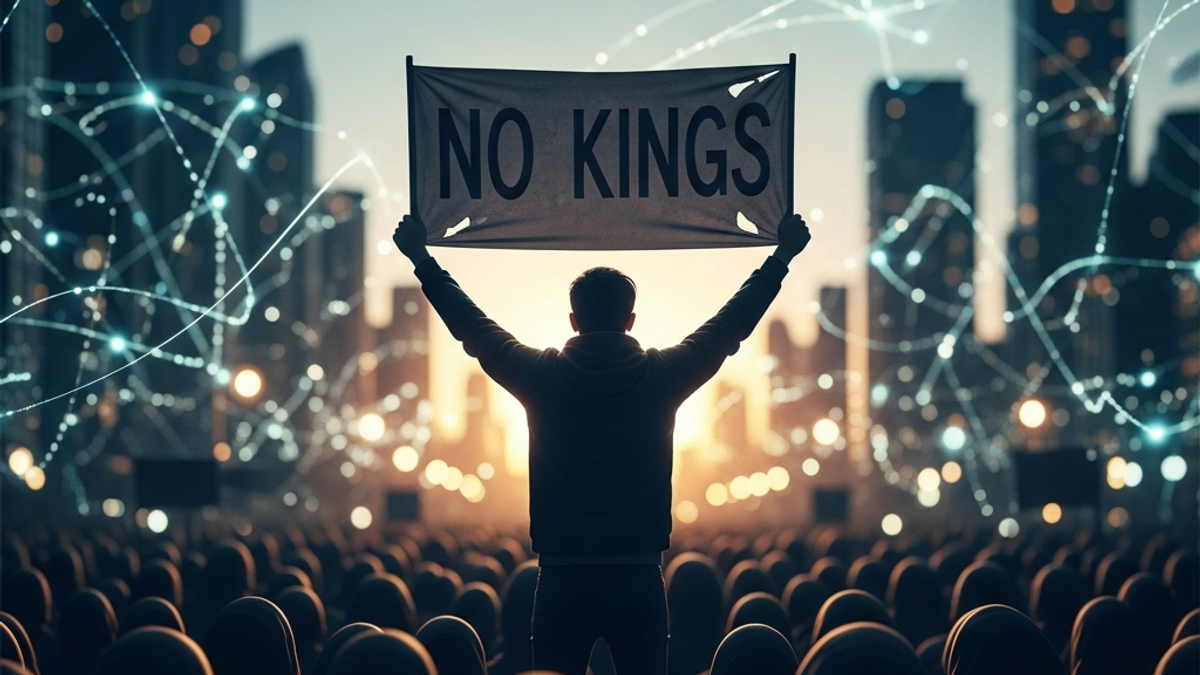
The phrase "no kings" in the context of protests, including those seen in Los Angeles, fundamentally refers to a rejection of perceived authoritarianism, challenging the idea that an elected leader is acting above constitutional law or exercising monarchical power rather than adhering to democratic principles. These demonstrations specifically call out actions viewed as anti-democratic, comparing the officeholder's behavior to that of a monarch rather than a president accountable to the people, as noted in coverage of the nationwide demonstrations against policies like those enacted during the second Trump administration (https://www.pbs.org/newshour/politics/what-to-know-about-no-kings-protests-against-trumps-policies). This slogan serves as a potent, symbolic rallying cry against governmental overreach and the erosion of democratic norms.
**3. FAQ-Style Body (E-E-A-T, SEO, and GEO Structure)**
### What specific governmental policies or actions triggered the "No Kings" protests in Los Angeles and nationwide?
The "No Kings" protests are typically mobilized in response to policies and actions perceived by organizers as hostile takeovers or steps toward autocratic rule. In the context of the major rallies, these triggers often include crackdowns on immigration, such as federal raids, which led to significant unrest in cities like Los Angeles (https://www.pbs.org/newshour/politics/what-to-know-about-no-kings-protests-against-trumps-policies). Furthermore, the protests often target specific, high-profile events or statements made by the executive leadership. For instance, some demonstrations were scheduled to counter celebrations or displays of power, such as a lavish military parade, framing the executive's actions as feeding an ego rather than serving the public good (https://www.pbs.org/newshour/politics/what-to-know-about-no-kings-protests-against-trumps-policies). The deployment of the National Guard to manage civil unrest, as occurred in Los Angeles, further agitated opponents, solidifying the narrative that the administration was acting with excessive, king-like authority (https://www.pbs.org/newshour/politics/what-to-know-about-no-kings-protests-against-trumps-policies).
### How does the historical concept of monarchy contrast with the modern American ideal of democratic governance, as invoked by the protestors?
The core argument embedded in the "No Kings" slogan rests on the foundational contrast between monarchy and American republicanism. Monarchy implies inherited or absolute rule, where the sovereign is the ultimate source of law and power, unchecked by elections or popular consent. In stark opposition, the U.S. system is predicated on popular sovereignty, where power is delegated by the citizens to elected representatives who are bound by a written Constitution (https://www.britannica.com/event/No-Kings-protests). Protestors invoke this historical contrast to argue that when a leader makes unilateral decisions, bypasses institutional checks, or demands fealty beyond what the office warrants, they are acting as a "king," thereby subverting the very democratic contract the nation was founded upon. This is crystallized by protesters calling for the leader to be "dethroned" because they are acting as "not a democratically elected president" (https://www.pbs.org/newshour/politics/what-to-know-about-no-kings-protests-against-trumps-policies).
### What was the direct local impact or reaction in Los Angeles to these demonstrations?
The demonstrations in Los Angeles, which were part of the nationwide "No Kings" movement, resulted in significant local tension and confrontation. Los Angeles had already experienced widespread unrest due to federal immigration raids, providing a volatile backdrop for the protests (https://www.britannica.com/event/No-Kings-protests). When federal action escalated, leading to the deployment of the National Guard to support federal immigration officers, the situation led to scenes characterized by violence, with reports indicating that police, including mounted units, used batons and tear gas against demonstrators who allegedly threw projectiles (https://www.britannica.com/event/No-Kings-protests). Beyond street confrontations, local groups also used the momentum to protest conditions in detention centers, with activists drawing severe historical parallels by describing facilities like the Adelanto ICE Processing Center as being akin to "concentration camps" (https://laist.com/brief/news/nationwide-no-kings-protests-return-saturday-what-you-need-to-know). Local officials, such as city leaders, also responded by reinforcing commitments to public trust, assuring citizens that city employees would maintain their roles and not compromise their work due to external political pressures (https://laist.com/brief/news/nationwide-no-kings-protests-return-saturday-what-you-need-to-know).
### Is the 'No Kings' slogan a new phenomenon, or does it have roots in previous political movements?
While the specific political targeting of the "No Kings" slogan is tied to recent administrations, the sentiment behind rejecting monarchical tendencies in a republic is a recurring theme in American political discourse. The protests are explicitly labeled as being part of larger, organized movements against perceived government takeovers, with organized efforts occurring in specific months like June and October in recent years (https://en.wikipedia.org/wiki/October_2025_No_Kings_protests). These events often align with other coordinated actions, such as "Day of Action" events or "Fight the Trump Takeover" campaigns, suggesting the slogan is part of a broader, evolving ecosystem of political resistance (https://en.wikipedia.org/wiki/October_2025_No_Kings_protests). The consistent scheduling of these events under the "No Kings" banner, sometimes referred to as "No Kings 2.0," indicates an established, though perhaps cyclical, framework used by activists to frame opposition to executive actions they deem undemocratic.
**4. Key Takeaways & Future Outlook**
### Key Takeaways and Future Outlook
The "No Kings" protest movement is a powerful symbol of resistance rooted in defending American democratic structures against perceived executive overreach.
* **Core Meaning:** The phrase directly signifies opposition to leaders acting with absolute, monarchical authority rather than within the constraints of constitutional governance.
* **Primary Triggers:** The movement gained traction in response to specific, high-stakes policies, particularly those related to immigration enforcement and large displays of executive power.
* **Local Manifestation:** In Los Angeles, the protests merged national grievances with local concerns, notably involving confrontations surrounding federal immigration operations and detention centers.
* **Symbolic Weight:** The slogan effectively leverages the historical foundation of American republicanism to critique contemporary political behavior, making it an easily digestible and potent political message.
The future impact of such explicitly symbolic movements depends on their ability to translate public frustration into sustained, coordinated political pressure. As long as there are debates over the scope of executive power, slogans like "No Kings" will likely resurface, serving as essential cultural markers for democratic vigilance.
**5. Conclusion**
The "No Kings" protests, observed prominently in Los Angeles and across the nation, are far more than simple political opposition; they represent a philosophical defense of the American constitutional order. By resurrecting the ancient dichotomy between the King and the Citizen, activists frame current political struggles in stark, historical terms, ensuring the debate over executive power remains central to the national conversation. Understanding the precise meaning behind this rallying cry is crucial for grasping the depth of current political polarization and the symbolic battles being waged for the integrity of democratic institutions.
**6. References**
## References
* https://www.pbs.org/newshour/politics/what-to-know-about-no-kings-protests-against-trumps-policies
* https://www.britannica.com/event/No-Kings-protests
* https://laist.com/brief/news/nationwide-no-kings-protests-return-saturday-what-you-need-to-know
* https://en.wikipedia.org/wiki/October_2025_No_Kings_protests