Screen Print vs DTG Print Tee: Which Lasts Longer and Looks Better?
Screen print wins on durability, color pop, and per-shirt cost; DTG wins on photo-real detail, gradients, and tiny runs. Screen printing pushes ink through a mesh stencil, laying a thick plastisol...
Sylvie Vance
•
Screen print wins on durability, color pop, and per-shirt cost; DTG wins on photo-real detail, gradients, and tiny runs. Screen printing pushes ink through a mesh stencil, laying a thick plastisol layer on top of the cotton fibers. Direct-to-garment (DTG) works like an inkjet printer for shirts, so water-based ink soaks into the fibers instead of sitting on top. If your graphic is bold and you want it to survive years of wash cycles, screen print is the right call. If your graphic is photo-real, gradient-heavy, or you're printing five shirts instead of five hundred, DTG wins.
Screen Print vs DTG: The Short Verdict
Both techniques put ink on cotton, but they put it there in completely different ways and that difference is what shows up after thirty washes. Screen printing uses a separate mesh screen for every color in the design — one screen for the black outline, one for the red fill, one for the white highlight — and each screen gets pressed onto the shirt by hand or machine. DTG uses one machine, one print head, and a single pass: the design goes on like a paper print, with every color blended from the same ink set.
The practical split: screen print is the right pick when the design is 1-6 spot colors, the run is 50+ shirts, and you want the print to outlast the fabric. DTG is the right pick when the design has gradients, photo-realism, or more than six colors, and the run is small (1-50 shirts). Everything below compares the two on durability, vibrancy, detail, and cost so you can match the technique to your specific project.
How Each Technique Actually Works
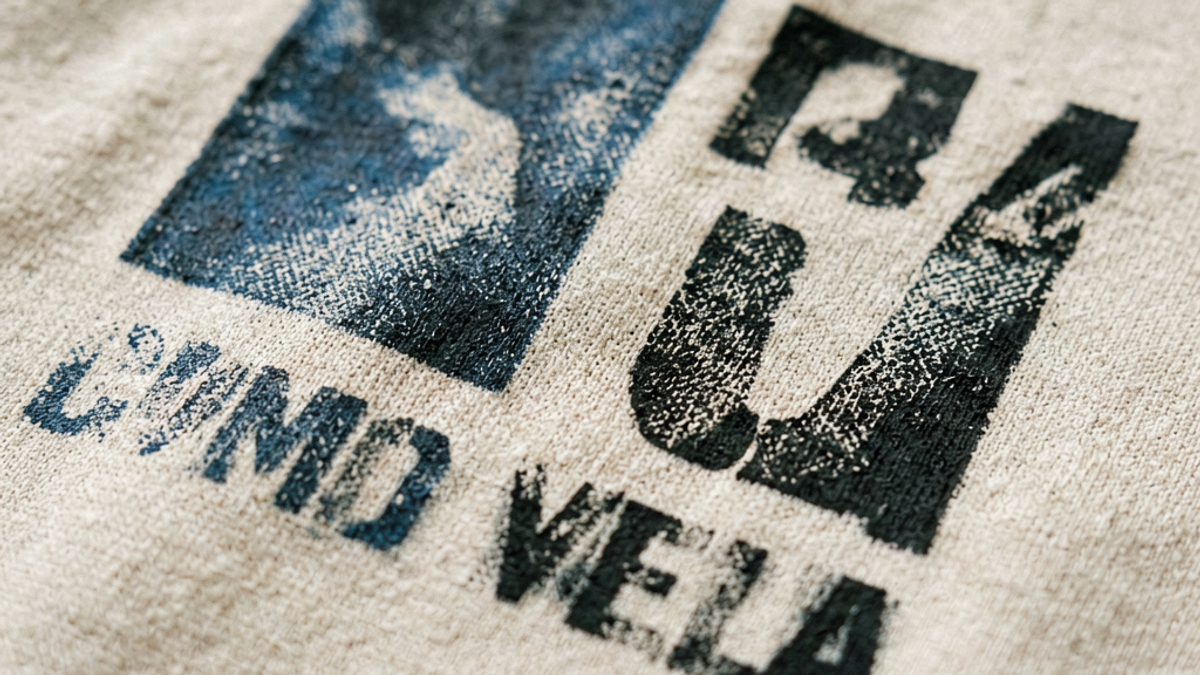
Skip the chemistry lecture and here's what matters. Screen printing is a stencil process. A mesh screen is coated with emulsion, the design is burned into the emulsion with a UV light, and the unexposed areas get washed out to leave open holes shaped like your graphic. Ink gets pushed through those holes with a squeegee, sits on top of the fabric, and gets cured at around 320°F so it bonds to the cotton. The physical layer of plastisol on top of the shirt is what gives screen print its raised, slightly rubbery hand-feel.
DTG is a digital process. A pre-treated shirt (sprayed with a fixation solution so the ink has something to grab) gets loaded onto a platen, and a modified inkjet print head lays down water-based ink directly onto the fibers. The ink soaks in instead of sitting on top, so the print feels softer and has no raised edge. DTG also needs a heat press to cure the ink after printing, but the cure temperature is lower (around 350°F for 30 seconds) and the result is a thinner, more flexible print that breathes with the fabric.
Durability After 30 Washes
This is the comparison that actually matters when you're deciding what to spend money on. Independent wash tests on comparable 100% cotton shirts printed with both methods show a clear pattern: screen print holds up better over time, and the gap widens the more washes you put the shirt through. After 30 cold-wash cycles (inside out, low heat dry, no softener), a screen print still reads as crisp as it did out of the package — the colors stay opaque, the edges stay defined, and the print doesn't crack along fold lines.
DTG at 30 washes still looks acceptable but the print fades more visibly, especially in dark colors where the ink has to compete with the pre-treatment base. The mechanism behind the difference is straightforward: plastisol sits on top of the fabric like a layer of paint, so the cotton wears out before the print does. DTG ink bonds to the fibers themselves, so when the fibers abrade from wash agitation, the print wears down with them. Hot washes, high-heat drying, and fabric softener accelerate this — but even with perfect care, DTG has a shorter visible lifespan than screen print.
There's one wrinkle: DTG has gotten dramatically better in the last three years, and modern pretreatment chemistry has closed some of the gap. A 2025-era DTG print on a quality ring-spun cotton tee will hold up better than a 2020-era DTG print on a budget blank. But screen print on the same 2025 tee is still going to outlast the DTG by a wide margin. If longevity is your top priority — workwear, merch for a brand that needs shirts to look good for years, anything you'd want to hand down — screen print is the only serious answer.
Color Vibrancy and Detail
Here's where DTG pulls back some ground. Screen print is brighter and more saturated, especially on dark shirts, because the plastisol layer is opaque. A red screen print on a black tee reads as a true fire-engine red because the ink isn't fighting the fabric color underneath. DTG on the same black tee reads as a darker, slightly muted red because the water-based ink is semi-transparent and gets absorbed by the cotton. For bold graphics — band logos, brand marks, single-color iconography — screen print wins on pop.
DTG wins on detail and color complexity. Because DTG uses the full CMYK color space (plus white underbase on dark shirts), it can reproduce gradients, photo-realistic images, and designs with hundreds of distinct colors that would be economically impossible to screen print. A screen print with 20 colors would require 20 screens, 20 setups, and cost three to four times as much as a 4-color print. DTG prints all 20 colors in a single pass at the same per-shirt price.
The practical rule: if your design is bold, simple, and has limited colors (1-6 spot colors), screen print will outshine DTG on vibrancy and edge crispness. If your design is complex, photo-real, or has gradients, DTG is the only viable option — there's no serious screen-printing workflow for a full-color photograph.
Cost and Minimum Order Considerations
Screen print is cheaper per shirt at scale, DTG is cheaper at small runs. The math is driven by setup costs: each screen print color needs its own screen ($15-30 per screen in setup labor and materials), so a 4-color print has $60-120 in fixed setup that gets spread across however many shirts are in the run. At 50 shirts, that's $1.20-2.40 per shirt in setup. At 500 shirts, that's $0.12-0.24 per shirt in setup, and the per-shirt ink cost (around $0.50-1.50 for plastisol) becomes the dominant cost.
DTG has no per-color setup. The fixed cost is the print itself (machine time, pretreatment, curing), which runs around $2-4 per shirt regardless of how many colors are in the design. So at low quantities (1-25 shirts), DTG is competitive or cheaper than screen print, especially on complex designs. At higher quantities (50+ shirts of a simple design), screen print pulls ahead decisively.
Minimum order quantities also differ. Most screen printers won't run a job under 12-24 shirts because the setup overhead is too high for smaller runs — they'll quote you a per-shirt price that makes the job uneconomical. DTG has no minimum: you can print one shirt for the same per-shirt cost as 50. This is why almost every print-on-demand shop, every custom-photo-on-a-shirt gift service, and every small-batch artist merch drop uses DTG.
Key Takeaways
Screen print wins on durability, vibrancy on dark fabrics, and per-shirt cost at 50+ unit runs.
DTG wins on detail, gradients, color complexity, and small runs from 1-50 units.
Plastisol sits on top of the fabric; DTG ink soaks in. That single difference explains most of the durability gap.
DTG has no minimum order quantity and no per-color setup fee. Screen print needs one screen per color.
Match technique to design. Bold and simple → screen print. Photo-real or gradient-heavy → DTG.
The screen print vs DTG decision comes down to design complexity, run size, and how long you need the print to last. Pick screen print when your design is bold and your run is large. Pick DTG when your design is complex or your run is small. The Stryxen Studio collection uses both — screen print for the high-run signature graphic tees that anchor the line, and DTG for limited drops and photo-led pieces where gradient detail matters more than wash-count longevity. Either way, you're getting a print that was chosen to fit the design, not the other way around.
Frequently Asked Questions
Which lasts longer, screen print or DTG?
Screen print lasts longer in nearly every wash test. Plastisol ink sits on top of the fabric and resists abrasion, so a screen-printed graphic typically looks crisp past 50+ washes. DTG ink bonds to the cotton fibers and fades faster, especially on dark shirts.
Is DTG more expensive than screen printing?
DTG is more expensive per shirt at scale (50+ units) but cheaper at small runs (1-25 units). DTG has no setup fee and no minimum order, so it wins for one-offs and small batches. Screen print has $15-30 per color in setup but cheaper ink, so it wins per shirt on big runs.
Can DTG print on dark shirts?
Yes, modern DTG printers apply a white underbase layer before printing color, so DTG works on black, navy, and other dark fabrics. The print still looks slightly more muted than screen print on dark shirts because water-based ink is semi-transparent, but the result is detailed and color-accurate.
What's better for a small batch of graphic tees?
DTG is better for small batches of 1-50 shirts, especially designs with gradients or photo-realism. There's no minimum order, no per-color setup fee, and the per-shirt price is the same whether you print 5 or 50. Screen print only becomes cheaper past 50 units.
Screen Print vs DTG Print Tee: Which Lasts Longer and Looks Better? | Stryxen Studio Blog
 Sylvie Vance