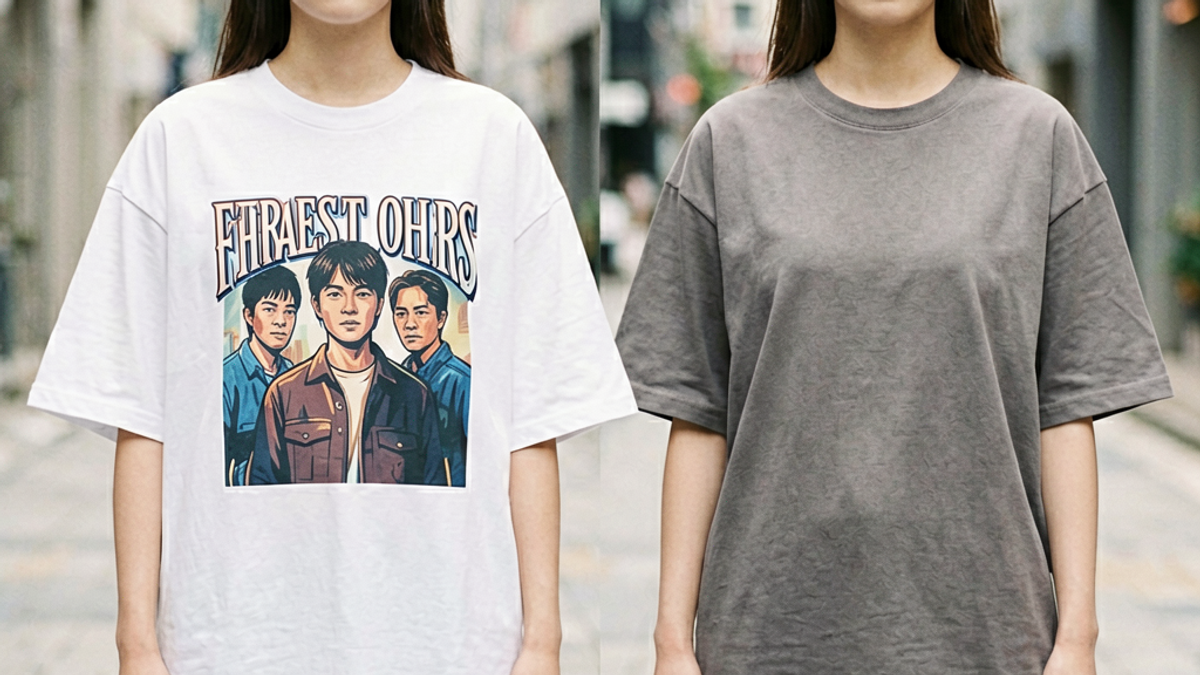
Oversized Tee vs Regular Fit Tee: Which Silhouette Suits You?
An oversized tee is a silhouette, not a size — it is cut deliberately wide through the chest, drop-shoulder, and longer through the body, so the fabric drapes away from the frame instead of...
Sylvie Vance
•
An oversized tee is a silhouette, not a size — it is cut deliberately wide through the chest, drop-shoulder, and longer through the body, so the fabric drapes away from the frame instead of tracing it. A regular fit tee is closer to your true measurements with just enough ease to move. The two are not interchangeable. Oversized reads as a styling choice and asks for proportion-aware bottoms; regular fit flatters most bodies, layers cleanly, and survives the dress code at any job that still has one. Picking the wrong one wastes the rest of the outfit, so the rest of this guide is about not picking the wrong one.
Oversized vs Regular Fit: The One-Line Verdict
If you have to choose one today, pick the silhouette that matches the bottom you wear most. Most people who reach for carpenter jeans, wide-leg cargos, or pleated trousers are already in oversized-tee territory, because those bottoms add volume below the waist and a slim-fit top makes the whole outfit look like a costume. Most people who reach for straight or skinny denim, tapered chinos, or shorts are in regular-fit territory, because a boxy top on a narrow leg reads untethered. The mental shortcut: oversized is for when you want the shirt to do the talking, regular is for when you want the outfit to.
There is also a third position a lot of guides skip: you can own one oversized and three regulars. For a working wardrobe the ratio is closer to that, because regular fits layer under jackets, tuck without bunching, and do not date. The oversized piece earns its slot by being the loudest thing in the rotation, not the most numerous.
When an Oversized Tee Looks Intentional (and When It Just Looks Big)
An oversized tee looks intentional when the volume is balanced, the hem is deliberate, and the fabric has weight. Cheap oversized tees fail on the third point — they are cut wide in a thin 140gsm cotton that hangs limp instead of draping, which is the difference between a designer drop and the souvenir shop. A real streetwear oversized tee uses 220–260gsm cotton or a heavyweight jersey, drops the shoulder seam 2–4 inches past your natural shoulder, and ends somewhere between the middle of the zipper fly and the top of the thigh.
The other test is what is happening at the hem. If the shirt is so long that it eats the waistband of your pants, it is going to read as a tent, not a silhouette. The fix is either a light front-tuck (just the front panel, leave the back loose), a half-tuck on one side, or cropping the visual line by wearing the tee over a longer base layer so the hem falls in layers instead of a single blob. Without one of those moves, oversized collapses into shapeless.
Visual rule: the tee should cover the belt, not the zipper
If the hem is past the bottom of your front pockets, the shirt is too long for your frame no matter how it is cut on top. The eye reads the lowest point of the shirt as the lowest point of the torso, so a long hem shortens the legs. Aim for the hem to land at the top of the thigh — roughly the same spot a regular fit tee hits when worn untucked.
When a Regular Fit Tee Is the Smarter Buy
Buy a regular fit tee when the outfit is doing work elsewhere. Layered under a chore coat, a leather jacket, a blazer, or any top layer with structure, the tee disappears into the silhouette and stops competing with it. An oversized tee under the same jacket adds bulk where you do not want it — under the arms, at the chest — and the jacket stops reading as fitted and starts reading as a sack.
Regular fit is also the safer choice for office-leaning environments, dinner reservations, and any event where the question "is this guy trying too hard" is on the table. A clean regular fit tee in black, white, or heather grey, untucked over dark denim, gets you through most dress codes that allow denim at all. An oversized graphic tee gets you turned around at the door.
Visual rule: the shoulder seam should sit at the bone
A regular fit tee fits correctly when the shoulder seam ends exactly where your shoulder ends — at the bony edge, not past it, not before it. Sleeves should hit the middle of the bicep. If the seam is past your shoulder, you bought an oversized tee mislabeled as regular; if it is set inside the shoulder, you bought a slim fit and it will pull across the chest when you reach forward.
Body Type: What Actually Works at Each Build
Fit advice that says "oversized works for everyone" or "slim builds only" is lazy. The real divider is vertical proportion, not weight. Taller frames absorb the extra length and drop-shoulder of an oversized tee without visual distortion. Shorter frames lose leg length to the hem every time. A 5'7" person in a 30-inch oversized tee and a 5'7" person in a 28-inch regular fit tee end up at the same optical leg length, which is why regular fit often wins for shorter builds even when the trend calls for boxy.
For broader shoulders and a fuller chest, oversized can mask and flatter, but only if the chest measurement of the shirt is at least 6–8 inches larger than your actual chest — any less and it pulls at the buttons and stops looking relaxed. For narrower frames, an aggressively oversized tee will swallow the shoulders entirely and read as wearing someone else's shirt. In that case, size up one from your regular instead of jumping two, and look for an oversized cut that is wide through the body but still hits at the natural shoulder rather than dropped by 4 inches.
Key takeaways
Oversized is a styling move, not a comfort upgrade — if you want comfort, size up in a regular fit and keep the shape.
Regular fit is the default for layering, for office-leaning events, and for shorter frames where leg length matters.
Hem length matters more than shirt width — a tee that hits mid-zipper looks baggy even when it is cut slim.
Shoulder seam position is the single best fit test — at the bone is regular, 2–4 inches past is the start of oversized.
Heavyweight fabric is non-negotiable for oversized — under 200gsm and the silhouette collapses into limp fabric.
How to Balance Proportions With Your Bottoms
The rule the rest of the industry keeps trying to make stick is volume on top equals taper on the bottom, and vice versa. An oversized tee with a wide-leg pant is a full-volume silhouette that only works when the waist is defined — a tucked or half-tucked tee, a belt, or a cropped jacket that ends at the natural waist. Without one of those anchors the eye loses the shape and the whole outfit turns into a column.
The cleanest combos right now: oversized graphic tee + straight or tapered denim + low-profile sneakers (the streetwear default), regular fit tee + wide-leg pleated trouser + loafers (the smart-casual crossover), and regular fit tee + cargo shorts + high-tops for the warm months. What to avoid: oversized tee with skinny jeans and chunky sneakers — all three elements are doing too much in different directions, and the silhouette ends up fighting itself instead of reading as styled.
Bottom line: the tee you choose should match the proportions you are building around, not the proportions you wish you had. The Stryxen Studio collection runs both silhouettes in heavyweight cotton — the oversized pieces are cut wide but hemmed to keep leg length, and the regular fits are sized honestly so the shoulder lands where it should. Pick the one that fits the bottom half of your outfit, not the mood board.
Frequently Asked Questions
How do I know if an oversized tee is too big for me?
Two quick checks. First, the shoulder seam should drop no more than 2–4 inches past your natural shoulder — past that, you are wearing someone else's shirt. Second, the hem should land no lower than the top of your thigh. If the hem covers the front pockets, the shirt is too long for your frame and will shorten your legs visually.
Is oversized the same as just buying a bigger size?
No, and this is where most people get it wrong. True oversized tees are cut with extra width in the chest and body, a dropped shoulder, and a longer hem — they are designed wide. A regular fit tee bought two sizes up will be wide but the proportions will be off: the shoulders will sit awkwardly, the sleeves will be too long, and the silhouette will look accidental instead of styled.
What body type looks best in an oversized t-shirt?
Taller frames absorb oversized cuts best because the extra length and drop-shoulder do not shorten the leg line. Broader shoulders and fuller chests can also pull off oversized well, provided the chest measurement is at least 6–8 inches larger than the actual chest — otherwise the fabric pulls. Shorter or narrower frames should size up one in a regular fit rather than jumping two sizes in an oversized.
Should I tuck in an oversized graphic tee?
Yes, but only a partial tuck. A full tuck kills the silhouette the shirt is built for. The cleanest options are a front tuck (just the front panel tucked into the waistband, back left loose), a half-tuck on one side, or a French tuck. Any of those keeps the volume on top while defining the waist, which is what makes an oversized tee read as intentional instead of oversized.
Oversized Tee vs Regular Fit Tee: Which Silhouette Suits You? | Stryxen Studio Blog
 Sylvie Vance