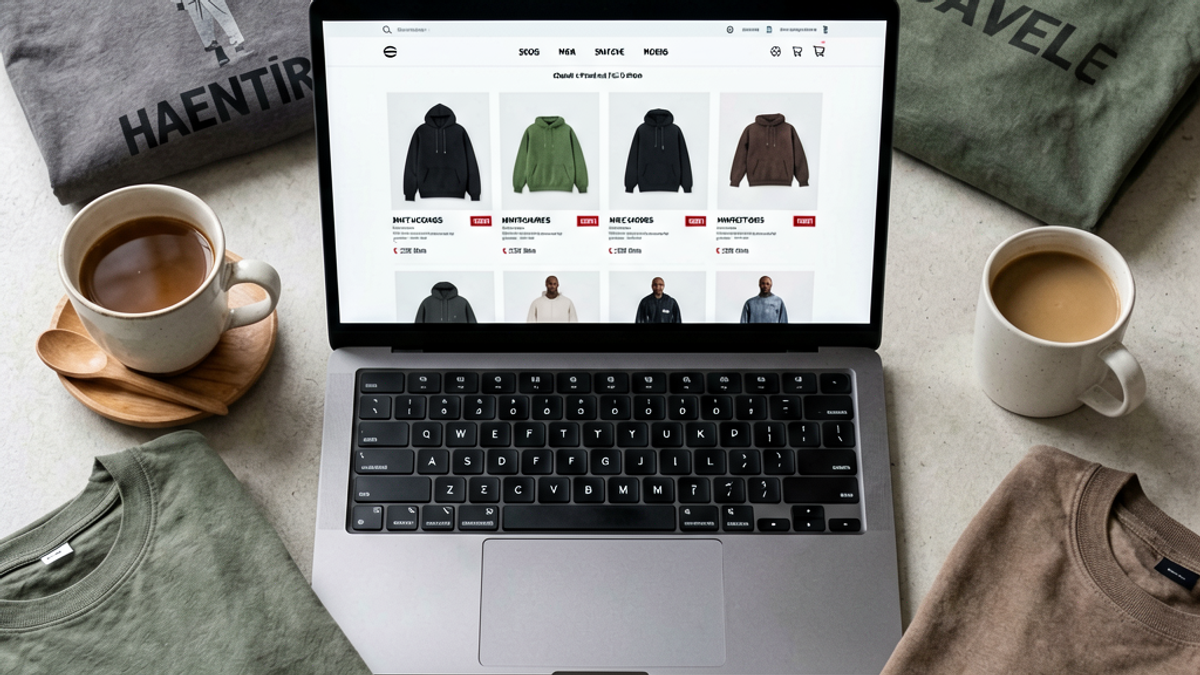
Where Can You Actually Buy Cool Graphic Tees Online in 2026?
If you're looking for where to buy graphic tees online in 2026, you've got five channels that actually matter — and each one serves a different style tribe. Brand-direct Shopify stores win on...
Sylvie Vance
•
If you're looking for where to buy graphic tees online in 2026, you've got five channels that actually matter — and each one serves a different style tribe. Brand-direct Shopify stores win on drops and authenticity, curated marketplaces win on discovery, limited-release platforms win on hype, vintage and secondhand shops win on character, and the broader fashion giants win on convenience. Skip the everything-stores — the graphic tee is a taste purchase, and taste lives in curation.
Key Takeaways
The five channels below aren't ranked — they're matched to what you're after. A collector chasing a specific artist's drop has no business browsing the same site as someone hunting a one-of-one 90s piece.
Brand-direct Shopify stores are the safest bet for current-season drops and authenticity — no markup, no reseller tax.
Curated streetwear marketplaces trade breadth for taste: someone else has already filtered the noise.
Drops and limited-release platforms are where the most-hyped graphic tees actually land first.
Vintage and secondhand shops beat everything else on character and price once you learn what to look for.
Reading listings matters more than the platform — wrong sizing, AI-generated mockups, and shipping-from-Asia tells are universal.
Where to Buy Graphic Tees Online: The 5 Channels Shoppers Actually Use
Most independent streetwear brands run their own Shopify storefront, and that's almost always the cleanest place to buy. You cut out the reseller markup, you get the actual sizing chart, and you're funding the designer directly instead of an algorithm. Stryxen Studio runs this way on purpose — every tee is launched, photographed, and shipped from the brand itself, so what's on the product page is what's in the box. The brand handles sizing questions, exchanges, and restock alerts in one inbox — no third-party logistics layer to fight with.
The trade-off is choice. A single Shopify store might carry 30 SKUs at a time, where a marketplace carries 30,000. That's not a flaw — it's the point. Taste-led brands treat their storefront like a gallery: every piece is a deliberate edit. If you want the broadest browse, jump to section two. If you want a focused drop that someone with taste put together, stay here. One practical tip: bookmark the new-arrivals page of three or four brands you like. Independent shops restock on a rolling schedule, not a fixed calendar, and the only reliable signal is the page itself.
Curated Streetwear Marketplaces Trade Breadth for Taste
Curated marketplaces sit in the middle: bigger catalog than any single brand, but with an editor deciding what gets in. The original version of this model was a printed magazine with a mail-order coupon — the modern incarnation is a Shopify Plus storefront with a buyer behind it. Think of it as a record store that carries every press, not a streaming service that carries every song: someone has already decided what's worth your time.
These work best when you know what aesthetic you're chasing but don't want to learn 30 individual brand sites. Browse for two hours and you'll surface five brands you'd never have found through search. The weakness: curation is opinionated, and the buyer's taste may not be yours. Treat the marketplace as a discovery tool — once you find a brand you like, jump to their direct store for the next drop. Most marketplaces surface a brand-by-brand index page; use it as a launchpad, not a destination. Pricing here also runs a touch higher than retail because of the curation premium — that's the cost of letting someone else filter.
Drops and Limited-Edition Platforms Are Where Hype Lives First
If you want the graphic tee that everyone else is going to want six months from now, you need to be where the drop happens, not where it ends up on resale. Drops platforms use timed releases, raffles, or queue systems to sell a fixed run at retail. Once the run is gone, it's gone — what shows up on resale sites a week later is three to five times the original price, sometimes ten times for collab pieces.
The platforms run on email and SMS lists, not search. You have to opt in before the drop, not after. Set a reminder, have your size ready in the cart profile, and accept that you'll lose more drops than you win. When you do land one, the value isn't just the tee — it's knowing you saw it before everyone else did. Two practical notes: drops often run on a 10-minute window, not a full day, so set phone alarms not just calendar ones. And raffle drops favor clean profiles with verified shipping addresses — bots get filtered, but so do first-time buyers with three-year-old accounts.
Bonus tell for drops platforms: if the same tee is sold on three different drops sites simultaneously, it's probably a marketing campaign, not a real drop. The genuinely scarce pieces get one release window, one platform, one shot.
Vintage and Secondhand Beat Everything on Character
Here's where the real finds live. Vintage graphic tees — single-stitch construction, sun-faded prints, decades-old band merch, original tour shirts — are functionally a different product than a new tee. The cotton has softened, the ink has cracked in patterns the printer couldn't plan, and the cut follows a body shape that doesn't really get made anymore. A 1994 tee fits different than a 2024 tee, and that's not a sizing failure — it's the entire appeal.
The secondhand market for graphic tees has exploded for a reason: the new stuff is fine, but it isn't scarce. Scarcity, character, and history — that's what you buy vintage for. Pricing is wild and asymmetric. Know your eras, know your references, and don't pay premium prices for reproductions. A real 1970s tour shirt has specific telltale wear around the collar and hem; a 2018 reproduction of one does not. Learn the difference before you spend $300 on something that came off a screen-print shop last spring.
If you're new to vintage, start with one trusted seller and one trusted era — most buyers start in the 90s because the graphics are loud, the references are recognizable, and the prices are still manageable. The deeper eras (70s, 80s) reward patience and research but require both.
How to Read Listings So You Don't Get Burned
The platform matters less than the listing. Five tells separate a real shop from a dropshipping ghost:
Sizing in numbers, not letters only. Real streetwear brands publish chest width and length in inches. If you only see S/M/L with no measurements, walk away.
Photographs on a body or a hanger, not a flat lay. Flat-lay product photos are the universal mark of a reseller running 200 SKUs at once.
Shipping origin and time clearly stated. "Ships in 2-3 weeks from Asia" is a tell. Domestic brands ship in 2-3 days.
Care instructions and fabric weight on the page. A genuine brand knows the GSM of their cotton and writes it down.
Returns policy that names a person or address. A real shop has a real returns address. A dropshipper has a boilerplate paragraph.
Apply these five checks and you'll filter out roughly 80% of bad listings before you ever click add-to-cart. The remaining 20% is where you spend your time.
The graphic tee market in 2026 is healthier and more fragmented than it's been in a decade. There are five genuinely different ways to shop, and the right one depends on whether you're chasing a drop, hunting a vintage piece, or just building a rotation. Pick the channel that matches your intent — and if you're looking for current-season graphic tees designed and shipped from one place, the Stryxen Studio collection is built around exactly that idea.
Frequently Asked Questions
Where can I buy graphic tees online without getting scammed?
Stick to brand-direct Shopify stores, curated streetwear marketplaces, and known drops platforms. Check that the listing has sizing in inches, real product photos, and a named returns address — those three tells alone filter out most dropshipping ghosts.
Are graphic tees cheaper on marketplaces or brand websites?
Brand-direct is almost always cheaper at retail because there's no reseller or curator markup. Marketplaces make sense for discovery and for hunting sold-out pieces at resale prices, but the first-sale price is lowest at the brand itself.
What should I look for in a vintage graphic tee listing?
Look for single-stitch construction, soft-hand cotton, and honest wear — sun-fading, ink cracking, and authentic decade-specific cuts. If a listing calls a 2020 tee "vintage," it's not. Real vintage tees are 20+ years old and have specific tells.
How do I know my size when buying graphic tees online?
Don't trust S/M/L alone. Pull a tee you already own, measure chest width and length, and compare to the brand's sizing chart in inches. Streetwear sizing varies more than mainstream fashion, so a Medium at one brand can be a Large at another.
Where Can You Actually Buy Cool Graphic Tees Online in 2026? | Stryxen Studio Blog

 Sylvie Vance