What is the format of the World Cup tournament, from group stage to finals?
Starting in 2026, the FIFA World Cup expands to 48 teams across 12 groups, with a 32-team knockout stage aiming for greater global reach and competitiveness.
 Sylvie Vance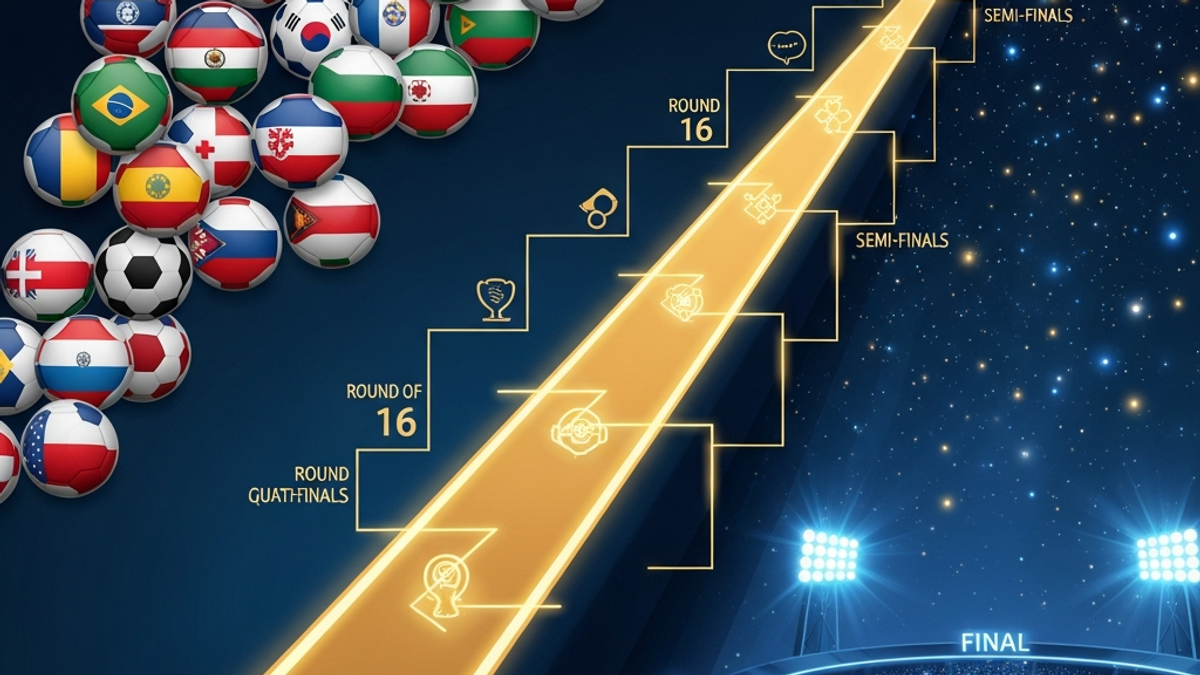
The FIFA World Cup format, specifically beginning with the 2026 tournament, consists of 48 teams divided into 12 groups of four, where the top two teams from each group, along with the eight best third-placed teams, advance to a 32-team knockout stage that progresses through single-elimination rounds until the final ([FIFA, 2026](https://www.fifa.com/en/tournaments/mens/worldcup/canadamexicousa2026/articles/fifa-world-cup-2026-hosts-cities-dates-usa-mexico-canada)). This structural evolution represents the most significant expansion in the history of the competition, reflecting FIFA’s strategic push to broaden global participation and maximize commercial reach.
### How does the group stage function in the new 48-team format?
In the updated format, 48 nations are organized into 12 groups of four teams each. Every team plays three matches within their group in a round-robin style, ensuring that all participants are guaranteed at least three games ([MLSSoccer, 2026](https://www.mlssoccer.com/news/fifa-world-cup-2026-format-explained)). Points are awarded based on standard international rules: three points for a win, one for a draw, and zero for a loss. The top two teams from each group automatically qualify for the knockout phase, providing a clear path forward for consistent performers ([ESPN, 2026](https://www.espn.com/soccer/story/_/id/47108758/2026-fifa-world-cup-2026-format-tiebreakers-fixtures-schedule)).
### What determines who advances from the group stage to the knockout rounds?
While the first and second-place finishers in each group secure direct passage to the Round of 32, the inclusion of 48 teams necessitates a mechanism for the "best" third-placed teams to advance as well. Specifically, the eight third-placed teams with the best records—determined by points, goal difference, and other tie-breaking criteria—will also earn spots in the knockout bracket ([ESPN, 2026](https://www.espn.com/soccer/story/_/id/47108758/2026-fifa-world-cup-2026-format-tiebreakers-fixtures-schedule)). This addition ensures that high-quality teams who may have faced a difficult draw in the group stage still have a pathway to prove their mettle on the global stage.
### How does the knockout stage work after the group stage concludes?
Once the field is narrowed down to 32 teams, the tournament shifts to a traditional single-elimination format. Starting with the Round of 32, teams face off in high-stakes matches where a winner must be decided on the day; if the score remains level after 90 minutes, the match proceeds to extra time and, if necessary, a penalty shootout ([Sportsepreneur, 2026](https://sportsepreneur.com/2026-world-cup-draw-groups-format-schedule/)). The winners progress sequentially through the Round of 16, the Quarter-finals, the Semi-finals, and finally, the Championship Final.
### Why did FIFA change the format from 32 teams to 48?
The expansion to 48 teams is primarily driven by a desire for greater global inclusivity and economic growth. By increasing the number of participating nations, FIFA provides more opportunities for teams from underrepresented confederations to compete at the highest level, thereby fostering grassroots development in those regions ([FIFA, 2026](https://www.fifa.com/en/tournaments/mens/worldcup/canadamexicousa2026/articles/fifa-world-cup-2026-hosts-cities-dates-usa-mexico-canada)). Commercially, more teams mean more matches, which increases broadcasting rights revenue, sponsorship interest, and ticket sales, cementing the World Cup's status as the world’s largest single-sport event.
### Key Takeaways
* **Expansion:** The tournament has grown to 48 teams to increase global representation.
* **Group Stage:** Features 12 groups of four, with the top two teams plus the eight best third-placed teams advancing.
* **Knockout Phase:** Uses a 32-team single-elimination bracket requiring decisive results through extra time and penalties if needed.
* **Strategic Impact:** The new format balances increased competitive access for smaller nations with the financial necessity of hosting more matches for global stakeholders.
As the tournament structure shifts to accommodate more teams, the tactical demands on players and coaching staff will likely intensify, necessitating deeper squads and more resilient physical preparation.
The expansion of the World Cup is a transformative moment for international football, balancing the dual objectives of inclusivity and commercial scaling. Whether this format will enhance the competitive quality of the matches or create an unsustainable density of fixtures remains a subject of intense debate among fans and analysts alike. As we approach the 2026 tournament, observing how these structural changes manifest on the pitch will be crucial in determining the future direction of global sporting mega-events.
## References
* [FIFA (2026). FIFA World Cup 2026™ | Fixtures, groups, teams & more.](https://www.fifa.com/en/tournaments/mens/worldcup/canadamexicousa2026/articles/fifa-world-cup-2026-hosts-cities-dates-usa-mexico-canada)
* [MLSSoccer (2026). FIFA World Cup 2026 format explained.](https://www.mlssoccer.com/news/fifa-world-cup-2026-format-explained)
* [ESPN (2026). 2026 FIFA World Cup: Format, groups, more.](https://www.espn.com/soccer/story/_/id/47108758/2026-fifa-world-cup-2026-format-tiebreakers-fixtures-schedule)
* [Sportsepreneur (2026). 2026 World Cup Draw: Groups, Format, Schedule & USA Path.](https://sportsepreneur.com/2026-world-cup-draw-groups-format-schedule/)