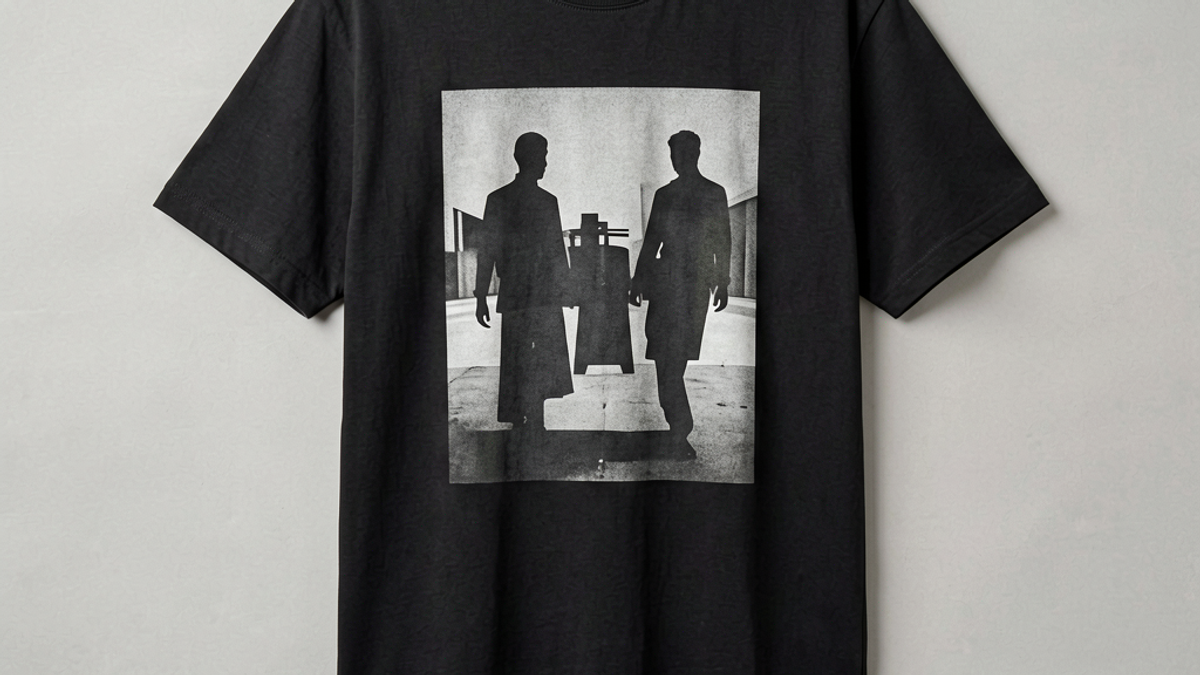
What Is a Streetwear Graphic Tee and Why Is It So Popular?
A streetwear graphic tee is a printed cotton T-shirt rooted in skate, hip-hop, and pop-culture design — built to be seen, not just worn. It started as merch and protest wear in 1980s California...
Sylvie Vance
•
A streetwear graphic tee is a printed cotton T-shirt rooted in skate, hip-hop, and pop-culture design — built to be seen, not just worn. It started as merch and protest wear in 1980s California and 1990s New York, and by the 2020s it had become the cheapest, loudest form of self-expression in fashion. Below: where it came from, what makes one, and why it's still in every closet in 2026.
Direct Answer: What a Streetwear Graphic Tee Actually Is
Strip away the marketing and a streetwear graphic tee is two things: a heavyweight cotton blank and a printed graphic that says something. The blank is almost always ringspun cotton — anything from a 6oz lightweight to a 9oz heavyweight — chosen for structure, drape, and how it holds ink. The graphic is the point: typography, illustration, photography, or a band/brand/logo that signals which tribe the wearer belongs to.
Key Takeaways
The blank matters. Streetwear tees run heavier than fast-fashion basics — 7oz minimum, often 8–9oz. The weight is what gives the tee its shape after washing and what keeps the print from bleeding.
Most streetwear tees carry a single statement piece on the chest or back: a logo, an illustration, a slogan, a band photo. Multi-graphic or all-over prints exist but are less iconic.
The graphic is the brand.
Construction details signal authenticity. Taped neck seams, double-needle hems, side-seamed bodies (not tubular), reinforced shoulders. Cheap blanks skip these details; serious streetwear brands don't.
The construction details matter more than the brand name. A $50 tee from a brand you haven't heard of, with heavyweight cotton, taped neck seams, side-seamed body, and a quality plastisol screen print, will outlast and outperform a $100 tee from a famous brand that uses lighter blanks and standard construction. Check the spec sheet before you check the logo. The spec sheet is the truth; the logo is the marketing.
Origin in Skate, Hip-Hop, and 1990s Pop Culture
Streetwear graphic tees emerged at the intersection of three cultures. Skate culture in late-1980s California gave the form its oversized fits and DIY graphics — Powell-Peralta, Santa Cruz, and World Industries tees were the early templates. Hip-hop in late-1980s and 1990s New York turned the graphic tee into a billboard for record labels, MC names, and cultural references — think the Wu-Tang W, the Roc-A-Fella diamond, the Bad Boy logo. Pop culture in the 1990s broadened it: MTV, Nintendo, sports, anime. By the late 1990s, a graphic tee was a standard-issue uniform.
Drop calendars are how the culture moves. Most serious streetwear brands release in numbered drops — sometimes weekly, sometimes monthly, sometimes quarterly. Following a brand's drop calendar is how you stay current, cop limited pieces, and avoid the inflated resale market. The brands that release consistently are the ones building real visual languages, not chasing single-season trends.
Key Design Features: Prints, Fabrics, Fits, Drops
What separates a streetwear graphic tee from any other printed T-shirt is a handful of consistent design moves. Most of them are invisible if you don't know to look, but they're the reason some graphic tees feel intentional and others feel like merch.
Print technique. Plastisol screen print, discharge ink, or high-density ink — not digital transfer or vinyl. The print should feel like part of the fabric, not stuck on top of it.
Drop-based release model. Streetwear tees are released in numbered drops, not endless reorders. Scarcity is part of the value.
Weight and fit. Heavier blanks, boxy or oversized cuts, longer torsos. Not the fitted, slim-cut tees you find at fast-fashion basics brands.
Storytelling. Every graphic tee has a reason — a collaboration, an artist, a movement, an inside reference. The story is part of what you're paying for.
Care is the underrated half of the equation. A graphic tee cared for properly will outlast three tees treated carelessly. Cold wash, inside out, hang dry — those three rules turn a $40 tee into a five-year piece. Most people skip the care step and then blame the brand when the print cracks at month eight. The brand isn't wrong; the wash routine is.
How It Differs From a Regular Graphic T-Shirt
A regular graphic T-shirt — the kind from a concert venue, a tourist shop, or a fast-fashion brand — is designed for a single wear. A streetwear graphic tee is designed for years. The differences show up in every part of the garment.
Blank quality. Streetwear tees use ringspun, combed cotton at 7oz+. Regular graphic tees use open-end cotton at 5–6oz that loses shape after three washes.
Print durability. Streetwear uses plastisol or discharge inks rated for 50+ washes. Regular graphic tees use plastisol transfers or vinyl that crack and peel.
Design intent. Streetwear graphics are designed by named artists or with cultural context. Regular graphic tees are designed by whoever can produce the cheapest vector at the cheapest vendor.
Price as a signal. A $25 graphic tee is rarely streetwear; a $45–$80 graphic tee usually is. The price reflects blank cost, print technique, and brand overhead.
Resale is the secondary market, not the primary one. Hyped pieces will appear on StockX, GOAT, and Grailed at 2–3x retail within weeks of a sellout drop. That market is real, but it's not where you build a daily wardrobe. The pieces you'll actually wear are the ones you buy at retail from brands you genuinely like — not the ones you buy to flip.
Why It Remains a Wardrobe Staple in 2026
Graphic tees keep winning in 2026 because no other garment does as much per dollar. A $50 tee carries more identity than a $200 hoodie, more cultural weight than a $300 pair of jeans, and more longevity than either. That's the math that keeps them on shelves.
The drops never stopped. While other categories consolidated, indie streetwear brands kept releasing weekly, keeping the format culturally alive.
AI-generated art lowered the cost of custom graphics. Small brands can now produce artist-quality prints without a five-figure illustration budget, expanding the variety of what's available.
The nostalgia cycle keeps returning to 1990s and Y2K. Every few years, the cultural moment revives interest in vintage-style graphics, which then pulls in new streetwear prints.
The cost-per-wear is unbeatable. A $50 tee worn twice a week for three years is 16 cents per wear. No other garment hits that number.
The best graphic tee is the one you'll wear next year. Forget the trend cycle, forget what's on Instagram this week, forget what your favorite creator is wearing right now. The right graphic tee is the one that still feels like you twelve months from now. If you're going to love it in a year, it's worth the investment. If it feels disposable today, it will be disposable in three months.
The Short Version
The streetwear graphic tee is the cheapest, loudest piece in any wardrobe. It carries identity, tells a story, and outlasts trends when the construction is right. The Stryxen Studio collection is built on this exact playbook: heavyweight cotton, discharge-printed graphics, drop-based releases, and the kind of detail that turns a tee into a five-year staple rather than a single-season buy.
Sizing varies more than the size chart suggests. A 'medium' from a Japanese label, an American basics brand, and an Italian heritage house are three different garments. Always check actual measurements (chest, length, shoulder) against a tee you already own. The size label is a guideline; the measurements are the truth.
Frequently Asked Questions
What counts as a streetwear graphic tee?
A printed cotton tee with a heavyweight blank (7oz+), a graphic rooted in skate, hip-hop, or pop culture, and a brand that releases in drops rather than endless reorders. Construction details like taped neck seams and side-seamed bodies are the tell.
How is streetwear different from regular fashion?
Streetwear started as subcultural wear — skate, hip-hop, graffiti — and was built around limited drops and cultural credibility. Mainstream fashion borrows the aesthetics but lacks the scarcity model and the cultural context.
Why are streetwear tees so expensive?
Heavyweight blanks, quality inks, small-batch production, and brand overhead add up. A $50–$80 streetwear tee reflects real material and labor cost; a $15 graphic tee reflects the cheapest blank, the cheapest print, and the fastest production.
Are graphic tees still trendy in 2026?
Yes. The format has survived every fashion cycle since the 1990s because it's the cheapest self-expression in fashion. The graphics change, the blanks evolve, but the structure — cotton tee plus printed graphic — keeps winning.
What Is a Streetwear Graphic Tee and Why Is It So Popular? | Stryxen Studio Blog

 Sylvie Vance