What Is a Retro Vintage Graphic Tee and Why Does It Never Go Out of Style?
A retro vintage tee is a printed cotton shirt engineered to look 15-30 years old the day you put it on — sun-faded colors, cracked ink, a softened hand-feel — even though the fabric rolled off the...
Sylvie Vance
•
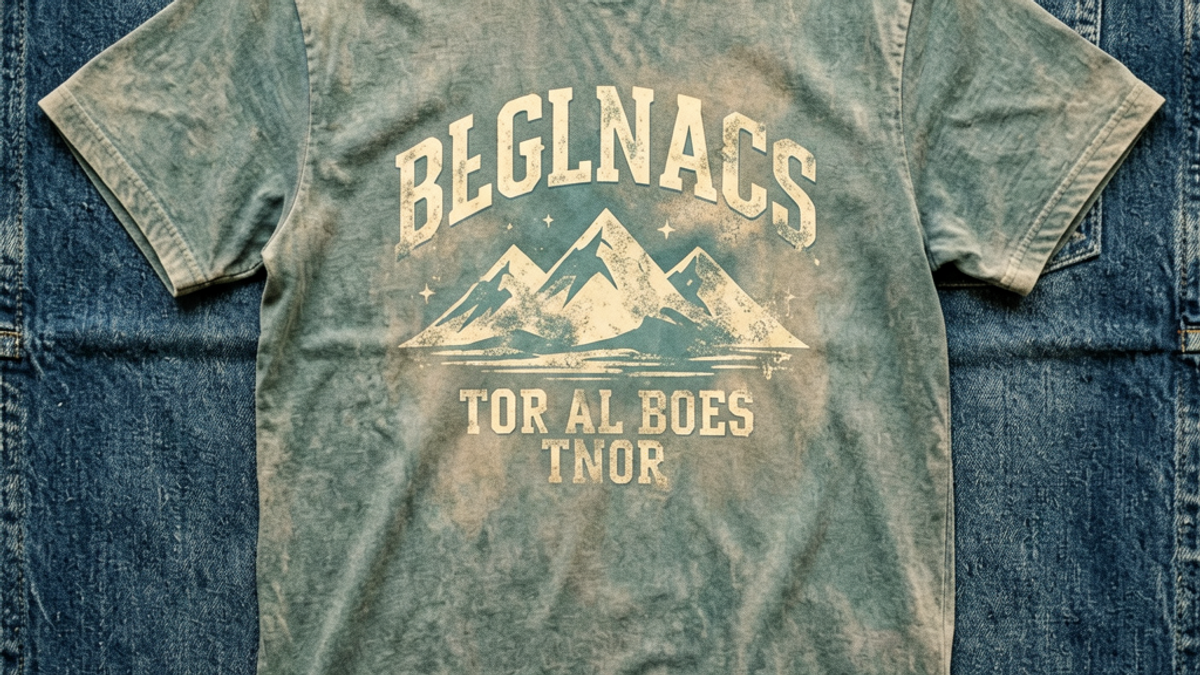
A retro vintage tee is a printed cotton shirt engineered to look 15-30 years old the day you put it on — sun-faded colors, cracked ink, a softened hand-feel — even though the fabric rolled off the line last season. The look is built from three ingredients working together: a distressed or weathered print, a desaturated palette borrowed from mid-century advertising, and a fabric finish (usually garment dye or mineral wash) that breaks up the cotton. Read those three cues and you can tell a thrift-store survivor from a new tee with "vintage" stamped on the tag.
Retro Vintage Tee: What It Actually Means (and What It Doesn't)
The phrase gets thrown around like every washed-out graphic tee is the same thing, but there is a working definition the streetwear industry uses, and it lines up with what shoppers actually look for. A retro vintage tee is a contemporary garment treated to imitate the visual signature of an authentic aged tee: cracked or faded print, softened cotton, and a palette that has been pulled toward sepia or faded blue. The "retro" part is the styling, the "vintage" part is the look — the shirt itself is new.
Three things make the formula land. First, the print looks broken-in. Real print machines used in the 70s and 80s laid down plastisol ink that cracked along every fold after a few dozen washes; modern repro tees simulate this with discharge ink, a wash that strips pigment out of specific fibers. Second, the colors look desaturated. Mass-market tees printed today lean saturated to grab attention on a rack; aged tees look like they have been left in a garage window for a decade. Third, the fabric itself has drape and weight — usually 6-7 oz cotton with a slightly uneven slub, not the slick 4 oz jersey used for fast-fashion blanks.
Print that reads broken — cracked edges, faded center, slight registration drift.
Palette pulled toward beige, washed indigo, or sun-bleached red — never neon.
Fabric with visible slub or knit irregularity — not a smooth, plastic-hand feel.
Construction details borrowed from older tees — tubular body, no side seams, taped collar.
Genuine Vintage vs Retro Reproduction: How to Tell
A genuine vintage tee — pulled from a thrift store, a deadstock bin, or your older sibling's closet — has a few tells you cannot fake. The single-stitch hem is the big one: tees sewn before the mid-1990s almost always used a single needle on the hem, leaving a small, tight chain of stitches that runs flush with the edge. A reproduction, even an expensive one, uses a coverstitch with two parallel rows. If you can flip the hem and see one row of stitching, you're holding something older than your taste in music.
The tag is the second tell. Vintage tees carry screen-printed care labels or single-color woven labels from brands that often no longer exist — the kind that say "Made in U.S.A." on the neck tag without apology. Repro tees lean on modern branding (printed inner neck tags, woven hem labels, RN-number compliance) because they have to meet current retail regulations. The print itself is the third tell: an original 1980s tee will have plastisol ink that has cracked along every fold line and softened into the cotton. A retro reproduction usually has a print that looks faded, but the cracks feel printed-on, not worn-in. Hold it up to light and you can sometimes see the original screen color peeking through.
Price tells you less than you'd think. Genuine deadstock — a tee that was made and never worn — can run $80-300 on collector markets, but most "vintage" tees you find at retail are reproductions priced at $35-65. The category has matured: good reproductions are honest about being new, and they charge a small premium for the wash treatment and the print quality. If a tee is being marketed as "authentic vintage" at $25, it's almost certainly a reproduction.
Design Motifs That Read as Retro (90s, Y2K, 80s Sports)
The 1990s owns the biggest slice of the retro market right now, and the visual language is unmistakable once you start noticing it. Big curved collegiate wordmarks, washed-out band tees, oversized MTV-style stacked graphics, bootleg hip-hop covers, and the kind of faded rainbow gradients that lived on every tourist-shop rack. The colors lean into primary saturation that's been pulled 40% toward gray, the print is huge, and the tee itself usually runs long and boxy — closer to a dress fit than a tailored modern cut.
Y2K is the second-largest slice, and it pulls in a totally different direction: chrome, glitter, butterfly clips worth of pink and baby blue, and graphics that borrow straight from early-2000s pop — the rhinestone fleur-de-lis, the trucker hat silhouette, the racing stripe. The print here tends to be sharper and more saturated than 90s retro, but the fabric finish still does the work of aging the whole thing down so it doesn't look like a 2003 prom favor.
80s sports is the third pillar, and it's the easiest to fake badly. The reference is the licensed athletic tee — NBA, NFL, college — with the team wordmark across the chest and the player number underneath. The good reproductions soften the screen-print and pull the colors toward a sun-faded version of the original team palette (faded Celtic green, dusty Lakers gold). The bad ones just slap a modern team logo on a heavy tee and call it vintage. Look for the print registration drift and the slightly off-color shade — those are the cues that tell you the maker actually studied the source.
Fabric and Finishing: Garment Dye, Mineral Wash, Enzyme Wash
The wash is where the magic happens. Three finishes show up on almost every retro vintage tee worth buying, and each one fakes age a different way. Garment dye is the cleanest: the finished tee is sewn first, then dyed as a complete garment, which gives every seam a slightly uneven color pull. The result is the kind of tonal variation you only see in actual 80s tees that have been washed 200 times. It's also the most expensive finish because every size has to be dyed separately.
Mineral wash is the more aggressive treatment. The tees are tumbled with pumice stones or chemical agents (typically sodium hypochlorite) that physically eat away at the surface dye, leaving lighter speckles and a softer hand-feel. It's the finish that gives the most obvious "this shirt has been through something" look, and it works best on dark colors that can take the contrast — faded black, washed navy, charcoal. The trade-off is fabric longevity: a heavily mineral-washed tee will thin out faster than a garment-dyed one.
Enzyme wash is the third option, and it's the quietest. Cellulase enzymes break down a small percentage of the cotton fibers on the surface of the fabric, softening the hand-feel without changing the color dramatically. The result is a tee that drapes like a five-year-old favorite from the first wear, but the print and palette look almost untouched. It's the right finish for graphics where you want the art to stay sharp while the fabric does the talking.
Base cloth matters as much as the wash. Most credible repro tees use 6-7 oz ring-spun cotton with a slubby knit — the visible irregularities in the yarn are part of the look. Cheaper reproductions use 4-5 oz open-end cotton that feels smooth and uniform; the wash still ages it visually, but the drape gives it away the moment you put it on. If a tee looks vintage but feels like a thickness you could see through, the maker cut a corner.
Three Outfit Formulas That Make a Retro Tee Look Intentional
A retro vintage tee on its own is just a faded shirt. The styling is what turns it into something that reads as deliberate rather than tired. The first formula is the easiest: tuck the tee into a pair of high-rise straight-leg denim, add a worn leather belt, and finish with a pair of low-profile sneakers (Vans, Adidas Samba, or a classic runner). The proportions do the work — the structured denim gives the soft tee a frame, and the sneakers keep the whole thing from tipping into costume.
The second formula layers for weather. Throw an open flannel or an oversized chore coat over the tee, cuff the sleeves once, and pair with relaxed cargo pants or pleated trousers. This is the look that translates best into fall and winter — the heavier outer layer carries the structure, and the retro tee sits as a printed underlayer. Keep the color story tight: pick one accent color from the tee print and echo it in one other piece (the flannel, the belt, the shoes) so the whole outfit reads as composed.
The third formula is the night-out move. Tuck a darker retro tee (faded black, washed burgundy, charcoal) into a pair of wide-leg trousers, add a simple chain, and finish with a cropped leather jacket or a structured denim jacket. The contrast between the soft, broken-in tee and the harder outerwear is what makes the look land. Skip the sneakers for this one — a clean pair of boots or derbies takes the whole thing up a level.
Key Takeaways
A retro vintage tee is a new garment styled to look 15-30 years old — distressed print, faded palette, softened fabric.
Genuine vintage tees almost always have a single-stitch hem and screen-printed or single-color woven labels.
The three eras driving the market are 1990s (faded collegiate, band tees), Y2K (chrome, rhinestones, racing stripes), and 80s sports (washed athletic wordmarks).
The wash is the secret: garment dye for tonal variation, mineral wash for visible aging, enzyme wash for a soft drape with crisp print.
Style with structured denim, layering outerwear, or wide-leg trousers — never with another soft piece on top.
Conclusion
The reason the retro vintage tee keeps cycling back into style is simple: the look is built on reference, not novelty, and a well-aged tee flatters almost every body and every wardrobe. Once you've trained your eye to read the three cues — distressed print, faded palette, broken-in fabric — you stop buying fast-fashion knockoffs and start buying the kind of shirt that gets better the more you wear it.
If you're ready to see what a properly washed, well-constructed retro tee looks like in person, the Stryxen Studio collection is built around exactly that formula — garment-dyed and mineral-washed cotton, screen-print treatments that age on cue, and graphics pulled from the eras that keep coming back.
Frequently Asked Questions
What makes a tee look retro vintage vs just old?
Retro vintage tees are built to look aged from day one using three cues working together: a distressed or weathered print with cracked edges, a desaturated palette pulled toward sepia or faded blue, and a fabric finish like garment dye, mineral wash, or enzyme wash that breaks up the cotton. A tee that just looks old usually only has one of those cues — most often the fabric softness — and the print still looks factory-fresh.
How can you tell if a vintage tee is real or a reproduction?
Flip the hem first. A genuine vintage tee (made before the mid-1990s) almost always has a single-stitch hem — one tight row of stitching flush with the edge. Modern reproductions use a coverstitch with two parallel rows. Check the tag too: real vintage usually has a screen-printed care label or a single-color woven label from a brand that's often no longer around. If both the hem and the tag check out, the print is the next tell — real vintage plastisol ink has cracked along fold lines and softened into the cotton.
Are retro vintage graphic tees still in style in 2026?
Yes — the category has held steady for the last several seasons and shows no sign of cooling. 90s graphics, Y2K references, and 80s sports wordmarks continue to dominate the washed-tee section at most streetwear retailers. What shifts is which era gets the most attention: right now 90s is leading, with Y2K close behind and 80s sports holding a smaller but loyal slice of the market.
What is the difference between garment dye and mineral wash?
Garment dye is the cleaner finish: the finished tee is sewn first, then dyed as a complete garment, which gives every seam slightly uneven color and the tonal variation of an actual aged tee. Mineral wash is more aggressive — the tees are tumbled with pumice stones or chemicals that physically eat away surface dye, leaving lighter speckles and a much softer hand-feel. Garment dye preserves fabric longevity better; mineral wash ages the look faster but thins the cotton sooner.
What Is a Retro Vintage Graphic Tee and Why Does It Never Go Out of St | Stryxen Studio Blog

 Sylvie Vance