What Is a Pop Art Graphic Tee and How Did It Become a Streetwear Icon?
A pop art graphic tee is a printed T-shirt that borrows directly from the visual language of 1960s pop art — comic-book panels, halftone dots, neon palettes, and satirical imagery lifted from mass...
 Sylvie Vance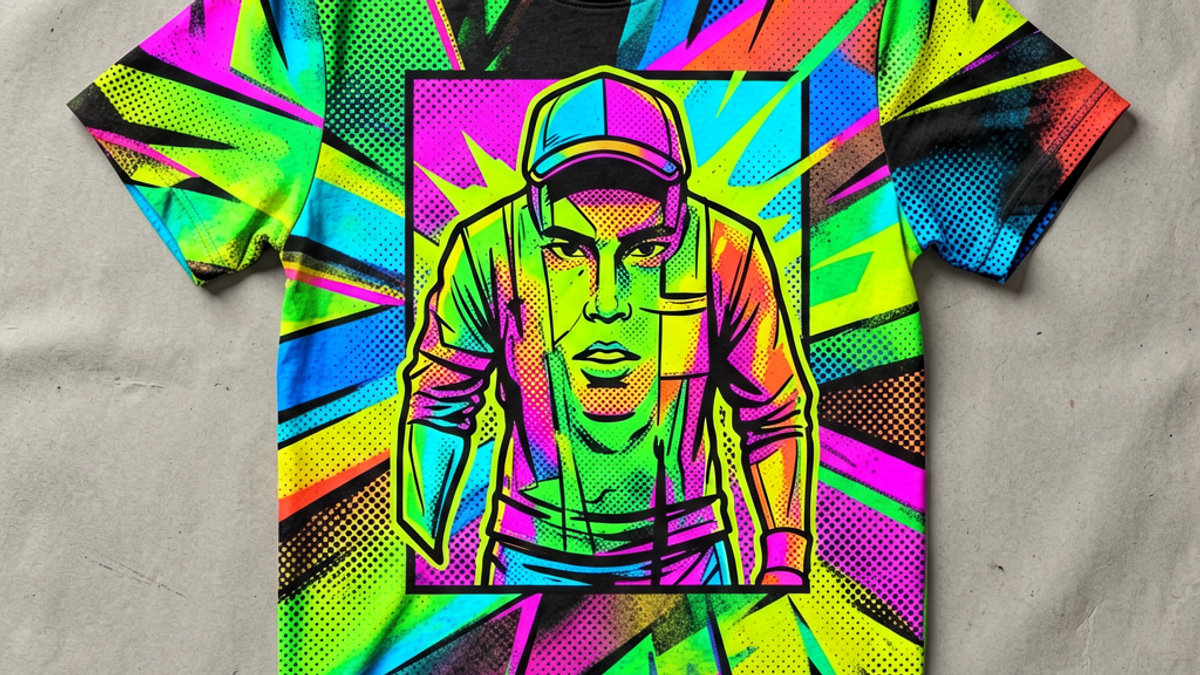
A pop art graphic tee is a printed T-shirt that borrows directly from the visual language of 1960s pop art — comic-book panels, halftone dots, neon palettes, and satirical imagery lifted from mass media. The result is a tee that reads loud, graphic, and culturally self-aware rather than subtle or decorative.
Pop art tees have never left rotation. They spike in drops every few years because the aesthetic ages slowly, prints loud on simple cotton, and photographs exceptionally well — three things the streetwear market cares about more than almost anything else.
The short lineage from canvas to cotton
Pop art as a movement emerged in late-1950s Britain and early-1960s New York, with Andy Warhol and Roy Lichtenstein as the two most familiar names. Warhol's silkscreens of soup cans, Marilyn Monroe, and Elvis turned commercial imagery into high art; Lichtenstein's Ben-Day dot comic panels turned high art back into commercial imagery. Both moves — art up, mass media up — were the joke and the point.
By the 1980s, designers like Stephen Sprouse and Jean-Michel Basquiat brought that vocabulary onto clothing. Sprouse collaborated with major fashion houses; Basquiat wore his own screen-printed tees as a kind of walking gallery. By the 2000s, pop art prints were a permanent fixture of streetwear drops, and every few seasons a new label would refresh the formula with a contemporary twist.
Signature design elements
Five visual cues reliably read as pop art, and most pop art tees combine at least three:
Halftone dots — the Ben-Day dot pattern that mimics cheap newsprint. Used as both a graphic texture and a stylistic shoutout to comic books.
Comic panel borders and speech bubbles — direct quotes from the comic-strip tradition. Almost always with a punchline or absurd tagline.
Neon and primary colors — saturated reds, electric blues, hot pinks, and acid yellows against black or off-white.
Saturated, screen-printed portraiture — celebrity or character faces rendered flat and bright, with no shading or photorealism.
Typography that mimics advertising or ransom-note cut-outs — bold sans-serif, hand-lettered capitals, or layered word collages.
Why pop art graphics keep returning in drops
Pop art tees survive because the format is inherently referential — every drop riffs on a source image that audiences already recognize. That cuts design cost (the artwork is partly borrowed, partly recontextualized) and accelerates purchase intent (the buyer recognizes the visual immediately).
Pop art also photographs loud. On a product page, in a flat lay, or in a lookbook, a halftone print pops against a clean background better than almost any other graphic style. For an ecommerce-first brand, that visibility is worth a lot. It is also the reason most lookbooks include at least one pop art piece — it carries the whole editorial when paired with neutral supporting pieces.
How to wear a pop art tee without looking like you're in costume
The format is loud by design, so the rest of the outfit should be quiet. Black jeans, a plain overshirt, simple sneakers — anything that lets the tee be the only loud thing in the frame. Avoid layering another graphic piece over or under a pop art tee; the visual noise compounds and the result reads costume-y, not styled.
If you want to push the look further, lean into monochrome supporting pieces. A black blazer over a halftone-print tee reads as intentional editorial styling; a color-clashing jacket reads as cosplay.
Pop art tees vs band tees vs statement tees
A pop art graphic tee is often confused with a band tee or a generic statement tee. The differences are worth knowing:
Pop art tee. Visual language lifted from 1960s pop art movement; saturated colors, halftones, comic references. The graphic is the entire point.
Band tee. Tour merch or licensed band merchandise. The graphic identifies a specific artist or album. The format is older than pop art tees and tends to use thinner cotton and a more limited color palette.
Statement tee. Any tee with a slogan, phrase, or single-message graphic. May or may not have any visual style at all — many statement tees are typographic only.
Pop art tees sit between band tees (which carry cultural loyalty) and statement tees (which carry an explicit message). They deliver visual style without requiring the buyer to commit to a band or repeat a slogan.
What makes a great pop art tee in 2026
Three things separate a good pop art tee from a mediocre one:
Originality of reference. The best pop art tees riff on a source image in a way that adds something — a new color, a new context, an unexpected juxtaposition. The worst ones just copy Warhol.
Print quality. Halftones and gradients need precise screen registration; cheap pop art tees show off-register prints that look like mistakes.
Fabric contrast. Heavyweight cotton (200+ GSM) makes the loud print feel grounded; thin cotton makes the same print feel like a costume piece.
Frequently Asked Questions
What is a pop art graphic tee?
A printed T-shirt that uses the visual vocabulary of 1960s pop art — halftone dots, comic panels, neon palettes, and satirical mass-media imagery. The defining trait is that the graphic treats the print itself as the entire product.
Who started pop art t-shirts?
Pop art as a movement traces to Andy Warhol and Roy Lichtenstein in the early 1960s. Pop art tees as a wearable format were popularized in the 1980s by designers like Stephen Sprouse and artists like Jean-Michel Basquiat.
Are pop art tees still trendy?
Yes. The format resurfaces in drops every few seasons because the aesthetic ages slowly, prints bright on simple cotton, and photographs well — three things that matter disproportionately to streetwear buyers.
How do you style a pop art graphic tee?
Keep everything else quiet. Plain bottoms, no competing graphics, simple sneakers. The tee should be the only loud element in the outfit; otherwise the look reads costume-y rather than styled.