Screen Print vs DTG Print Tee: Which Lasts Longer and Looks Better?
Screen print wins on durability and tactile feel; DTG wins on photo-real detail and color range. For bold graphics, typography, and any design with two to six solid colors, screen printing is the...
Sylvie Vance
•
Screen print wins on durability and tactile feel; DTG wins on photo-real detail and color range. For bold graphics, typography, and any design with two to six solid colors, screen printing is the right call — it lasts longer, feels better, and costs less at scale. For photographic imagery, gradients, or one-off prints with lots of colors, DTG (Direct-to-Garment) is the only honest answer. Neither technique is objectively better — they are different tools for different jobs, and the print method that comes out of the shirt depends entirely on the artwork.
How Screen Printing Works (in Plain English)
Screen printing pushes ink through a fine mesh stencil — one screen per color. Each color in your design gets its own screen, aligned by hand or machine, and the ink is laid down one color at a time. Plastisol ink sits on top of the fabric; water-based and discharge inks sink into the cotton fibers.
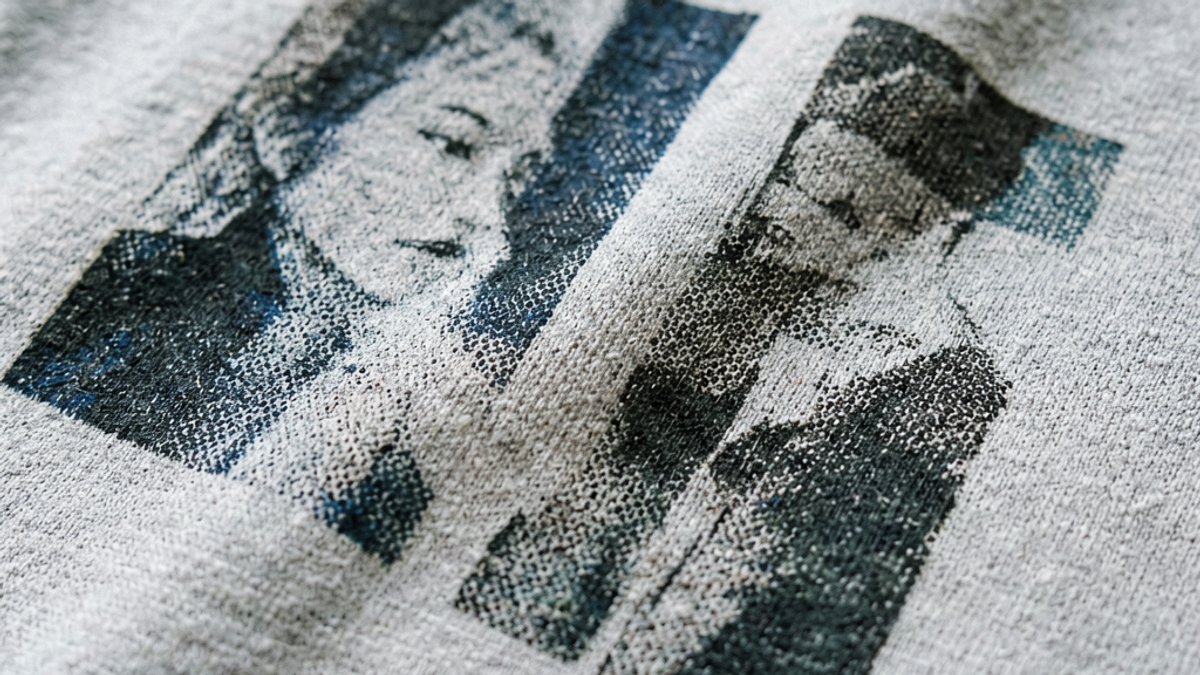
The result is a print you can feel with your thumb — slightly raised on dark shirts, almost flush with the fabric on light shirts. That physical layer is why screen prints survive wash cycles better than almost any other technique. It's also why fine detail (hair, gradients, small type under 8pt) gets fuzzy: the mesh can't resolve it cleanly.
Screen Print vs DTG Print Tee: Which Lasts Longer and Looks Better? | Stryxen Studio Blog
Setup cost is real. Each screen has to be burned, mounted, and registered, which is why screen printing has minimum orders — typically 25 to 50 pieces. Past that floor, the per-unit cost drops fast, which is why every band merch table and every independent streetwear label still uses screen printing for their core drops.
How DTG Printing Works (in Plain English)
DTG printing works like an inkjet printer aimed at a t-shirt instead of paper. The garment goes on a platen, a pre-treatment solution is rolled on to help the ink bond with cotton fibers, and the printer lays down cyan, magenta, yellow, black, and white ink in a single pass. No screens, no stencils, no color separation.
Because every pixel can be a different color, DTG handles photographic detail and gradients that screen printing physically can't. A 12-megapixel image prints essentially lossless. DTG also has effectively no minimum order — you can print one shirt for one customer and the price is the same as the fiftieth.
The catch is durability. DTG ink sits inside the cotton fibers rather than on top of them, which makes the print feel softer but also more vulnerable to wash abrasion. It also requires cotton-rich fabric — the pre-treatment and ink chemistry don't bond well with polyester or tri-blends. If your brand prints on heavy cotton blanks, DTG is a strong fit. If you print on athletic or performance fabric, screen print (or sublimation) is still the way.
Durability After 30 Washes
Thirty wash cycles is the honest benchmark — about a year of weekly wear. Here's what actually happens to each technique under that regimen, based on standardized testing and what streetwear brands see in the field.
Plastisol screen print: virtually unchanged. The ink layer remains intact, colors stay saturated, and any cracking is usually the shirt fabric wearing around the print rather than the print itself cracking. Properly cured plastisol on a quality blank will outlast the garment.
Water-based / discharge screen print: similar longevity to plastisol, with the print aging into the fabric rather than sitting on top. Some customers prefer this softer hand-feel; the trade-off is slightly less color pop on dark shirts.
DTG print on cotton: visible fading by wash 20, with meaningful color loss by wash 30 if washed hot or dried on high heat. Cold wash, hang dry, and the print holds closer to wash 40. DTG is dramatically better than it was five years ago — but it is still the most fragile of the three.
Sublimation (a related technique worth flagging): on polyester, sublimation actually becomes part of the fabric and lasts as long as the garment does. If you're comparing printing methods for athletic or all-polyester shirts, sublimation beats both screen print and DTG on durability.
Color Vibrancy and Detail Differences
The print technique you pick should be driven by the artwork first, then by the order quantity and the blank. Here's the visual side of the comparison.
Color count: Screen print is bounded by the number of screens you're willing to make — typically 1 to 6 for streetwear. DTG is unbounded; millions of colors print the same.
Color vibrancy on dark shirts: Screen print wins outright. Plastisol on black or navy cotton has a saturation and depth DTG can't match, especially under direct light.
Photographic detail: DTG wins outright. Portraits, gradients, watercolor effects, and small text under 8pt all look better in DTG than in any screen-printed equivalent.
Hand-feel: Water-based screen prints and DTG prints both feel soft. Plastisol screen prints feel raised, which most buyers either love or hate — there is no neutral position.
Consistency across units: Screen print is highly consistent if the operator is skilled. DTG consistency depends heavily on pre-treatment, humidity, and printer maintenance; lower-end DTG shops show noticeable drift.
Cost and Minimum Order Considerations
The print method that wins on cost depends entirely on order size, color count, and blank type. Three rules of thumb cover most real-world streetwear decisions.
Rule 1: Below 25 units, DTG is usually cheaper. No screen setup fees, no per-color charges. You pay a premium per shirt, but the upfront cost is near zero. This is why DTG dominates the print-on-demand and one-off drop market.
Rule 2: Above 50 units with 1-4 colors, screen print is cheaper. Setup fees are amortized across enough units that the per-shirt cost drops below DTG, usually by 30-50%. At 200+ units, screen printing wins on cost by a wide margin even on 6-color designs.
Rule 3: Photographic or complex-color designs flip the math. A 12-color screen-printed design needs 12 screens — the setup cost becomes prohibitive. DTG prints the same design with no setup premium, which is why independent labels with detailed artwork almost always start on DTG and only switch to screen print for their best-selling designs.
Minimum order quantities follow the same logic: most screen printers have a 25-50 piece minimum per design, while DTG shops will print one. If you need five shirts for a sample run or a pop-up, DTG is the only realistic option.
Key Takeaways
Screen print for bold, simple, durable graphics; DTG for photographic, colorful, or one-off designs.
Plastisol screen prints last 30+ wash cycles essentially unchanged; DTG shows visible fading by wash 20-30 if washed hot.
Screen print wins on dark shirt vibrancy; DTG wins on gradient and photographic detail.
Below 25 units, DTG is cheaper. Above 50 units, screen print is cheaper. The crossover depends on color count and complexity.
Pick the technique to match the artwork, not the other way around — designing for the print method is the single biggest factor in how the final tee looks and lasts.
If you're choosing what to put in your closet, the right question isn't "screen print or DTG?" — it's "what design language do I want?" Bold graphic statements and band merch are almost always screen printed. Photo art and gradient-heavy designs are almost always DTG. The Stryxen Studio collection leans on the screen-print side of this — heavyweight blanks, limited color palettes, prints engineered to age into the fabric over years of wear rather than fade off it.
Frequently Asked Questions
Which lasts longer, screen print or DTG?
Screen print, by a wide margin. Properly cured plastisol on a quality blank will look essentially unchanged after 30+ wash cycles. DTG prints are dramatically better than they were five years ago, but you'll see visible fading by wash 20 if you wash hot or tumble dry. Cold wash and hang dry will get a DTG print closer to wash 40 before noticeable fade.
Is DTG printing good quality?
Yes — for the right kind of design. DTG excels at photographic detail, gradients, and small text, and the prints feel soft because the ink sits inside the cotton fibers rather than on top. The trade-off is durability: DTG fades faster than screen print, and the print quality varies more from shop to shop. Pick a DTG printer who controls humidity and pre-treatment carefully, and the quality is excellent.
Why do streetwear brands still use screen printing?
Three reasons: durability, feel, and cost at scale. Plastisol screen prints survive years of wear, sit bold on dark shirts, and drop in per-unit cost dramatically as order size grows past 50 units. For bold graphics, typography, and limited color palettes — which is most of what streetwear actually prints — screen printing is still the right tool.
Can you screen print one shirt?
Technically yes, but it almost never makes financial sense. Screen printing has setup costs (one per color) that have to be amortized across the run, so a one-off screen print can cost $40-80 per shirt. For one-off prints, DTG is the practical choice — most DTG shops will print a single shirt for $20-35 with no setup premium and full photographic quality.
 Sylvie Vance