Screen Print vs DTG Print Tee: Which Lasts Longer and Looks Better?
Screen print wins on durability, color pop, and cost-per-shirt; DTG wins on detail, gradients, and small runs. That's the honest one-line answer if you're choosing a print method for a graphic tee...
Sylvie Vance
•
Screen print wins on durability, color pop, and cost-per-shirt; DTG wins on detail, gradients, and small runs. That's the honest one-line answer if you're choosing a print method for a graphic tee in 2026. Screen printing pushes ink through a mesh stencil onto fabric, layer by layer, so each color is a separate pass. DTG (direct-to-garment) is basically a textile inkjet printer that soaks pigment into the cotton fibers of a pre-treated shirt. The right one depends on whether your design is bold-and-simple or detailed-and-photographic, and how many shirts you're printing.
Screen Print vs DTG: The Honest Verdict in Plain English
Pick screen printing if your graphic is two to four solid colors, your run is twenty or more shirts, and you want the print to outlive the cotton. Pick DTG if your graphic is a photograph, a watercolor, or any artwork with subtle gradients and you're printing one to fifty pieces. That decision tree covers about 90% of indie streetwear and graphic tee work in 2026.
The other 10% is the interesting part. There are hybrid workflows now — DTG for the main image plus a screen-printed highlight layer for a metallic or puff ink accent — that give you both detail and tactile punch. And there are shops that screen print everything out of pure principle, because the slightly raised hand-feel of plastisol ink is part of the brand. But for the buyer asking the practical question — which print should I buy — the rule above is the rule that survives.
How Each Printing Technique Actually Works
Understanding the mechanism makes every other comparison downstream make sense. The two techniques use totally different physical processes to land ink on fabric, and almost every quality difference between them flows from that.
Screen printing, step by step
A screen printer burns a separate mesh stencil (called a screen) for every color in the design. The shirt is loaded onto a pallet, the screen is laid on top, and ink is pushed through the open areas of the mesh with a squeegee. Each color is a separate pass, with a flash-cure dryer between layers so the previous color doesn't smudge. A four-color design is four screens, four passes, four flashes.
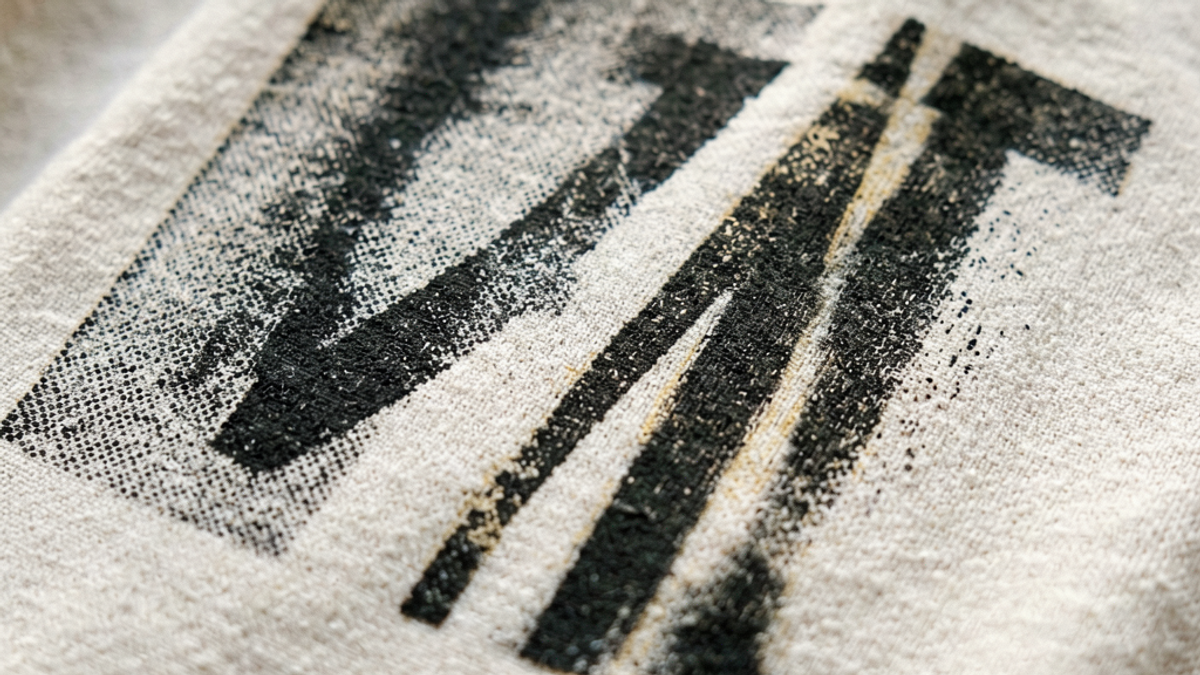
The ink sits on top of the cotton fibers as a thin film. That's why screen prints have that recognizable slightly-raised, almost rubbery hand-feel — you can feel the edge of the print when you run your thumb across it. Plastisol ink (the industry default) is plastic-based and sits on the surface. Water-based and discharge inks soak in further and feel softer but require more skill to print consistently.
DTG printing, step by step
DTG is closer to printing a document than to traditional apparel printing. The shirt goes onto a platen, a pre-treatment solution is rolled onto the print area to help the cotton absorb pigment, and then a specialized inkjet printer head deposits the image directly into the fibers. The result is a print that is essentially part of the shirt — there's no raised edge because there's no film on top of the fabric.
DTG printers like the Kornit and Brother GTPro series can reproduce millions of colors in a single pass, including photorealistic gradients, fine line work, and tiny text that would be impossible to burn into a screen. The catch is speed: a DTG machine prints one shirt at a time, while a screen press can run hundreds of shirts per hour once the screens are set up.
Durability After 30+ Washes: Where Screen Print Still Dominates
The single biggest reason streetwear brands keep coming back to screen printing is that the print outlasts the shirt. After 30 cold-wash cycles inside-out on low heat, a quality screen print looks essentially the same as the day it was pulled off the press. After the same treatment, a DTG print shows visible fading, especially in the darker areas of a graphic.
This isn't a knock on DTG — it's a consequence of how the ink is anchored. DTG pigment is locked into the cotton fibers with a pre-treatment and a cure pass, but it lives inside the fiber rather than on top of it, so each wash cycle gradually lifts a little more pigment out. Screen print plastisol sits on top of the fabric as a continuous film and doesn't have that fading pathway.
If you want a tee you'll wear hard for two or three years, screen printing is still the safer bet. If you're buying a tee you'll wear for a season or two and replace anyway — concert merch, a single-event graphic, an art piece you want to look exactly right out of the gate — DTG is more than durable enough.
Color Vibrancy and Detail: Where DTG Pulls Ahead
For vibrancy on solid colors and for true black, screen printing is still the winner. A screen-printed black on a black tee is genuinely black, not the washed-out charcoal you sometimes get from DTG trying to lay enough pigment down to register as black. Screen-printed reds and yellows also hit harder and more saturated than the DTG equivalent, because each color is a deliberate single pass of pure pigment rather than a halftone approximation.
DTG wins decisively on detail and gradient. If your design has a sky, a watercolor wash, a portrait, or any artwork with more than four or five distinct colors, DTG is the only realistic option. A screen print of a photograph would require dozens of screens and would still lose subtle tonal transitions. DTG prints the full color spectrum in a single pass with no halftone dot pattern visible at normal viewing distance.
Fine line work and tiny text also go to DTG. A screen print of a typeface smaller than about 10pt starts to lose detail and clog the screen after a few hundred shirts. DTG prints type as small as 6pt cleanly because there's no stencil to clog. So if your design is a dense illustrated scene or a long paragraph of small type, DTG is the right tool.
Cost, Minimum Orders, and When Each Method Actually Makes Sense
Cost is where the two methods diverge the most in practical terms. Screen printing has a high upfront setup cost — burning screens, color separations, test prints, register alignment — but a near-zero marginal cost per additional shirt. Once you're past the setup, each shirt is mostly fabric and ink, both of which are cheap. DTG has essentially zero setup cost and a constant marginal cost per shirt, because every shirt takes the same amount of machine time, pre-treatment, and ink regardless of the design complexity.
The breakeven point for a single design usually lands somewhere between fifteen and twenty-five shirts. Below that, DTG is cheaper because you skip the screen setup. Above that, screen printing pulls ahead because the per-shirt cost drops fast. A rough rule of thumb: under ten shirts, DTG almost always. Over fifty, screen print almost always. In between, it depends on how many colors your design has and how patient you are with setup lead times.
There's also the question of where you actually sit in the production chain. If you're a customer buying one tee from an independent brand's Shopify store, you almost certainly got a DTG print unless the brand specifies otherwise. If you're ordering custom merch for a band, a brand, or a small business and you need sixty pieces, screen printing is going to be the right call and your printer will tell you so.
Key Takeaways
Screen print is the right choice for bold, simple graphics in two to four colors, runs of twenty or more shirts, and any print you want to outlive the cotton.
DTG is the right choice for photorealistic detail, gradients, fine line work, small text, and short runs of one to fifty shirts.
Durability goes to screen print — quality plastisol survives 30+ washes with no visible change. DTG fades gradually over the same period, especially in dark areas.
Vibrancy on solid colors goes to screen print. Detail and color range go to DTG. Neither wins on both axes — pick the technique that matches your design.
Cost crossover happens around 15–25 shirts. Below that, DTG is cheaper; above that, screen printing wins on per-unit cost.
If you're shopping for a graphic tee and trying to figure out what you're actually getting, the print method tells you a lot about how the brand thinks about the product. A screen-printed tee from a brand that does runs of a few hundred pieces is built to last. A DTG-printed drop from an artist running fifty pieces at a time is built to be a specific object for a specific moment. Both are valid — and you can see exactly where each one sits in the Stryxen Studio collection by checking the product details on each listing.
Frequently Asked Questions
Which print lasts longer on a t-shirt, screen print or DTG?
Screen print lasts longer. Quality plastisol screen prints survive 30+ wash cycles with little to no visible change because the ink sits on top of the fabric as a continuous film. DTG prints fade gradually over the same period because the pigment lives inside the cotton fibers and slowly washes out. If longevity is the priority, screen printing wins decisively.
Is DTG printing good quality for streetwear?
Yes, for the right designs. DTG handles photorealistic detail, gradients, and fine line work that screen printing can't touch, and modern DTG prints look excellent out of the gate. The trade-off is durability over time and slightly less vibrancy on solid black and saturated colors. For limited drops, artist collabs, and one-off pieces, DTG is a legitimate streetwear-quality option.
How many shirts do you need to make screen printing worth it?
Roughly fifteen to twenty-five shirts is the breakeven point for a single design. Screen printing has high upfront setup costs — burning screens, separating colors, test prints — but the per-shirt cost drops fast after that. Below ten shirts, DTG is almost always cheaper. Over fifty, screen printing pulls ahead decisively.
Can you tell the difference between screen print and DTG by touch?
Usually yes. Screen-printed plastisol ink has a slightly raised, almost rubbery edge that you can feel with your thumb. DTG ink soaks into the fibers so the print feels flush with the fabric and there's no edge to detect. Water-based and discharge screen prints feel softer and closer to DTG, but the difference is still usually detectable.
Free Shipping on All OrdersFree ReturnsNo Hidden Fees
 Sylvie Vance