Oversized Tee vs Regular Fit Tee: Which Silhouette Suits You?
An oversized tee is a fashion statement, a regular fit tee is a wardrobe workhorse — and most people need at least one of each. Choose oversized when you want volume, drape, and a clear streetwear...
 Sylvie Vance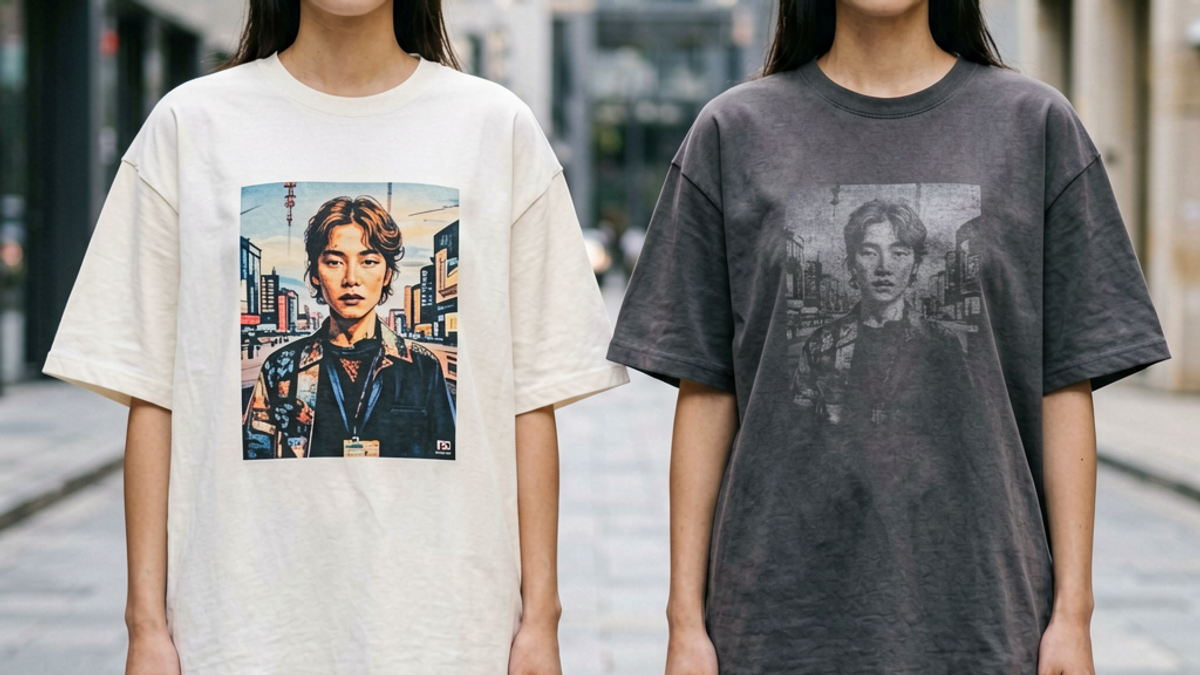
An oversized tee is a fashion statement, a regular fit tee is a wardrobe workhorse — and most people need at least one of each. Choose oversized when you want volume, drape, and a clear streetwear read. Choose regular fit when you want clean lines, easy layering, and a silhouette that flatters almost every body type. The right answer depends on the outfit, the occasion, and what you're trying to say.
The Quick Verdict: Statement vs Safe
The two silhouettes are not rivals. They solve different problems. An oversized graphic tee is built to do visual work — the print sits on a wide canvas, the dropped shoulders change your proportions, and the hemline lands mid-thigh instead of at the hip. A regular fit tee is built to disappear. It sits close enough to read your frame, hangs straight from the shoulder, and gets out of the way of whatever you put over it.
If you had to pick just one tee to buy this week, the honest answer is the regular fit. It pairs with everything, it layers under jackets and hoodies, and it works for the office if you dress it up. The oversized version is a second or third purchase — something you add once your basics are locked in and you want a piece that does the talking for you. The same logic applies in reverse: if you already own five regular fit tees and nothing that says something on its own, the next addition to the drawer is probably an oversized graphic piece, not another plain shirt in a different color.
When Oversized Tees Look Intentional
Oversized tees look intentional when three things line up: the fabric is heavy, the shoulder seam sits past your actual shoulder, and the rest of the outfit tapers below it. A boxy oversized tee in 240gsm cotton draped over slim cargo pants and chunky sneakers reads as deliberate. The same shirt over basketball shorts and slides reads as laundry day.
The visual rule is simple. If your top is wide, your bottom should be narrow. Slim straight jeans, tapered joggers, fitted trousers — anything that comes in at the ankle. When both pieces are wide, the silhouette collapses into a shapeless rectangle. That's the look most people mean when they say oversized tees look bad — it's not the shirt, it's the pairing.
Oversized also works in specific contexts: layered over a long sleeve in cooler weather, worn with a structured jacket that holds its own shape, or styled with a front tuck into high-waisted pants. Skip the look for formal settings, athletic fits where movement matters, and any time the hem is going to bunch at the belt. Concerts, streetwear-heavy events, travel days, and casual creative offices are the natural homes for the silhouette. Anywhere you need to look like you read the room, the regular fit pulls less attention and reads more polished.
When Regular Fit Is the Smarter Buy
A regular fit tee is the smarter buy when you need a shirt that performs in multiple roles. It tucks into trousers for a smarter look. It layers under an open shirt or zip hoodie without bunching. It survives being worn two days in a row without looking wrinkled or stretched out. And — this is the underrated part — it photographs well from any angle.
Regular fit also wins for slimmer body types where oversized tees swallow the frame, for office-adjacent outfits where you need to look pulled together without trying, and for any shirt that gets worn to the gym, on a flight, or under a backpack. The closer fit means the fabric moves with you instead of catching on things.
The visual rule for regular fit is the inverse of oversized. The shirt should follow your shoulder line, not extend past it, and the hem should land around the hip bone. Anything longer starts to read as a tunic; anything tighter starts to read as compression wear.
Body Type Considerations
Fit is personal, but a few patterns hold up across body types. Broader shoulders carry oversized tees well because the dropped seam still lands on the arm, not the bicep. Narrow shoulders often get lost in the same shirts — the volume pools around the torso and the silhouette turns boxy in a way that doesn't read as style.
Taller frames can handle the extra length of an oversized tee without it looking like a nightshirt. Shorter frames should look for cropped oversized cuts that hit at the high hip, or stick with regular fit and let the cleaner proportions do the work. Curvier bodies often prefer the drape of a slightly oversized tee because the extra fabric skims rather than clings — but the shoulder seam still needs to be in the right place or the shape disappears.
The honest summary: regular fit is the safer starting point for almost everyone, and oversized is the upgrade once you know what works for your frame. Most of the worst oversized fits in the wild come from people buying the trend before they understood their own proportions. Trying both cuts in a fitting room, with the bottoms you actually wear, will answer the body type question faster than any guide — including this one. Trust the mirror over the rule.
How to Balance Proportions With Bottoms
The outfit rule that ties it together: contrast volume, don't double it. If the top is oversized and long, the bottom should be slim and cropped. If the top is regular and tucked, the bottom can be wider — pleated trousers, wide-leg jeans, structured shorts. The mistake is treating the silhouette as one piece instead of two.
Footwear matters more than people think. Chunky sneakers balance an oversized top by adding visual weight at the base. Low-profile sneakers or loafers balance a regular fit top by keeping the line clean. A heavy boot grounds either silhouette, but a dress shoe can make a regular fit tee look overdressed and an oversized tee look like a costume.
Accessories follow the same logic. A long chain or crossbody bag works with both fits but reads as more deliberate with the oversized silhouette. A beanie or cap pulls focus up and works with the regular fit. Skip the belt unless you're tucking — a belt over an untucked oversized tee breaks the line in a way that's hard to recover from.
Bottom Line
Pick the silhouette that matches the message. Oversized says I read the culture, I dress with intent, I'm not trying too hard. Regular fit says I'm pulled together, I respect the setting, I look good in anything I put on top of it. Most wardrobes need both, and the best outfits mix them: a regular fit tee under an oversized chore coat, an oversized graphic over a slim trouser, a tucked regular fit into wide-leg denim. The point isn't picking a side — it's understanding what each cut does, and reaching for the one that matches the read you want on any given day. The Stryxen Studio collection carries graphic tees in both cuts, in weights that hold their shape, in prints that earn the space the oversized silhouette gives them — worth browsing both fits before you decide which one belongs in your rotation.
Frequently Asked Questions
Is oversized the same as baggy?
No. Oversized is a deliberate silhouette — the shoulder seam drops, the body widens, the hem extends past the hip, and the fabric is heavy enough to hold the shape. Baggy is what happens when a regular fit shirt is two sizes too big. The difference shows up in the fabric weight, the seam placement, and the way the shirt drapes.
Should short guys wear oversized tees?
It depends on the cut. A standard oversized tee that hits mid-thigh will swallow shorter frames and shorten the legs visually. A cropped oversized cut that lands at the high hip works much better — it gives the volume and streetwear read without the length penalty. When in doubt, regular fit is the safer starting point.
How do I make an oversized tee look good?
Anchor the volume with a slim bottom. Slim straight jeans, tapered joggers, or fitted trousers. Keep the shoulder seam dropped past the actual shoulder, and pair the look with chunky sneakers or boots to add weight at the base. Skip the front tuck unless the shirt is specifically cut for it.
What is regular fit in t-shirts?
Regular fit is the classic tee cut — straight from the shoulder, slight ease through the body, hem landing at the hip. It's not slim and it's not relaxed; it's the silhouette most brands mean when they don't label a shirt as anything else. It layers cleanly, tucks well, and works across most body types without adjustment.